


Sushi, salmon patties, or salmon fillets… Mmm… salmon is part of so many delicious dishes that most of us can’t help but smile when we think of the tasty fish.
Salmon also has a rich history. Early Native Americans depended on it for sustenance, and canning of salmon began in the late 19th century.
Salmon generally enjoys a pretty great reputation, but just how healthy is it for diabetes?
I bet you can probably guess the answer. But, let’s dig in and explore the facts.

Salmon Nutrition Facts
The word ‘salmon’ is used to describe several different species of fish in the family Salmonidae. Salmon can be found in all parts of the world, and are generally born in freshwater but migrate to saltwater in order to spawn. Commonly eaten varieties include sockeye, Alaskan, and Atlantic.
In terms of nutrition, salmon contains a moderate amount of calories – a four ounce fillet of Alaskan sockeye has 160 calories. But, you’ll be happy to learn that its carbohydrate count is exactly zero!
That same four ounce fillet contains a magnificent 24 grams of protein and six grams of fat, and less than one of those nine grams of fat is saturated. Salmon is one of the best sources of healthy dietary omega-3 fats, satisfying 55% of your recommended daily amount (RDA).
Salmon also packs a punch in the micronutrient department.
A four ounce coho salmon fillet contains the following vitamins and minerals:
- 236% RDA vitamin B12
- 128% RDA vitamin D
- 78% RDA selenium
- 56% RDA vitamin B3
- 38% RDA vitamin B6
- 14% RDA potassium
As you can see, salmon is rich with micronutrients and is a smart addition to any meal!
Different Types of Fish Compared
Let’s take a look at a few different types of salmon compared to other commonly consumed varieties of fish.
| Type | Calories | Carbs (g) | Protein (g) | Omega 3 fat (g) |
| Sockeye fillet (4 oz/ 113 g) | 160 | 0 | 24 | 5 |
| Smoked salmon (0.5 cup) | 105 | 11 | 4 | 5 |
| Canned pink salmon (3.5 oz/ 100 g) | 129 | 0 | 20 | 4 |
| Canned tuna (3.5 oz/ 100 g) | 86 | 0 | 19 | 0.4 |
| Tilapia fillet (4 oz/ 113 g) | 100 | 0 | 20 | 1 |
| Albacore tuna fillet (4 oz/ 113 g) | 120 | 0 | 30 | 1 |
As you can see, all unflavored and unseasoned fish products are carbohydrate free, which makes them a delicious and nutritious food ideally suited for your diabetic diet!
Smoked salmon does contain some carbohydrates, likely due to its method of preparation.
Salmon packs a much higher healthy-fat-punch than other types of fish. But don’t be concerned about the fat. Salmon’s high levels of omega-3 fats can help you lower your cholesterol, reduce your blood pressure, boost your brain health, prevent depression and anxiety, and help you stay fuller for longer after meals.
Myths and Truths about Salmon
You may be wondering what the difference is between farmed and wild salmon, as many restaurants offer customers a choice between the two. Many people think they’re essentially the same thing, but that is not the case.
Farmed salmon contains about one and a half times as many calories as its wild cousin, and it also contains much more saturated fat and a lower ratio of omega-3s.
It can also contain pollutants, which some researchers claim may actually be contributing to the growing number of type 2 diabetes cases worldwide.
The message here is, stick with wild salmon whenever possible, as its slightly higher price tag is totally worth it for your health!




Research about Salmon and Diabetes
Alaskan natives’ lower-than-average prevalence of diabetes has been linked to daily salmon consumption.
If you already have type 2 diabetes, that’s even more reason to keep eating salmon. Fish consumption is associated with lower incidence of myocardial infarction in diabetics and lower mortality, especially for cardiovascular event-related deaths.
When you’re cooking up salmon fillets, leave the skin on. It contains oligopeptides that may reduce blood sugar by decreasing inflammation and oxidative stress, and therefore protecting pancreatic cells.
Mouse studies have found that salmon peptides can improve metabolic syndrome by reducing inflammation and glucose intolerance.
In pregnant women who ate salmon twice a week, it was shown they had improved antioxidant defenses during their pregnancies. Higher antioxidant activity in people with type 2 diabetes can mean a greatly lowered risk of diabetic complications.
And overall, most nutrition research agrees that a couple of servings of fish per week provides great health benefits – especially fatty fish like salmon!
So is Salmon Good for Diabetics?
Absolutely!
Salmon is a good quality, carbohydrate free source of protein and healthy omega-3 fats. This protein/fat combination is a recipe for satiety (better feelings of fullness). Which means, by default, salmon can help you lose weight by keeping you fuller longer. And best of all, it won’t spike your blood sugar at all.
Salmon – both fresh and canned – is a great addition to any diabetic diet plan!
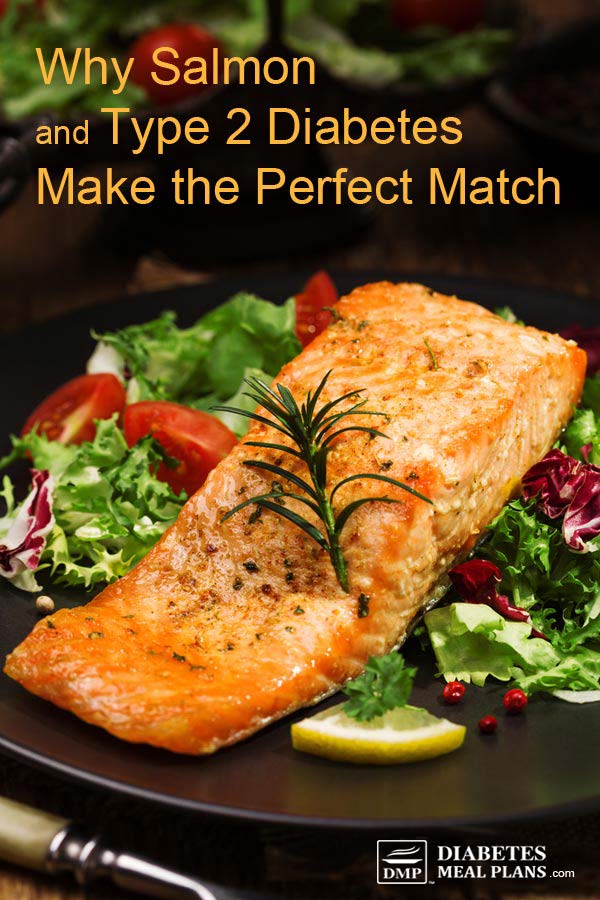
Try it on top of a green salad, alongside some roasted vegetables, or even on its own in sashimi (a no carb, rice-free variety of sushi). Salmon can be seasoned and prepared in so many interesting ways, you’ll never get bored.
In this case, looks like being fishy isn’t such a bad thing. ;)
Please pin, tweet or share this info with others. Thanks!

Ava Bradshaw
Since eating daily for 6 weeks…I lost lbs feel energetic…just plain content, happy…hair growing back, quick thinking,
night vision improvement…feel physically stronger..
Barry Allsuch
Very helpful
I’m type 2 diabetes, love most fish, especially smoked salmon
Good or bad