


For years, butter has been blamed for heart disease and margarine praised as the healthier choice. But is that advice actually grounded in solid science, especially when it comes to type 2 diabetes or prediabetes?
In this episode, we cut through decades of confusion and explore the latest research on how butter and margarine affect blood sugar, insulin resistance, cholesterol, and long-term metabolic health.
LISTEN TO THE PODCAST
Support the podcast by leaving a 5-star rating and review on Apple, Spotify or our Website – Thank You!
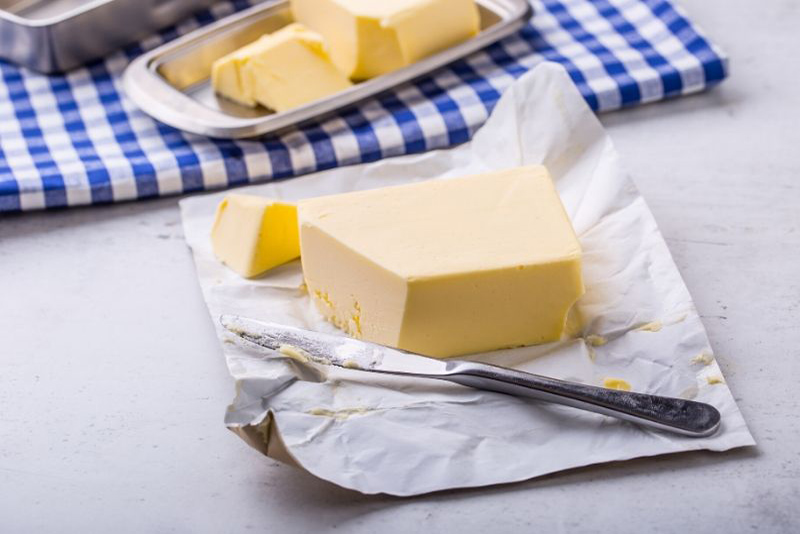
Butter vs Margarine: Which is Better for Diabetes?
Butter has been a topic of heated debate since the 1970s, largely because of its saturated fat content. Back then, public health guidelines were quick to blame saturated fat for rising rates of heart disease, and butter found itself squarely in the firing line.
Margarine, on the other hand, was marketed as the healthier alternative, supposedly better for your heart because it was made from vegetable oils. Food companies jumped on this trend, producing countless margarine products to replace butter in people’s homes.
But over time, we learned that many of these margarines were made using a process called hydrogenation, which created trans fats, something we now know is far worse for our health than the saturated fat found in butter. Trans fats not only raise LDL (bad) cholesterol but also lower HDL (good) cholesterol and increase inflammation, which all contribute to cardiovascular disease.
Even though regulations have largely removed trans fats from our food supply, the confusion about butter versus margarine remains. Meanwhile, many newer margarines still rely on highly refined seed oils that come with their own health concerns.
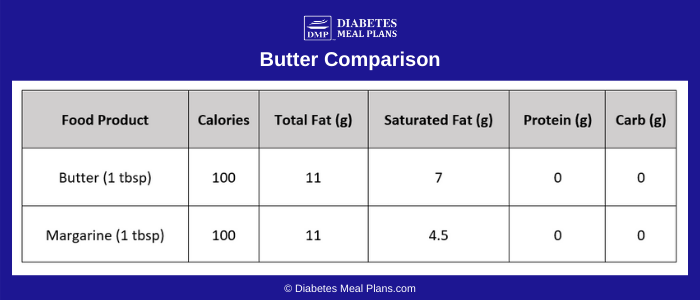
How is Butter and Margarine Made?
Butter
Butter is defined as a whole food, which is a solid emulsion of fat globules, air and water made by churning milk or cream – a simple and natural process that people have been doing for centuries.
This process separates the fat from the liquid, resulting in a smooth, rich spread. Butter naturally contains saturated fats, some monounsaturated fats, fat-soluble vitamins like A, D, and K2, and compounds such as conjugated linoleic acid (CLA), which may have anti-inflammatory benefits. If you choose butter from grass-fed cows, you’ll also get small amounts of omega-3s. Importantly, butter contains zero carbohydrates, so it doesn’t raise blood sugar.
Margarine
Margarine is defined as a food ‘product’ usually made from vegetable oils through a refining process called hydrogenation.
It’s made by taking vegetable oils—commonly canola, soybean, sunflower, or palm—and putting them through industrial processes to turn them from a liquid into a solid. Originally, this meant hydrogenation, which produced harmful trans fats.
Today, margarines have removed most trans fats, but they’re still highly refined and often contain a mix of vegetable oils, emulsifiers, flavorings, preservatives, and added colors.
Even margarine products that claim to be olive oil–based often only contain small amounts of olive oil, combined with the same refined oils used in regular margarine.
During processing, these oils are heated to high temperatures, which can strip away beneficial nutrients and produce oxidized compounds. These by-products may increase inflammation and oxidative stress in the body, raising concerns for people with insulin resistance or diabetes.

What Does the Research Say About Butter and Diabetes?
For decades, we were told to avoid butter to protect our hearts. But recent research is telling a different story.
A large study from the Framingham Offspring Cohort, published in 2025, followed over two thousand people for nearly 18 years. It found that people who ate more than five grams of butter a day—just over a teaspoon—had better insulin sensitivity, higher HDL cholesterol, lower triglycerides, and remarkably, a 31% lower risk of developing type 2 diabetes compared to those who ate little or none.
On the other hand, people who consumed more than seven grams of margarine per day had a significantly increased risk of both cardiovascular disease and type 2 diabetes. In fact, their risk of diabetes was 41% higher.
This flips the old butter-is-bad, margarine-is-good story on its head.
Other research supports these findings. A 2016 meta-analysis called “Is Butter Back?” looked at data from over 600,000 participants across multiple countries. It found that butter had a neutral effect on heart disease and total mortality, with a small protective effect against developing diabetes.
A 2024 review examined nearly 60 studies on dairy fat. The authors concluded that full-fat dairy foods, including butter, generally were not associated with increased obesity, insulin resistance, or cardiovascular disease. Some studies even linked full-fat dairy to improved body composition and better lipid profiles.
It’s worth noting that while butter may raise LDL cholesterol slightly in some people, it also raises HDL cholesterol. And unlike refined seed oils, the natural structure of dairy fat—sometimes called the dairy-fat matrix—seems to change how it’s metabolised in the body.




Why the Source of Fat Matters
One of the biggest shifts in our understanding of nutrition is that it’s not just about the type of fat, but also the source and the food matrix it comes in.
Butter, cheese, and yogurt all package fat along with proteins, minerals, and bioactive compounds like phospholipids and sphingolipids. This natural structure seems to influence how our bodies process the fat.
Studies comparing butter to other dairy fats have shown interesting differences. For example, a randomized controlled trial published in the American Journal of Clinical Nutrition found that eating the same amount of saturated fat from cheese led to lower LDL cholesterol compared to eating it from butter. Yet both dairy foods raised HDL cholesterol, the so-called “good” cholesterol, and had no negative effects on inflammation, blood pressure, or insulin levels.
In contrast, margarine and similar spreads rely on refined oils that have been stripped of these natural components. They often contain a high amount of omega-6 fatty acids, which when consumed in excess can promote inflammation, a key driver in insulin resistance and type 2 diabetes.
Saturated Fat
When it comes to saturated fat consumption, there is evidence to suggest the source of saturated fat is important to focus on. For instance, consumers often focus on fats they can see such as oils, spreads and dressings. But they do not think about fats in processed foods like certain meats, baked goods and snack foods.
A review from the American Heart Association reminds us that dietary saturated fat can be obtained from a variety of healthy foods and each of these may possess numerous other ingredients and characteristics that modify their health effects.
Studies show intake of meat, milk, cheese and all dairy products have no significant association with heart disease. When you compare that to processed meat, which is associated with increased risk, it becomes clear that eliminating processed food may be more important than eliminating fats in general.
Interestingly, the majority of saturated fat in the western diet comes from junk foods.
According to the US dietary guidelines, the highest intakes of saturated fat come from processed food such as sandwiches, desserts and snacks; rice, pasta and other grain-based mixed dishes, pizza, chips and savory snacks.
So there is not enough evidence to support a strong recommendation that people should restrict all food high in saturated fat, particularly if they come from nutrient dense whole food sources.
So, Which Should You Choose?
If you’re managing type 2 diabetes or prediabetes, butter in small amounts is generally a better choice than margarine. It’s a natural whole food that doesn’t spike blood sugar and isn’t linked to increased diabetes risk.
Choose lightly salted or unsalted butter when possible, and if it’s in your budget, go for grass-fed varieties, which offer a better omega-3 and vitamin K2 profile.
That doesn’t mean you should start piling butter onto everything. Like all fats, it’s calorie dense, so keep portions moderate. Use it as a way to add flavour and help absorb fat-soluble nutrients from your meals, not as the main part of your plate.
Instead of margarine, diversify your healthy fats. Use extra virgin olive oil for drizzling over salads or roasting vegetables. Enjoy avocado, nuts, and seeds for their fibre and healthy fat content. These foods all support insulin sensitivity and offer anti-inflammatory benefits.
When you’re reading labels, be cautious of spreads that use vague terms like “vegetable oil blend.” If you see ingredients like hydrogenated or interesterified oils, it’s best to steer clear. These processing methods can alter fat structures in ways that may not support metabolic health.
Conclusion
Our choice would be butter over margarine as it is less processed and a healthy choice when included within a whole food diet.
At the end of the day, it’s not just about butter versus margarine. It’s about the overall quality of your diet.
Choosing real, minimally processed foods, whether that’s butter instead of margarine, or olive oil instead of a vegetable oil blend, can make a meaningful difference over time.
So yes, you can enjoy butter without guilt. Just keep it in reasonable amounts and balance it with plenty of veggies, quality proteins, and other healthy fats.
Butter contains zero carbs, so you don’t have to worry about blood sugar spikes when eating it.
Just keep in mind hat eating a variety of different fats is important. There are many other options for fats such as virgin olive oil, avocado, olives, nuts and seeds, including seed and nut butters – and these should make up part of your diet too.
For more healthy fat options, check out the “fat” portion of our Diabetes Friendly Food List!

Diane Yakiwchuk
Interesting article. What are your thoughts on mixing butter with avocado oil, equal ratio, so that it would be easier to spread.
Malorie: Dietitian (MS, RD, CLT)
Hi Diane,
I don’t see an issue with this but you can also just store small amounts of butter out to make it softer.: )
Premila
I had quadruple bypass surgery last year. Following the surgery I attended 2 seminars which was recommended by my Cardiologist and was presented by a nutritionist at the local hospital. Her recommendation was contrary to yours, as she suggested Becel margarine over butter. I recall several years ago when I had been diagnosed with diabetes, the nutritionist suggested the same, ie., Becel over butter. I find these contradictory messages very confusing.
Malorie: Dietitian (MS, RD, CLT)
Hello Premila,
Unfortunately, there are still providers that use this out-dated information when working with clients. The research has evolved the past few years and we are learning more about saturated fats vs. vegetable oils. As a nutritionist, I would recommend small amounts of butter over a highly processed margarine.