


A1c, or hemoglobin A1c, is one of the most important measures for understanding long-term blood sugar control.
Unlike a single glucose test, which captures just one moment in time, A1c reflects your average blood sugar levels over the past 2–3 months. For people with prediabetes or type 2 diabetes, it’s a crucial marker not only for diagnosis but also for gauging the risk of diabetes complications.
So, what exactly is a dangerous level of A1c? Let’s take a closer look at what different A1c levels mean, when damage starts, what thresholds often trigger medication recommendations, and the A1c goal levels to aim for.

High A1c Levels = High Blood Sugar
The first thing to understand: the higher your A1c, the higher your average blood sugar. Each A1c percentage point corresponds to an approximate average glucose level.
For example:
- A1c 5.7% (39 mmol/mol) ≈ 139 mg/dL (7.7 mmol/L)
- A1c 7.0% (53 mmol/mol) ≈ 170 mg/dL (9.4mmol/L)
- A1c 9.0% (75 mmol/mol) ≈ 220 mg/dL (12.2 mmol/L)
- A1c 10.0% (86 mmol/mol) ≈ 240 mg/dL (13.4 mmol/L)
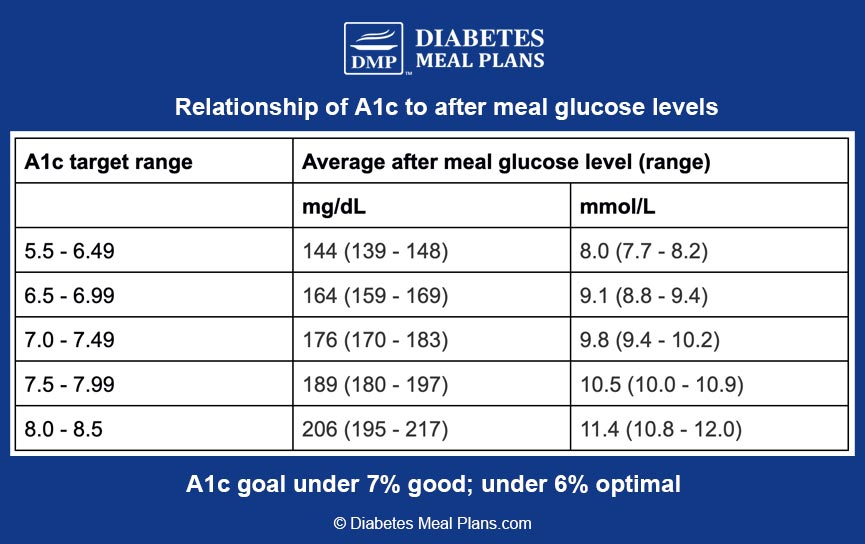
When A1c climbs above the diabetes diagnostic threshold of 6.5% (48 mmol/mol), the risk of complications such as eye disease, kidney damage, and cardiovascular problems steadily increases.
The danger isn’t just the number itself, but how long your body has been exposed to high blood sugar. Complications develop due to prolonged higher than normal blood sugar.
At What A1c Level Does Damage Start?
Research shows that damage can begin even before diabetes is diagnosed. Large population studies, including the UK Prospective Diabetes Study and others, reveal that risks for retinopathy, neuropathy, and cardiovascular disease begin to rise once A1c passes 6.0% (42 mmol/mol).
That means people in the prediabetes A1c range of 5.7–6.4% (39–47 mmol/mol) may already be experiencing subtle harm to blood vessels and nerves, especially if blood sugar has been elevated for years.
By the time A1c is in the 7–8% range (53–64 mmol/mol), the risk of microvascular complications like retinopathy (eye damage) increases significantly.
Put simply, there’s no truly “safe” high A1c. The higher the number, and the longer it stays high, the greater the damage. That’s why it’s so important to achieve and maintain healthy A1c levels.
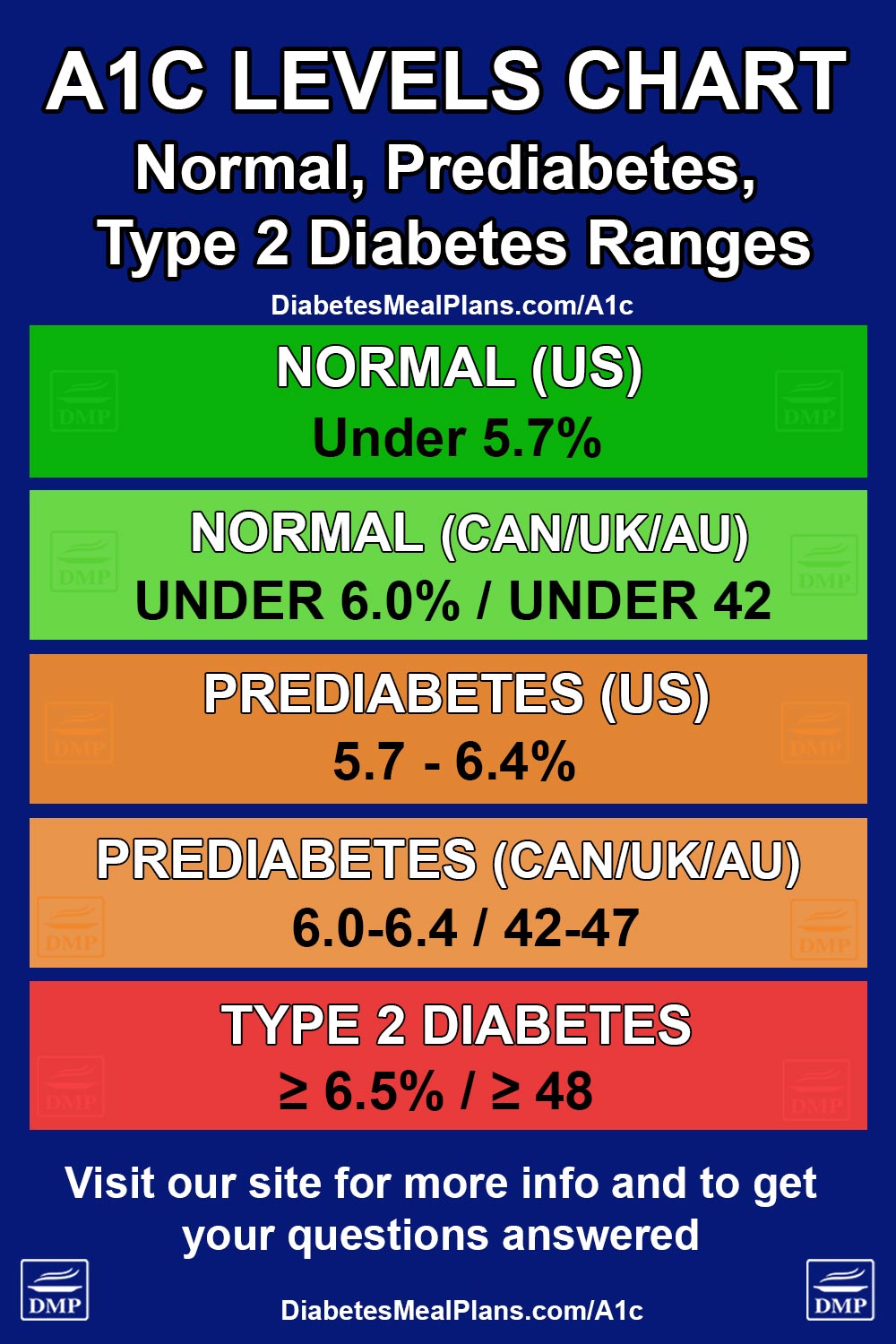
Normal A1c Levels
In case you’re wondering the normal A1c ranges and those for prediabetes and type 2 diabetes, refer to the chart. There can be slight differences based on country.




What A1c Level Requires Medication?
It’s important to note up front that medication isn’t the only option. Nutrition is more effective than medications – we have plenty of research to confirm this.
But, most doctors prescribe meds by default, so it’s good to be informed about what usually happens.
- 5.7–6.4% (39–46 mmol/mol): Prediabetes, medication not necessary for most people
- 6.5–7.0% (48–53 mmol/mol): Diabetes diagnosis, medication often not necessary if nutrition and lifestyle changes are implemented
- 7–9% (53–75 mmol/mol): Higher A1c, medication often prescribed, at least temporarily, though not always necessary if nutrition and lifestyle changes are implemented
- 9% and above (75 mmol/mol+): Very high A1c, urgent action needed so medication is often prescribed, at least temporarily, but nutrition and lifestyle changes also need to be implemented
Again, it’s important to note that medication isn’t the only option!
Research consistently shows that structured nutrition and lifestyle programs, like our clinically proven T2Diet Program, can lower A1c as effectively as, and often better than medications.
However, when A1c is very high, for example 9–10% or more (75–86 mmol/mol), medication may be necessary, at least initially to bring blood sugar down to a safer level.
You have a right to say no to medications, as long as you intend to be proactive with nutrition and lifestyle changes. And just know: if you have to initially take medications, nutrition can help you get off medications – medications do not have to be forever!
A1c Levels 10%
An A1c of 10% (86 mmol/mol) corresponds to an average blood glucose of around 240 mg/dL (13.4 mmol/L).
At this level, the body is exposed to sugar levels that are roughly double what’s considered normal.
Long-term exposure can quickly accelerate nerve damage, kidney problems, and eye disease. An A1c of 10% is considered a dangerous level that almost always requires medication and aggressive intervention – meaning, you need to get serious and very proactive!
And the good news is, it is possible to get an A1c level of 9-10% down to healthy ranges in around 4-6 months with nutrition alone. And it’s possible to reduce medications again, too.
John shares how he reduced A1c from 9-10% to 6% and reduced meds in the T2Diet Program – our clinically proven 16-week step-by-step nutrition program.
A1c Levels 7.3%
An A1c of 7.3% (56 mmol/mol) equals an average glucose of about 176 mg/dL (9.8 mmol/L).
While this might not sound extreme, it still puts you above the “safe” range. Clinical studies show that complications start to climb steadily when A1c levels go above 7%.
For most people, this level indicates that additional action is needed, whether through stricter carbohydrate management, more consistent exercise, or more strategic exercise like after-meal walking.
5.9% A1c Levels
At 5.9% (41 mmol/mol), you’re in the prediabetes A1c range, if you live in the US. For those in Canada, UK, or Australia, this puts you at the upper end of normal, 6.0% and above is considered prediabetes in these countries.
The positive side is that this is an A1c level where nutrition and lifestyle adjustments can have a powerful impact in returning prediabetes to normal.
For most people with prediabetes, achieving normal A1c levels is possible within 4-6 months, as we’ve seen from most members in our Prediabetes Reset Program.

Why Small Increases in A1c Matter
It’s easy to dismiss small changes, like going from 7.0% to 7.5% (53–58), but every tenth of a percentage point matters.
Studies demonstrate a continuous relationship between A1c and complications, meaning risk gradually increases with each upward shift.
On the flip side, lowering A1c by even 0.5% can significantly reduce the likelihood of heart attack, kidney damage, and other complications.
A1c Goals for Prediabetes and Type 2 Diabetes
Prediabetes A1c goal: NORMAL, under 5.7%
Type 2 diabetes A1c goal: Below 6.5% and then aim for under 6.0%, if you can achieve that over time. Research shows levels under 6.0% protect you from long term complications.
Conclusion on A1c Levels
A1c is more than just a number, it’s a reflection of the overall metabolic environment in your body.
Importantly, if your A1c is high, don’t see it as a fixed outcome because you can lower it!
While medications may be necessary, even temporarily, the most effective treatment strategy is NUTRITION. What you eat has the biggest impact on your numbers and correcting your metabolism back to normal.
Need help to eat to treat diabetes? Join one of our proven programs – we can help you achieve normal A1c levels and reduce medications.

Leave a Reply