


Table of Contents[Hide][Show]
At different points throughout the year, many people take a quiet look back at their health and wonder why their blood sugar numbers didn’t move the way they hoped.
What makes this especially hard is that you probably feel like real effort has been made. Sugar was reduced. Portions were watched. Meals were adjusted. Articles were read. Podcasts were listened to. Advice that sounded sensible at the time was followed.
And yet, fasting glucose may still be higher than desired. After-meal blood sugar levels are still too high. A1c hasn’t shifted much. Or progress came briefly, then disappeared again.
If that sounds familiar, this isn’t about motivation or trying harder. It’s about understanding why effort doesn’t always translate into results when it comes to blood sugar.

Trying Isn’t the Problem
One of the biggest misconceptions around blood sugar is that lack of progress means lack of discipline.
In reality, most people struggling with glucose control are doing too much, not too little.
They’re juggling advice from different sources. One month it’s cutting calories. The next it’s cutting carbs. Then fasting. Then supplements. Then worrying about not eating enough. Then worrying about eating too much.
Each change makes sense on its own. But layered together, they often create confusion, stress, and inconsistent physiology.
Blood sugar doesn’t respond well to chaos, even when the chaos is well-intentioned.
Jumping Between Strategies Creates Metabolic Whiplash
A very common pattern is switching strategies before the body has time to adapt.
Carbohydrates are reduced, then calories are cut further to push weight loss. Blood sugar doesn’t improve, so fasting is added. Energy drops. Sleep suffers. Stress hormones rise. Glucose control quietly worsens in the background.
None of this means the strategies are wrong. It means they were applied without a clear order or framework, leading to metabolic whiplash rather than better outcomes for you.
Blood sugar improvement isn’t about stacking tactics. It’s about sequencing the right ones at the right time.
Focusing on the Wrong Marker Can Stall Progress
Another reason people feel stuck is focusing on a single number without understanding the full picture.
Fasting Glucose Isn’t the Whole Story
Fasting glucose gets a lot of attention, but it’s highly sensitive to stress, sleep, illness, late meals, and even anxiety about testing. A higher reading doesn’t always reflect what’s happening in your overall metabolism.
Weight Isn’t a Reliable Blood Sugar Proxy
Weight can fluctuate for many reasons that have little to do with insulin sensitivity or glucose control. When weight becomes the primary focus, people often make changes that actually work against blood sugar stability.
Meanwhile, post-meal glucose patterns, carbohydrate load, protein intake, and daily consistency are often overlooked.
When attention is placed on the wrong marker, people end up changing the wrong thing.
Stress and Physiology Are Quiet Saboteurs
Stress physiology plays a much larger role in blood sugar than most people realize.
Cortisol raises glucose. Poor sleep raises cortisol. Restrictive eating raises cortisol. Constantly worrying about results can raise cortisol too.
By the end of the year, many people are running on depleted reserves. Even if food choices are reasonable, the body may be in a state where glucose regulation is simply harder.
This isn’t failure. It’s biology.
Ignoring stress, sleep, and recovery doesn’t make someone weak. It just makes blood sugar harder to control.




Information Overload Creates Paralysis, Not Progress
We live in a time where information is everywhere, but clarity is rare.
Most people don’t need another tip. They need help filtering what matters now versus what can wait. They need help knowing what to focus on. They need reassurance that boring, steady work often produces the best outcomes, results that actually last.
Blood sugar improves through repetition, not novelty.
The problem isn’t that you didn’t do enough this year. It’s that you were likely pulled in too many directions without a clear anchor!
What Actually Helps Blood Sugar Improve
Sustainable progress usually comes from a few unglamorous but powerful foundations:
Consistent meals that provide enough protein and stable energy.
A carbohydrate intake that matches your physiology, not trends.
Understanding which glucose numbers matter most for you.
Reducing unnecessary restriction that drives stress responses.
Addressing sleep and stress alongside food, not after it.
These aren’t exciting. They are effective.
And they work best when applied within a clear structure, not pieced together from random advice.
A Different Way to Move Forward
Look, no matter where you are now, it’s worth saying this plainly.
You don’t need to start over. You don’t need a detox, more pressure, or a new years “resolution.”
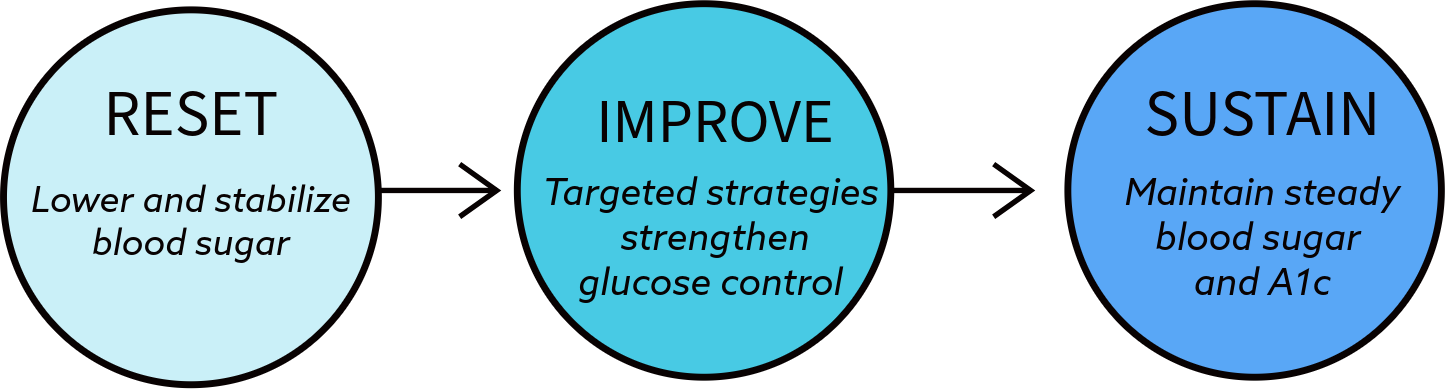
What most people need is a calmer, more organized approach that shows them what to focus on first, what to stop worrying about, and how the pieces actually fit together.
That’s exactly what the DMP Membership is built on. Not quick fixes or seasonal pushes, but a structured, physiology-first way of improving blood sugar over time, with clarity and support built in.
The most helpful thing to remember is this: if your blood sugar isn’t improving despite real effort, it doesn’t mean you failed. It doesn’t mean you lack discipline or need more willpower.
It means the approach needs structure.
When you’re ready to calm the noise and focus on what actually moves blood sugar in the right direction, you’re welcome to join us inside the DMP Membership.
We’ve been supporting people for over a decade, and we’re here for the long term.

Leave a Reply