


If you’ve ever tested your blood sugar after a meal and seen it sitting around 200 mg/dL (11.1 mmol/L), you might be wondering if that’s normal. The short answer is no.
A reading of 200 after eating signals that your body is struggling to manage glucose properly.
Let’s cover what that number means, what’s considered healthy, and one key step you can take to improve your health.

What Should Blood Sugar Be After Eating?
Blood sugar naturally rises after meals. This is called a postprandial rise.
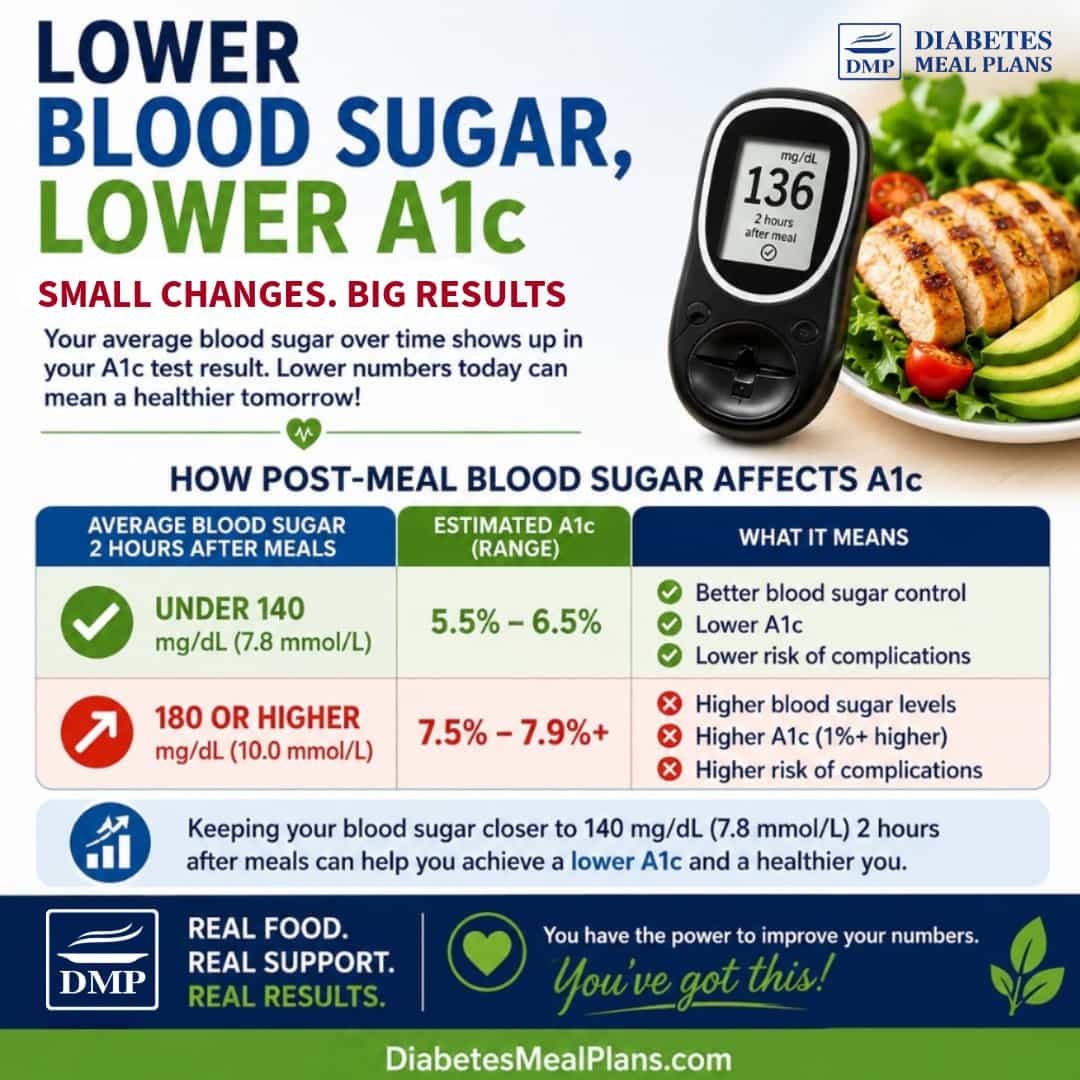
According to the American Diabetes Association (and other diabetes organizations), post-meal blood sugar should be less than 180 (10.0), two hours after eating. That’s still too high, according to lots of research!
Two hours after eating your blood sugar should be less than 140 (7.8). This provides the best protection for you against diabetes complications and will help you lower A1c levels to normal.
If your reading is consistently 200 (11.1) or higher, it means your blood sugar is well above the recommended range.
Why Does Blood Sugar Go So High?
Several factors can push blood sugar into the 200s after eating:
- High carbohydrate intake: Foods like bread, pasta, rice, potatoes, sweets, and sugary drinks break down into glucose quickly.
- Insulin resistance: A common issue in type 2 diabetes, where insulin can’t do its job effectively.
- Stress and hormones: Cortisol, adrenaline, and other hormones can raise blood sugar.
- Physical inactivity: Sitting after a meal allows glucose to build up instead of being used by muscles.
- Medications: Some medications such as steroids can temporarily elevate blood sugar.
Understanding these drivers helps you see why blood sugar rises more than expected and what you can do to lower it.
If you need help to work out what’s influencing your levels, consider joining us as a member for expert support.




Why Does After Meal Blood Sugar Matter?
It might feel like “just a number,” but repeated high post-meal readings cause real harm over time.
Research shows that high postprandial glucose contributes directly to blood vessel damage, raising the risk of heart disease and stroke. It also worsens insulin resistance, making blood sugar control harder in the long run.
Studies even suggest that post-meal spikes may be more harmful than fasting blood sugar alone because they keep your body in a state of ongoing stress and inflammation. This is why paying attention to those after-meal numbers is so important.
What You Can Do To Lower Post-Meal Blood Sugar?
Here’s the encouraging part: lowering post-meal blood sugar is possible, and small changes can make a big difference. One key step is reducing the amount of carbohydrate you eat at each meal.
Instead of a plate piled with pasta, rice or bread, aim for meals built around:
- Protein: chicken, fish, eggs, beef, tofu
- Non-starchy vegetables: leafy greens, broccoli, cauliflower, zucchini, peppers
- Healthy fats: olive oil, avocado, nuts, seeds
- Take a proven nutrition program that can lower blood sugar fast
Pairing a smaller portion of carbs with protein and fat slows digestion and blunts the blood sugar spike.
Even cutting back by half on the carbohydrate foods you usually eat can significantly reduce post-meal readings.
Other proven strategies include:
- Walking after meals: Even 10–15 minutes of light activity helps muscles use up glucose.
- Spacing out meals: Allowing enough time between eating gives your blood sugar a chance to come down before the next rise – limit snacks!
- Monitoring patterns: Keeping track of what foods lead to spikes helps you make smarter choices.
When To Be Concerned
If you see 200 mg/dL (11.1 mmol/L) once, it might simply be from a very carb-heavy meal. But if it happens often, it’s a red flag that your blood sugar control needs attention.
The most important thing here is to focus on diet and nutrition, as this is the most effective way to lower blood sugar.
Conclusion
A blood sugar of 200 (11.1) after eating is not normal.
It means your body is struggling to manage glucose, and over time, those high spikes can cause serious health problems.
By adjusting what you eat, you can bring those numbers down protect your health, and feel more in control.
Need help to do it? Join our program today to receive real support to lower blood sugar.
Or, get started with our free recommended food list.

Leave a Reply