


If you’re living with type 2 diabetes or prediabetes, chances are you have questions. Can you still eat pasta? Are protein shakes a good choice? What about beans and legumes? Does resistant starch really make a difference to blood sugar? And can supplements such as berberine help?
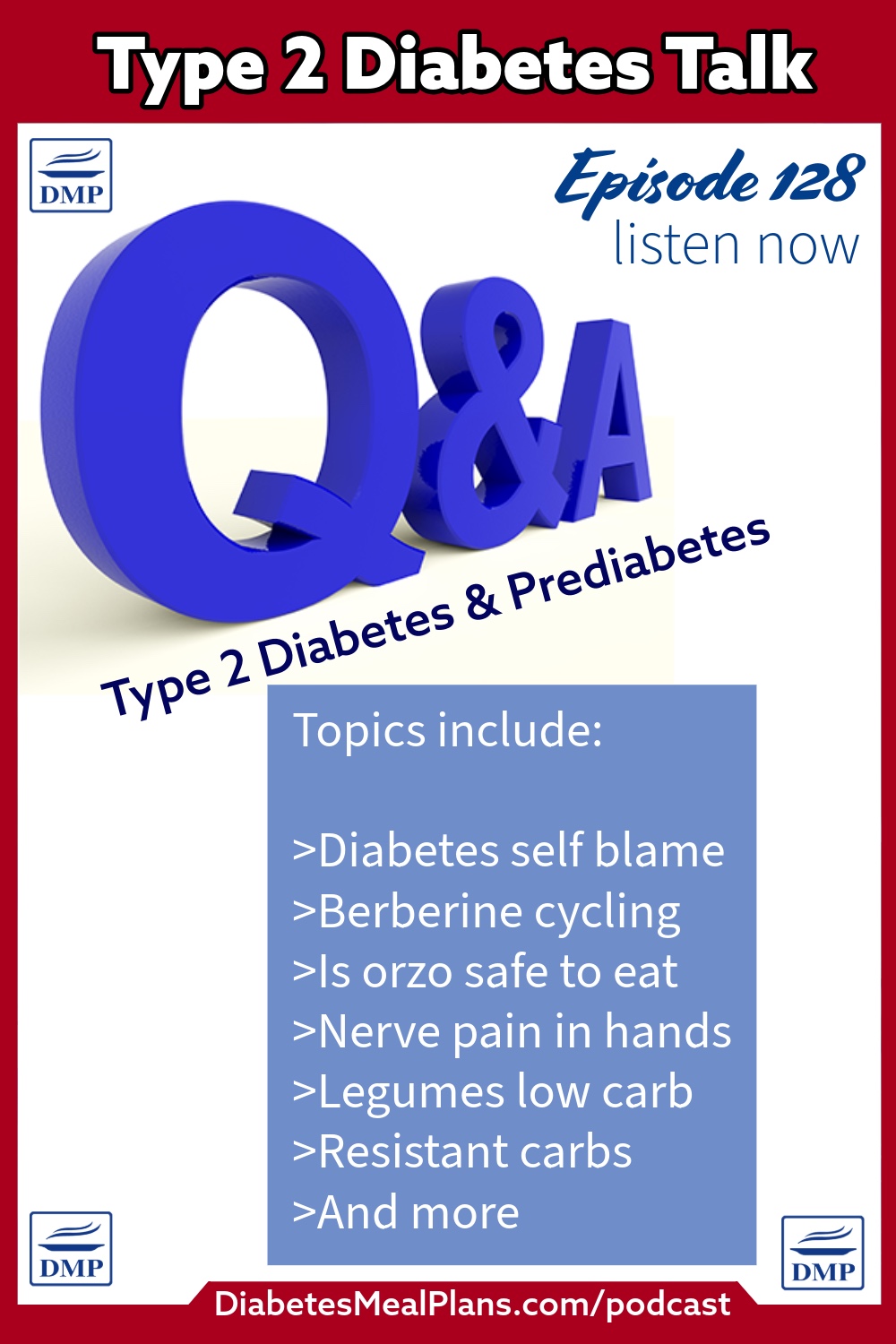
In this diabetes Q&A, Dr Jedha answers some great questions from our DMP community. But we also tackle something equally important: the blame and stigma that can accompany a type 2 diabetes diagnosis.
LISTEN TO THE PODCAST
Support the podcast by leaving a 5-star rating and review on Apple, Spotify or our Website – Thank You!
“I Keep Blaming Myself for Getting Type 2 Diabetes”
Cheryl recently discovered she has type 2 diabetes and shared that she keeps blaming herself. She walks every day, rarely eats desserts and thought she was eating healthily. She also has PCOS and a family history of type 2 diabetes.
This is such an important conversation because type 2 diabetes is not simply the result of eating too much sugar, being overweight or lacking willpower.
Genetics, insulin resistance, age, hormonal conditions such as PCOS, medications, sleep, stress, environment and lifestyle can all contribute.
Weight stigma within healthcare is also very real. As we’ve discussed previously on the podcast, research shows that weight stigma can lead to psychological distress, self-blame, reduced motivation and even avoidance of healthcare.
A diabetes diagnosis isn’t a reason to look backwards with guilt. It’s an opportunity to understand what’s happening metabolically and focus on the things you can influence from here.
Do You Need to Take a Break From Berberine?
Another listener asked whether berberine becomes less effective after six months and whether taking a one- or two-month break might “reset” its effects.
The simple answer is: we don’t know.
There isn’t good clinical evidence demonstrating that berberine loses effectiveness after six months or that cycling it restores its effectiveness. Long-term research is limited.
Berberine may have glucose-lowering effects, but it should still be considered an adjunct rather than the foundation of diabetes management. And if you take diabetes medications, discuss supplements such as berberine with your healthcare provider because they may further lower blood glucose.




Can You Eat Orzo, Beans and Legumes?
Orzo may look like rice, but it’s actually pasta—and therefore relatively high in carbohydrate.
That doesn’t necessarily mean you can never eat it. Portion size matters, as does what you eat alongside it. Adding protein, healthy fats and non-starchy vegetables can create a much more balanced meal.
Beans and legumes are similar. They’re rich in fiber, resistant starch and micronutrients, but most also contain substantially more carbohydrate than many people realise.
On a lower-carbohydrate eating plan, we generally recommend keeping beans and lentils to around ¼ cup cooked per meal and assessing your individual glucose response.
Soy foods such as tofu and tempeh are different because they’re relatively low in carbohydrate while providing valuable plant protein, making them excellent options.
What About Resistant Carbs?
Resistant starch is particularly interesting because some of the starch “resists” digestion in the small intestine and reaches the large intestine, where it can be fermented by gut bacteria.
That can mean a smaller glucose response than you’d get from rapidly digestible starch.
But don’t assume that something labelled “resistant starch” can’t raise your blood sugar. The amount varies considerably between foods and with preparation methods.
If you’re using a CGM, you have a wonderful tool for testing this yourself. If a particular food produces a glucose response you’re happy with, that information is far more useful than simply assuming you should or shouldn’t eat it.
Protein Shakes and Nerve Pain
We also discuss a listener’s protein shake containing 30 grams of protein and just 8 grams of carbohydrate. With milk-based proteins, no added sugar and a relatively simple ingredient list, it can be a convenient option—particularly when whole-food protein isn’t practical.
And finally, we tackle nerve pain.
Numbness, tingling or pain in the fingers and arms shouldn’t automatically be attributed to diabetes. Diabetic peripheral neuropathy typically begins in the feet and toes. Symptoms affecting the hands and arms can have other causes and deserve proper assessment.
Metformin itself isn’t a treatment for nerve pain. Importantly, however, long-term metformin use can contribute to vitamin B12 deficiency in some people, and B12 deficiency can cause neurological symptoms.
The Takeaway
Perhaps the biggest message from this episode is simple: use information to empower yourself, not blame yourself.
Whether you’re newly diagnosed or you’ve been managing diabetes for years, keep learning, pay attention to how your body responds, and focus on the actions you can take today.
Small changes, repeated consistently, can lead to remarkable improvements in your health.
Transcript
Click Here To View
Dr Jedha, Host
Hello wonderful people, Dr Jedha here and welcome back to episode 128.
Today is another listener Q&A episode, and as always, I’ve rounded up some fantastic questions that people have submitted or left on the DMP blog. We’ll be talking about whether berberine should be cycled, how much legumes you can eat on a lower-carbohydrate diet, whether resistant starch really lives up to the hype, covering food questions, nerve pain and metformin, and sharing the real struggles of a new diagnosis and the emotional side of diabetes.
So, let’s jump straight in.
I want to begin with Cheryl, as I know many of our listeners and subscribers will related to her situation.
Cheryl said: I just found out that i am type two diabetic .I keep blaming myself . I always walked everyday and ate what I thought was healthy. I rarely have desserts . I have pcos and I also have family members who have type two diabetes too not all are overweight. I have been sent to a dietitian and diabetes educator . I have been told I am obese by my dr. I have changed my lifestyle just this week alone . It’s so hard.
Cheryl, first of all, I’m really sorry you’re going through this. And I want to say something that I hope takes a little weight off your shoulders: type 2 diabetes is not simply caused by a lack of willpower or because you did something wrong.
From what you’ve shared, there are several factors that increase your risk that have nothing to do with personal failure. You have PCOS, which is closely linked with insulin resistance. You also have a strong family history of type 2 diabetes, which tells us genetics may play a role as well. Those are significant risk factors that you didn’t choose.
I also hear this all the time: “But I thought I was eating healthy.” The challenge is that many foods we’ve been told are healthy—wholegrain bread, breakfast cereals, rice, pasta, potatoes, fruit juice, even large amounts of fruit—can still raise blood sugar significantly in people who are insulin resistant. So you may well have been following advice that simply wasn’t the best fit for your body.
Being told you’re obese can also feel confronting, and it can be hurtful depending on the delivery by your doctor. I encourage people not to see weight as a personal flaw. In terms of weight gain, there can be many underlying factors and processes at play, so please don’t think of this as a personal flaw.
One amazing thing you’ve already done—you’ve already taken the hardest step—you’ve decided to make changes. It can feel overwhelming in the beginning, that’s normal, but you don’t have to change everything overnight. Small, consistent changes really do add up. You only have to listen to members who have shared their stories on the podcast. It’s just about taking small positive steps forward each day.
One thing I’d also say is to keep an open mind when you meet with the dietitian and diabetes educator. There are many excellent health professionals, but recommendations can vary quite a bit. If you’re advised to eat a higher-carbohydrate diet and you find your blood sugars remain high, don’t assume you’ve failed. Different people respond differently, and many people with type 2 diabetes find the recommendations they receive from dietitians and diabetes educators aren’t always helpful. We do have a clinically proven program and lots of support to offer, so if you ever need it, please consider joining us as a member.
Most importantly, don’t lose hope. I’ve worked with thousands of people who started exactly where you are today—scared, overwhelmed, and blaming themselves. Many have gone on to lower their A1c, lose weight, reduce medications, and some have even achieved diabetes remission. A diagnosis is the beginning of a new chapter, not the end of the story.
Marge asked: I have been taking Berberine 1000 mg daily for 1 year and read that it’s effectiveness may decrease after 6 months, which seems to be the case. I have also been on psyllium fiber supplement 5-10 g daily for many years. Do you recommend stopping Berberine for a month or 2 for resetting while I continue taking psyllium fiber?
Marge, that’s a really good question, and the thing is we simply don’t know the definitive answer.
There isn’t good clinical evidence showing that berberine becomes less effective after six months or that people should cycle it by taking a one- or two-month break. Scientifically we don’t know whether taking a break provides any additional benefit. At this stage, we don’t have evidence that cycling improves its effectiveness or “resets” the body.
If you’ve noticed that berberine doesn’t seem to be having the same effect it did a year ago, there are a few possible explanations. It may not be that your body has become resistant to berberine. Over time, insulin resistance can change, body weight can change, eating habits can gradually drift, stress or sleep may be different. Any of those factors, among others, could influence your blood sugar control and not be related to berberine at all.
Continuing psyllium fiber is a different story. Psyllium has good evidence for helping reduce the rise in blood glucose after meals and can also support cholesterol and digestive health, so I generally see that as a useful long-term strategy.
As for berberine, if someone wanted to take a break for a few weeks or a month to see whether it makes any difference, I don’t think that’s an unreasonable experiment, provided they’re monitoring their blood glucose and discussing it with their healthcare provider, particularly if they’re taking diabetes medications. But I wouldn’t recommend cycling it routinely because we simply don’t have evidence that it’s necessary.
Ultimately, I’d still view berberine as helpful and perhaps look at other areas that may be influencing the outcomes you’re trying to achieve.
Renee asked: Can I eat orzo? i love warmed up orzo salad for breakfast . I add feta cheese and hard boiled egg on the side…
Orzo is actually a type of pasta made from wheat, even though it looks a bit like rice. It’s relatively high in carbohydrate about 45g per cup, so for many people with type 2 diabetes or prediabetes, it can raise blood sugar quite significantly. It isn’t a food that we’d recommend as a regular inclusion in your eating plan.
I do like that you’re pairing it with feta and eggs because the protein and fat can help slow digestion and may reduce the blood sugar spike compared with eating the orzo on its own. But they don’t completely cancel out the carbohydrate.
The only way to know how a food is affecting you is to assess your blood glucose response through monitoring. If you find your blood sugar is climbing higher than, then it would be wise to remove or reduce the amount of orzo you’re eating. One thing I always encourage people to remember is that there isn’t a single food that’s “good” or “bad.” It’s your overall nutrition plan and how that’s put together that makes all the difference.
Michael asked: How can I get rid of nerve pain in the fingers and arms? Can metformin help?
Michael, the first thing I’d say is that it’s really important to find out what’s causing the nerve pain, because not all nerve pain is related to diabetes.
When people think about diabetic neuropathy, it most commonly starts in the feet and toes and gradually moves up the legs. It can also affect the hands, but that’s usually later on in what’s often described as a “glove and stocking” pattern. Not always the case, but more common. If your symptoms are mainly in your fingers and arms, there could be other causes that need to be considered, such as a pinched nerve in the neck, carpal tunnel syndrome, vitamin B12 deficiency, or other nerve conditions.
As for metformin, metformin isn’t a treatment for nerve pain. Its role is to help lower blood sugar. If high blood sugar is contributing to nerve damage, improving blood sugar control is one of the best ways to help prevent neuropathy from progressing. Some people notice symptoms improve over time as their glucose levels improve, but metformin itself doesn’t directly relieve nerve pain.
One thing that is worth mentioning is that long-term metformin use can reduce vitamin B12 levels in some people, and vitamin B12 deficiency can itself cause numbness, tingling and nerve symptoms. If you’ve been taking metformin for several years and you’re experiencing nerve symptoms, it’s worth asking your doctor to check your B12 level. It’s a simple blood test and, if you’re deficient, treatment can make a real difference. We recently spoke about metformin B12 deficiency in episode 125.
In terms of managing diabetic neuropathy, the biggest priority is getting blood sugar under the best control you can, because that’s the only approach we know can slow progression. We’ve also covered science-backed natural treatment strategies for neuropathy in episode 35. There are also medications that can help reduce nerve pain if it’s confirmed to be diabetic neuropathy, but they don’t treat the underlying cause—they’re aimed at reducing the symptoms.
So my advice would be, if you haven’t had it assessed properly that’s definitely the best first step so the cause can be identified, because the treatment really depends on what’s driving the nerve pain.
Rob asked: What would be your recommended intake of legumes when on a restricted carb diet? How about soy foods such as tofu and tempeh?
Rob, legumes are an interesting food because they have both strengths and limitations when it comes to blood sugar control.
They provide fiber, resistant starch, vitamins and minerals, and compared with refined grains like bread, rice or pasta, they’re generally a much better choice for blood sugar and overall health.
They often get marketed as a protein-rich food but the catch is that they’re still relatively high in carbohydrate. In fact, most beans and lentils contain a lot more carbohydrate than protein or fiber, so portion size really matters if you’re working toward lowering blood sugar and A1c levels.
Legumes can fit within a restricted carb diet. For most people with type 2 diabetes or prediabetes, we generally suggest limiting most beans and lentils to about a quarter cup cooked as part of a meal, rather than making them the main component. Then build the rest of your meal around protein, healthy fats and plenty of non-starchy vegetables.
Soy foods are a little different. Foods like tofu, tempeh, edamame and soybeans are much lower in carbohydrate and higher in protein, so they’re much better options to include in a blood sugar-friendly eating plan. Tofu and tempeh, in particular, can usually be enjoyed more freely as quality protein sources.
At the end of the day, there’s no one-size-fits-all answer. If you use a CGM or check your blood sugar after meals, let that guide you. Some people tolerate a small serving of lentils or chickpeas very well, while others see a much bigger rise in glucose and choose not to include them at all.
So our general rule is: enjoy legumes in moderation, keep portions modest, and choose soy-based foods more often.
Debbie asked: I’ve been eating resistant carbs. My glucose does not spike. What are your thoughts on this, Dr.?
Debbie, resistant starch is a really interesting area of research.
Resistant starch isn’t fully digested in the small intestine, so it tends to produce a smaller rise in blood glucose and can also feed beneficial gut bacteria.
If you’ve found that eating resistant starches doesn’t spike your glucose, then that’s great. It suggests your body is tolerating those foods well.
Having said that, I wouldn’t assume that because a food contains resistant starch, it’s automatically “free” from affecting blood sugar. The amount of resistant starch can vary depending on the food and how it’s prepared, and everyone responds differently. We spoke about this in episode 66 in regards to potatoes. Cooking and cooling potatoes before eating them increases their resistant starch. However, we looked at studies that showed there may be some potential impact on insulin sensitivity, that’s a good thing of course. But it does not lower postprandial blood sugar in most people, so that’s something to keep in mind. If anyone else is interested to learn more about this, listen to episode 66.
In terms of you Debbie, if your glucose stays in your target range, you enjoy those foods, and they fit within your overall carbohydrate goals, then they can certainly have a place in your eating plan. Just keep letting your blood sugar be your guide.
Harriet didn’t ask a question but made a comment on an article we shared on dealing with high blood sugar. I thought given the question we covered from Cheryl at the beginning of the podcast, about blaming herself and being told by her dr she was obese, I thought it was a relevant comment to finish the podcast. Harriet said: “Really great information so helpful. In the UK on the N H S. There is still a culture of blame for the person who is diabetic. So what was in the article was very useful.”
Harriet, thank you for sharing that. Sadly, you’re not alone. We hear similar stories from people all over the world, and as we discussed back in episode 40, weight stigma and diabetes stigma and shaming are still very real issues and still happens a lot in healthcare.
If there’s one message I’d like you to take away from today’s episode, it’s this: please don’t blame yourself. Type 2 diabetes is a complex condition influenced by genetics, insulin resistance, hormones, medications, environment, nutrition and lifestyle. Of course our previous actions or inaction on different aspects of our health may play a role, but it’s rarely as simple as “you caused this.” Blame and shame is not a helpful approach and should not be an approach used by health practitioners either.
Rather than looking backwards with guilt, focus on what you can do from today onwards. Every healthy choice you make is a positive step, and even small changes can make a meaningful difference over time. And like many of our members, you may just be surprised when you look back in months time and observe the changes you make and the place you’re in.
Thanks for joining me today. Until next time, be kind to yourself and take good care.
Dr Jedha, over and out.

Subscribe to Type 2 Diabetes Talk on: Apple | Spotify | Amazon Music | Audible | YouTube | Podcast Index | Player FM | and more…
Leave a Reply