


Table of Contents[Hide][Show]
We recently shared some info on the nutritional value of fresh versus frozen veggies. Overall they are very similar.
The main downfall is cooking frozen veggies can taste a bit different. Here are some tips and tricks for a better outcome.
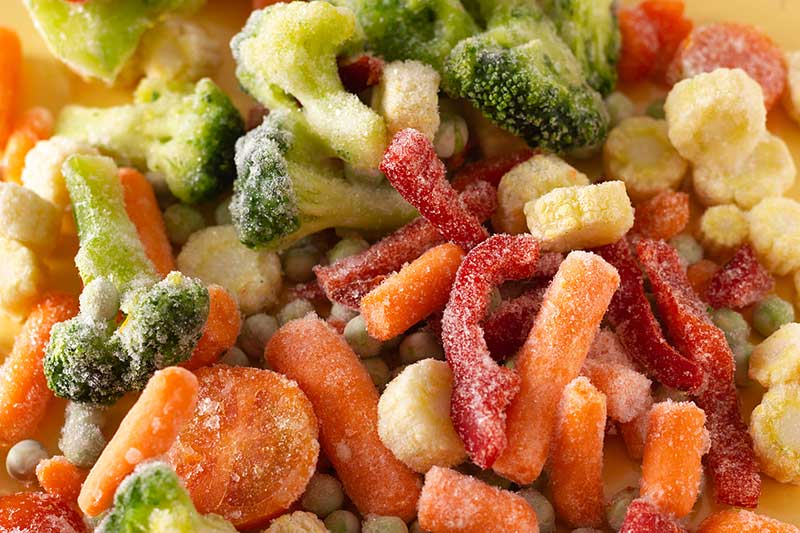
The “Right Way” to Prepare Frozen Veggies
Fresh vegetables are pretty straight forward: they can be steamed, boiled, broiled, roasted, blanched, air fried, or even eaten raw, and they’ll still probably taste pretty good no matter what you do.
While it’s pretty difficult to go wrong with raw fresh vegetables, the process of perfecting frozen vegetables can have more of a learning curve.
Here are the best ways to prepare frozen vegetables:
Oven-Roasted
Preheat the oven to 400 degrees F (204 degrees C), coat the pan with olive oil, and add your frozen veggies. Drizzle an extra bit of oil over the top and roast them for 20-25 minutes. Flip them halfway through cooking.
Steamed in the Microwave (when done right)
Few can resist the convenience of simply poking a few holes in a bag of frozen cauliflower and tossing it into the microwave…your veggies are ready in just minutes! However, microwaved frozen veg don’t have the best reputation and they can end up being a wet, soggy mess if not done correctly.
To avoid this, the trick is to cook them for the shortest amount of time and then check them again before adding more time in 30 second increments. Once your veggies are cooked, immediately drain the excess liquid from the bag so they don’t become water-logged. You can also steam them on the stove, but the microwave is the quickest.
Tip: Microwaving works best on firmer veggie like frozen cauliflower, broccoli, or green beans.
Stir-Fried
Place your frozen veggies directly into a hot pan over medium-high heat along with 1 tablespoon of oil. Some veggies that stir fry well are frozen cauli or cauli rice, broccoli, bell peppers, snap peas, mushrooms, zucchini, water chestnuts, and thinly sliced carrots.
Your frozen veggies will be cooked through in 3-5 minutes. Add sauces and seasonings just before serving.
Sautéed
Add 1 tablespoon of oil to a pan over medium heat, then add the frozen vegetables and cook for 5-7 minutes until heated thoroughly, stirring often.
Frozen veggies that sauté well by themselves are leafy greens like spinach and kale. Frozen greens are already softer in texture so sautéing them won’t make them unbearably mushy
Grilled
Frozen veggies can be grilled just like fresh vegetables can. All you need is a vegetable grilling basket or a wad of tin foil to place the vegetables in so they don’t slip through the grill. Add a splash of oil and grill them at a medium-high heat until fully warmed. Make sure to turn the veggies once in a while to prevent sticking and burning.
Frozen bell peppers, onions, Brussels sprouts, asparagus, artichokes, broccoli, and cauli are all options for grilling.
Now that we’ve covered the right way to do it, let’s quickly note the wrong way to prepare frozen veggies.
Ways to AVOID Preparing Frozen Veggies
Boiling or Blanching
Frozen veggies are less firm than fresh ones, so they get limp and lifeless very easily when boiled or blanched. Save these methods for preparing your fresh vegetables, instead.
Over-Steamed
Frozen produce can be easily over-steamed either in the microwave or on the stove. To avoid this, use the tips mentioned above to get perfectly steamed veggies that you’ll actually want to eat!
Raw
Not all frozen vegetables have been “pre cooked” and many are not “ready-to-eat” unless you heat them first. For safety reasons (and texture reasons) be sure to cook your frozen veggies before eating them.





Tips & Tricks for Frozen Veggies
In order to get the most out of your frozen vegetables, here are some more tips you can use as you experiment in the kitchen:
- Soups, stews, casseroles, noodle-based meals, and side dishes (as well as other dishes with a “squishier” texture) are the best ways to use frozen vegetables.
- Cook most frozen veggies while they’re still frozen—don’t allow them to totally thaw out before heating them. Thawed frozen veggies tend to absorb excess water, balloon up, and get mushy after they’re cooked.
- Don’t overcook them—they can get very limp and soggy, so watch them carefully and check them often to be sure you don’t overheat them! As a general rule, frozen veggies only need about half the cook time as their fresh counter parts do.
- Avoid freezer burn—if you don’t finish off a bag of frozen vegetables in one sitting, you’ll want to place the remaining still-frozen vegetables into a well-sealed freezer bag to avoid freezer burn that will render them un-eatable.
- Be strategic about re-freezing frozen vegetables. While any frozen vegetable can be re-frozen after being left out to thaw, not all of them should be. Veggies like broccoli, corn, peas, spinach, and kale will re-freeze well (just be sure to get an air-tight seal) but the taste and texture of veggies like asparagus, celery, and cucumber will be compromised after being re-frozen and eventually cooked.

Leave a Reply