


The timing of your last meal matters more than most people realize. For people with type 2 diabetes and prediabetes, eating late at night can raise fasting blood sugar, disrupt sleep, worsen insulin resistance, and make blood sugar control harder the following day.
So what time should you actually stop eating? Here’s what the research says.
Why Late Night Eating Affects Blood Sugar
Your body’s ability to handle glucose throughout the day is based on your insulin sensitivity.
Insulin sensitivity is how effectively your body’s cells respond to insulin, the hormone that helps glucose to move from the bloodstream into the cells to be used for energy.
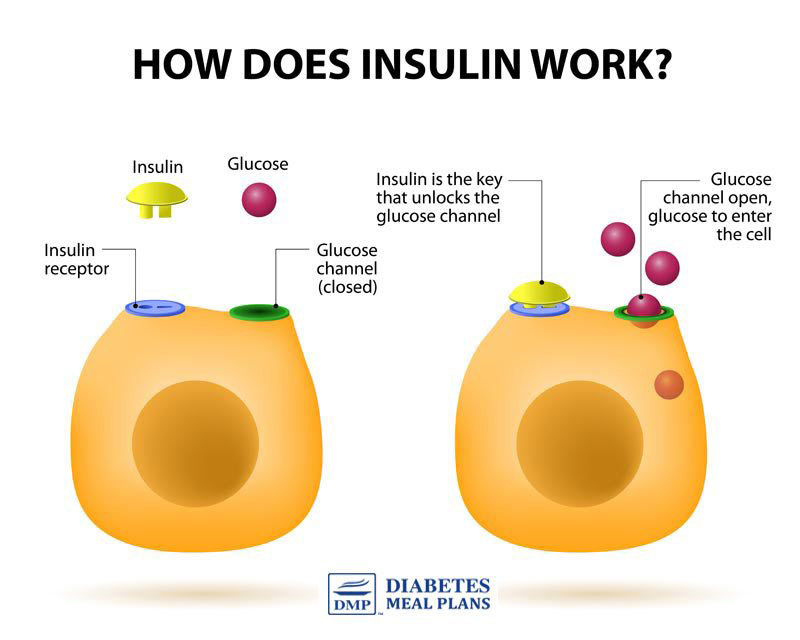
Your ability to handle glucose generally declines later in the day. Insulin sensitivity and glucose tolerance tend to be poorer in the evening, which means the same meal can produce a larger glucose response at night than earlier in the day.
Late eating also interferes with your body’s natural overnight repair and fasting period. When you eat close to bedtime, your blood sugar is still elevated as you fall asleep.
When you eat close to bedtime, digestion and glucose absorption can continue into the night. Because glucose tolerance is generally poorer later in the day, this can lead to higher overnight glucose exposure and, in some people, higher morning readings.
Cortisol and other hormones that naturally rise in the early morning hours, known as the dawn phenomenon, add to this effect.
If glucose remains elevated overnight after a late meal, the normal early-morning hormonal changes associated with the dawn phenomenon can make the resulting morning blood sugar reading even more difficult to manage.
What Time Should Diabetics Stop Eating?
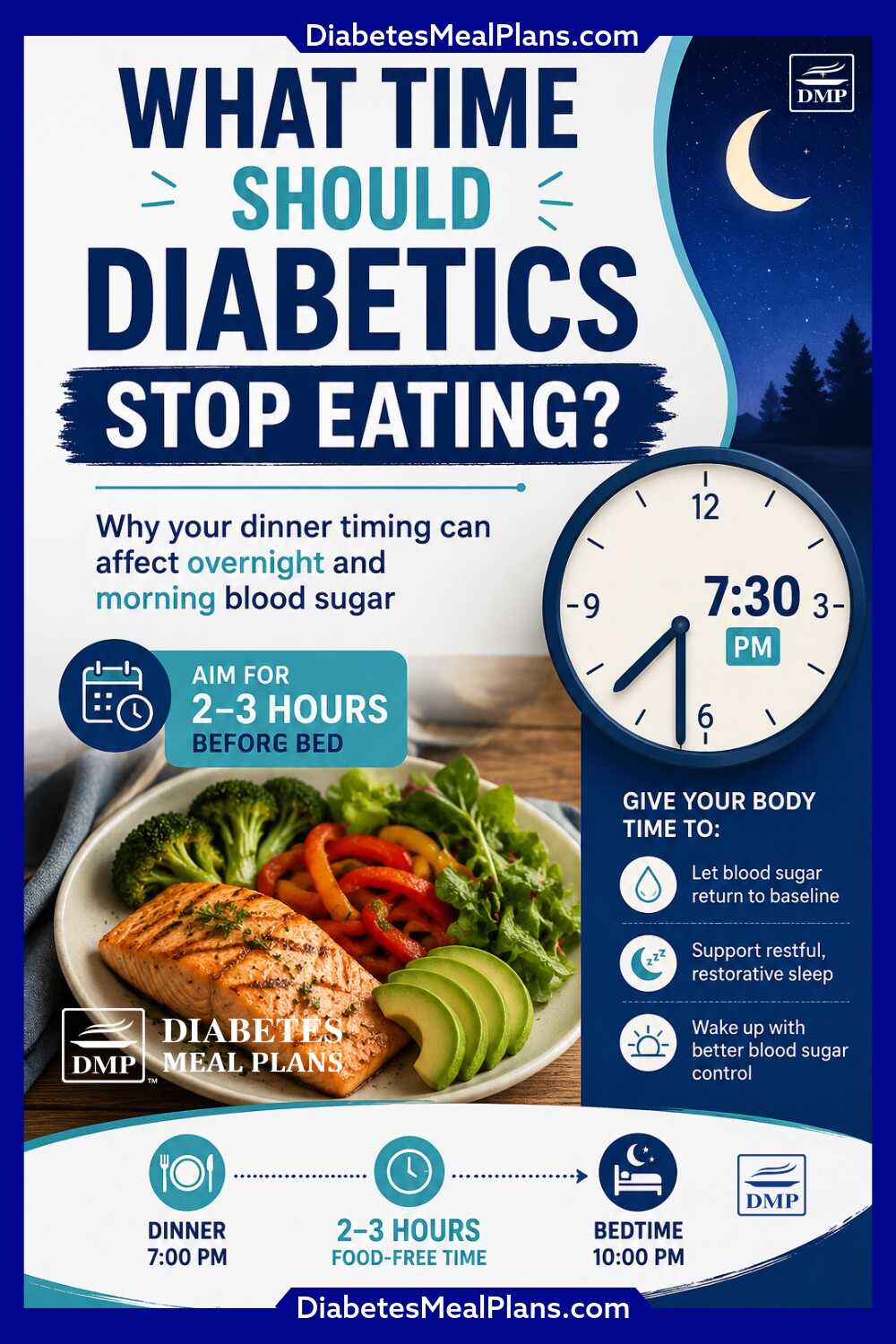
As a practical starting point, aim to finish dinner around 2–3 hours before bed rather than eating immediately before sleep. So, if you usually go to bed at 10 pm, try to finish dinner by around 7–8 pm.
Although there isn’t one scientifically established cutoff that applies to everyone, research generally favors earlier evening eating.
This window gives your digestive system time to process the meal, allows blood sugar to return toward baseline before sleep, and supports the natural overnight fasting period your metabolism relies on.
Research into time-restricted eating also suggests that consolidating food intake into a consistent daytime eating window and allowing a longer overnight period without food may improve glucose regulation and insulin sensitivity in some people. Earlier eating windows generally appear to have greater metabolic benefits than later ones.
So, what tome should diabetics stop eating?
→ Stop eating 2–3 hours before bed.
→ If bedtime is 10 pm, finish dinner around 7–8 pm.
→ Avoid eating again after dinner where possible.
→ An approximately 12-hour overnight food-free period is a reasonable additional goal.




What You Eat at Night Matters Too
The timing of your last meal matters, but so does the composition of it. A high carbohydrate dinner produces a much larger blood sugar rise than a meal built around protein, vegetables, and healthy fats.
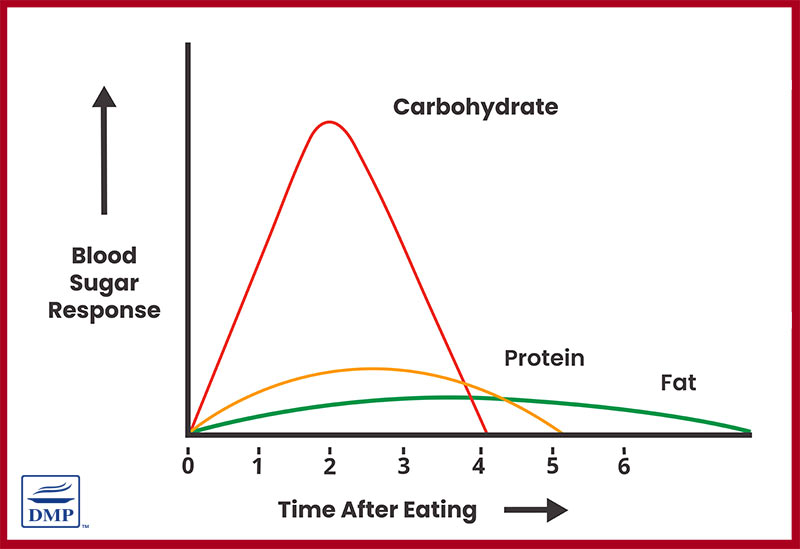
Reducing carbohydrates at your evening meal is one of the most effective steps you can take for improving morning blood sugar.
A dinner built around protein, non-starchy vegetables and healthy fats generally contains much less glucose-raising carbohydrate and can therefore produce a smaller post-meal and overnight glucose response.
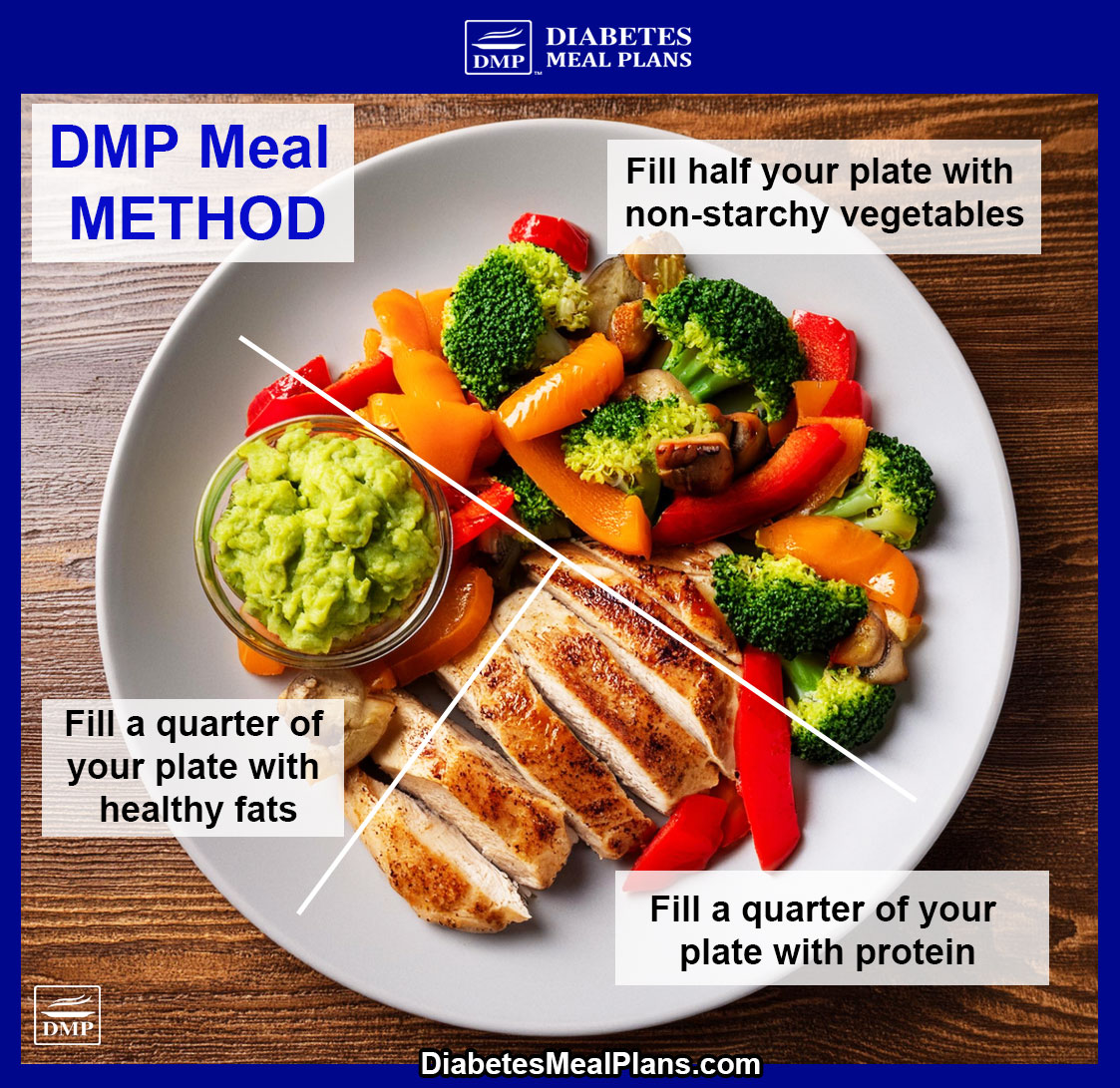
Knowing how many carbs to have per meal gives you a practical target to work within at dinner.
For some people, keeping carbohydrates lower at dinner can also improve overnight and morning glucose readings. Monitoring your own response is the best way to see whether this strategy makes a difference for you.
Late Night Snacking
Late night snacking is one of the most common habits that disrupts blood sugar overnight. Snacking after dinner, especially on high carbohydrate foods, keeps blood sugar elevated through the night and suppresses the overnight fasting period your body needs.
If you find yourself hungry after dinner, it is often a sign that your meals are not providing enough protein and fat to keep you satisfied. Building more substantial, nutrient-dense meals during the day reduces the urge to snack at night. Our guide to foods that lower blood sugar gives you the best options to build satisfying meals around.
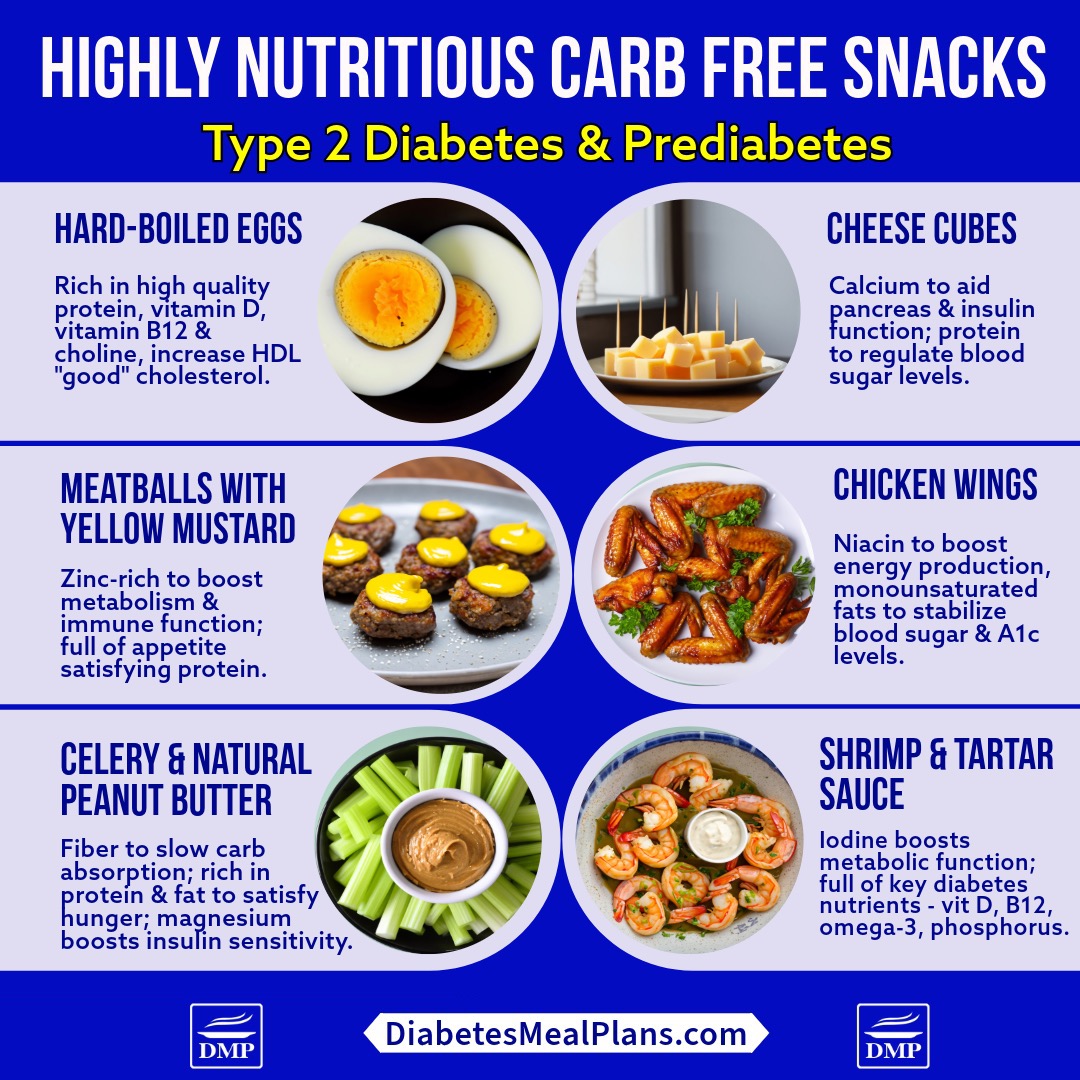
If you genuinely need something, choose a small protein-rich, lower-carbohydrate option such as an egg, cheese or a small handful of nuts.
In one randomized study in people with type 2 diabetes, a low-carbohydrate egg snack produced a better morning glucose response than a higher-carbohydrate bedtime snack — but having no bedtime snack performed just as well overall.
The Connection to Sleep
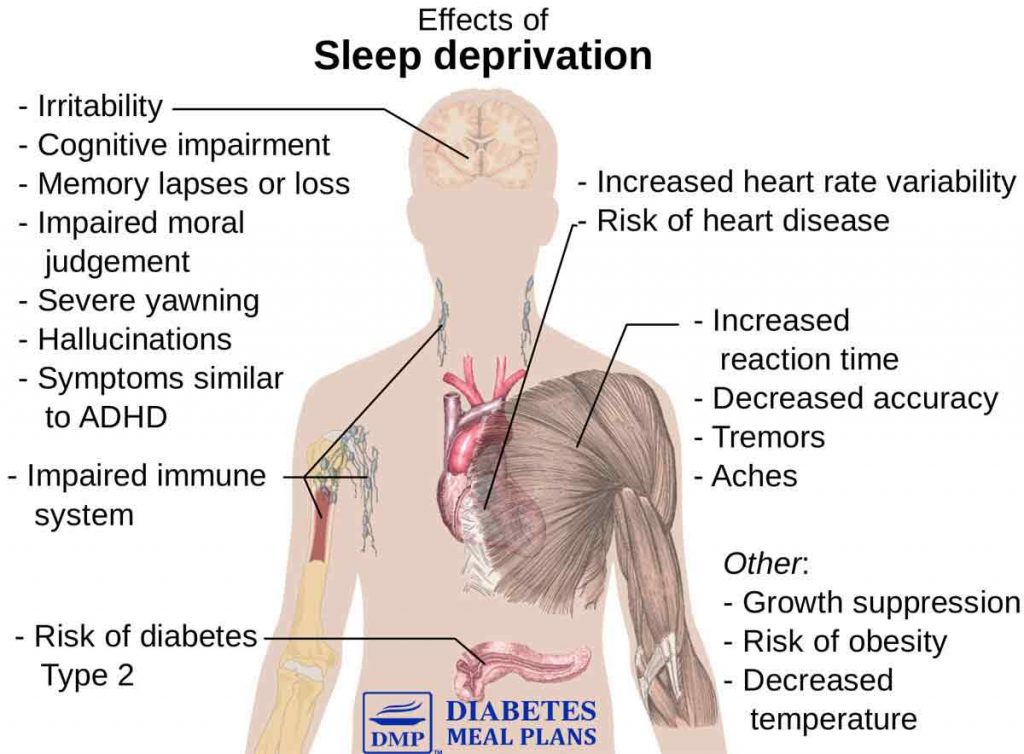
Sleep quality and blood sugar are closely linked in both directions. Poor sleep raises cortisol, which raises blood sugar and worsens insulin resistance the following day.
Eating late can also make sleep quality worse, which in turn makes blood sugar harder to control.
Getting your last meal in earlier in the evening gives your body more time to settle before sleep, supports deeper and more restorative sleep, and sets your blood sugar up better for the following morning.
Practical Tips
When practical, eat dinner earlier and avoid routinely eating close to bedtime. Aim for 2-3 hours before bedtime.
Keep dinner lower in carbohydrates and higher in protein and fat. Avoid unnecessary bedtime snacks. If hunger is a problem, focus on making lunch and dinner more filling rather than reaching for food late at night.
Use monitoring to test the impact of different dinner timings on your morning fasting readings. Most people are surprised by how much a simple change in meal timing improves their morning numbers.
Combine earlier eating with a short walk after dinner. Research in people with type 2 diabetes shows that even 10 minutes of walking after a meal can reduce post-meal glucose, with particularly strong benefits seen after the evening meal.
John Christ
I have the opposite problem. My blood sugar drops overnight and frequently is in the 60’s or 50’s by morning. So I need to eat a snack before bed.