


Table of Contents[Hide][Show]
Sugar is addictive! You probably know this is true from your own experience. And that sugar addiction is not imagined!
Neuroscientist, Dr Eric Stice, has done several studies on the brain showing that the same ‘addiction’ receptors are activated when we consume sugar as they are if we consume cocaine.
So, if you’re finding it extremely difficult to give up that sweet tasty stuff, you know it’s not just your lack of willpower!
So why is the sweet stuff so bad?
We Eat Far Too Much Sugar
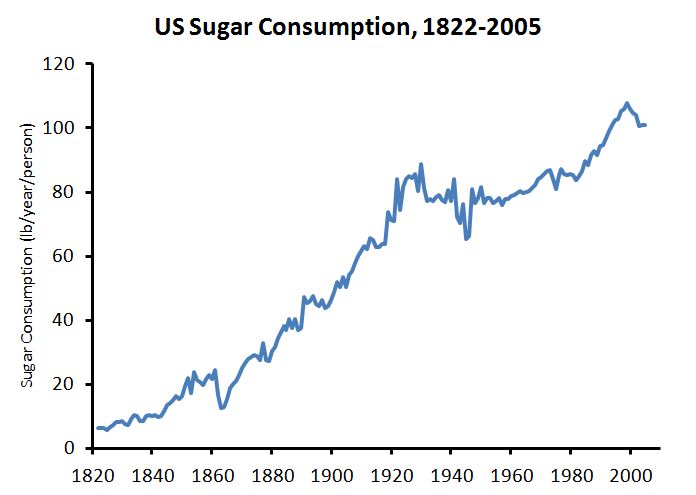
In 1776 people only consumed around 4 pounds sugar per year! Then around 100 years ago people only consumed 10 pounds of sugar per year. Now, each day, the average American’s added sugar intake is estimated to be 17 teaspoons, which equals about 57 pounds (27 kg) of sugar per year!
The World Health Organization recommends the ideal intake of sugar is below 5% of daily energy intake, or roughly 25 grams (6 teaspoons) per day.
Where does all this sugar come from? Processed and packaged foods, with majority of grocery store items sugar-filled!

The primary source of added sugar across the world, is cereals and cereal-based products.
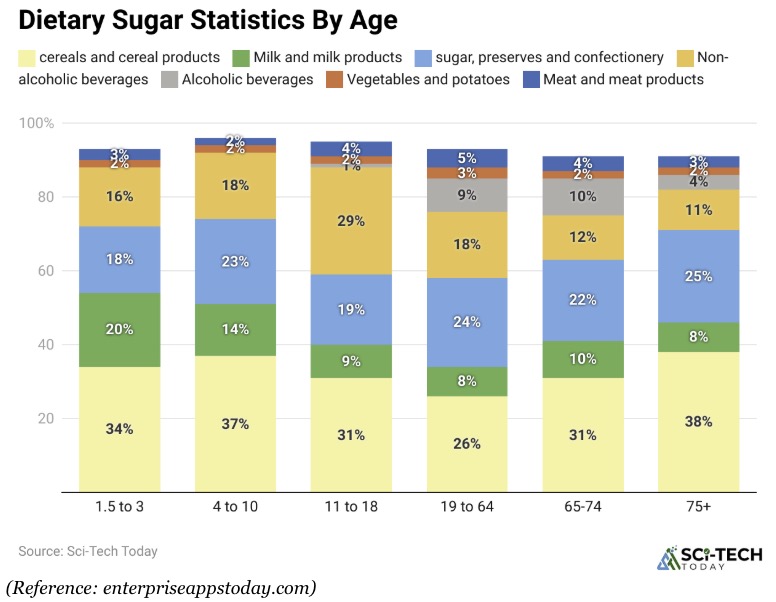
Cereals clearly refers to breakfast cereals, which are notoriously high in sugar.
Cereal-based products refers to anything made with flour—biscuits and cookies, pastries and pies, cakes and muffins, pancakes, waffles, breads etc—processed foods made from wheat, rice, corn, oats, barley, rye, or similar grains.
Fructose is a MAJOR Issue For Metabolism
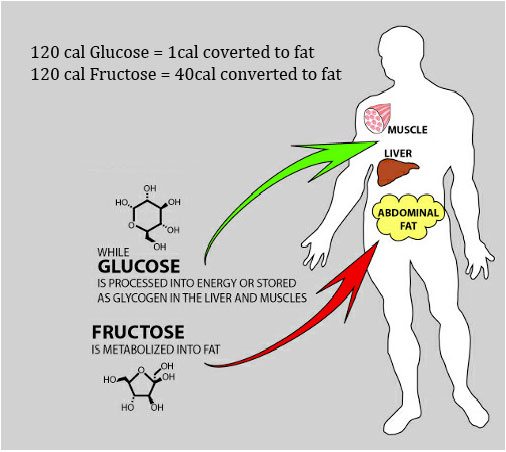
Biochemically, sugar is made up of glucose and fructose—half glucose / half fructose. While glucose is used by nearly every cell in the body, fructose is metabolized almost entirely by the liver, where it can trigger a cascade of harmful effects when consumed in excess.
A metabolic disorder occurs when abnormal chemical reactions in your body disrupt this process. When this happens, you might have too much of some substances (added sugar) or too little of other ones that you need to stay healthy.
You can develop a metabolic disorder when some organs, such as your liver or pancreas, become diseased or do not function normally. Diabetes is an example.





6 Proven Ways Sugar Harms Your Body
Most people know we eat too much sugar—but many don’t realize just how deeply it impacts the body.
Hidden in processed foods, drinks, and even so-called “healthy” snacks, sugar—especially in its refined form—is silently driving some of the most serious chronic diseases of our time.
1. Drives High Cholesterol
We’ve long been told to fear fat, but it’s sugar—not dietary fat—that often drives up cholesterol.
Excess fructose intake has been shown to increase fat production in the liver (hepatic de novo lipogenesis), which leads to higher levels of triglycerides, total cholesterol, and atherogenic cholesterol particles such as small, dense LDL particles and VLDL. These are the ‘bad’ types of cholesterol most closely linked with cardiovascular risk.

In fact, when people reduce sugar and refined carbohydrates in their diet, studies consistently show improvements in cholesterol levels/lipid profiles—even when dietary fat intake is increased.
Key takeaway: Reducing sugar can improve cholesterol far more effectively than cutting fat. Yet the opposite outdated advice is often still dished out by doctors and dietitians!
2. Promotes Fat Storage and Weight Gain

One of sugar’s most insidious effects is its ability to drive fat storage, especially visceral fat—the dangerous kind that wraps around your organs.
When you consume sugar, any glucose not used for immediate energy is stored as glycogen. But once glycogen stores are full, the excess is converted into fat through lipogenesis.
Fructose, in particular, bypasses the body’s energy regulation system, promoting fat gain more efficiently than glucose.
Research shows that high sugar intake—especially from sugar-sweetened beverages—is strongly linked to increased body weight, waist circumference, and obesity rates.
Key takeaway: Sugar doesn’t just add empty calories—it fundamentally shifts your metabolism toward fat storage.
3. Increases Insulin Resistance
Insulin resistance is the invisible cause of prediabetes and type 2 diabetes—and sugar plays a key role in its development.
Fructose consumption directly increases fat accumulation in the liver, which interferes with insulin signaling pathways. Over time, the pancreas has to produce more and more insulin to manage blood sugar levels, setting the stage for insulin resistance.
Even before blood sugar levels rise, this hidden insulin dysfunction is already at play—often for years. This is why reducing sugar is one of the most powerful steps you can take to prevent or improve insulin resistance.
Key takeaway: High sugar intake silently drives insulin resistance long before diabetes is diagnosed.
4. Elevates Inflammation
Chronic inflammation is now known to underlie nearly every major lifestyle disease—from heart disease to Alzheimer’s—and sugar is a significant contributor.
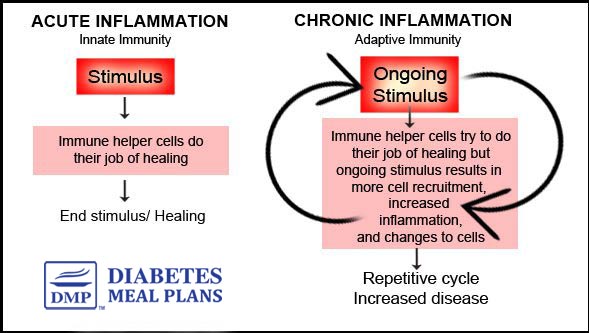
Excess glucose and fructose intake raise circulating levels of inflammatory markers like CRP (C-reactive protein), IL-6 and TNF-alpha.
Fructose also increases the production of advanced glycation end products (AGEs), which damage cells and promote systemic inflammation.
The continuous bombardment of refined sugar acts as a constant internal irritant, leading to oxidative stress, cellular dysfunction, and damage to the lining of blood vessels.
Key takeaway: Sugar fuels inflammation at the cellular level, making nearly every health condition worse.
5. Accelerates Fatty Liver
Unlike glucose, fructose is primarily metabolized by the liver—and excess intake directly leads to fat accumulation in liver cells, even in people who are not overweight.
This condition, known as non-alcoholic fatty liver disease (NAFLD), is now the most common liver disorder worldwide and is strongly associated with metabolic syndrome.
One of the most compelling studies in children showed that cutting added sugar—without changing total calories—led to significant reductions in liver fat in just 10 days.
Key takeaway: Excess fructose is a direct driver of fatty liver, even without weight gain.
6. Develops Prediabetes & Type 2 Diabetes
There’s no longer any doubt: excessive sugar intake is a key driver of prediabetes and type 2 diabetes.
In that same study of children mentioned above, a dramatic reduction in sugar (from 28% to 10% of total calories) produced incredible results, in just 10 days:
- Fasting blood sugar dropped
- Insulin levels fell by 33%
- Blood pressure improved
- Liver enzymes and cholesterol improved
This is not an isolated finding. Multiple studies show a direct relationship between high intake of added sugars—especially from sugary drinks—and the risk of developing prediabetes and type 2 diabetes.
Key takeaway: Sugar isn’t just a contributor to diabetes—it’s one of the central causes.
Final Thoughts
Quitting sugar isn’t easy. It’s addictive, hidden in many foods, and socially normalized. But the science is clear—cutting back on sugar can dramatically reduce your risk for chronic diseases and improve nearly every marker of metabolic health.
The real tragedy? Many dietary guidelines still downplay sugar’s role while continuing to vilify fat. It’s time to change that narrative. And it starts with awareness—yours.
Your health isn’t driven by willpower alone—it’s about informed choices. And knowing the truth about sugar puts you in the driver’s seat.
Please share, pin, or tweet this post – lots of people need to know the realities of sugar. Thanks :)

Leave a Reply