


Table of Contents[Hide][Show]
- LISTEN TO THE PODCAST
- Post-Meal Blood Sugar Rises: What’s Normal and What’s Not
- Why Fasting Blood Sugar Can Stay High
- Blood Sugar vs A1c: Two Measures, Two Purposes
- Why A1c Can Fluctuate Even When Habits Don’t Change
- Struggling with Blood Sugar While Using Insulin
- Food Myths and Monitoring Tools: What Actually Matters
- How to Monitor Blood Sugar
- Early Nerve Symptoms and When to Pay Attention
- Transcript
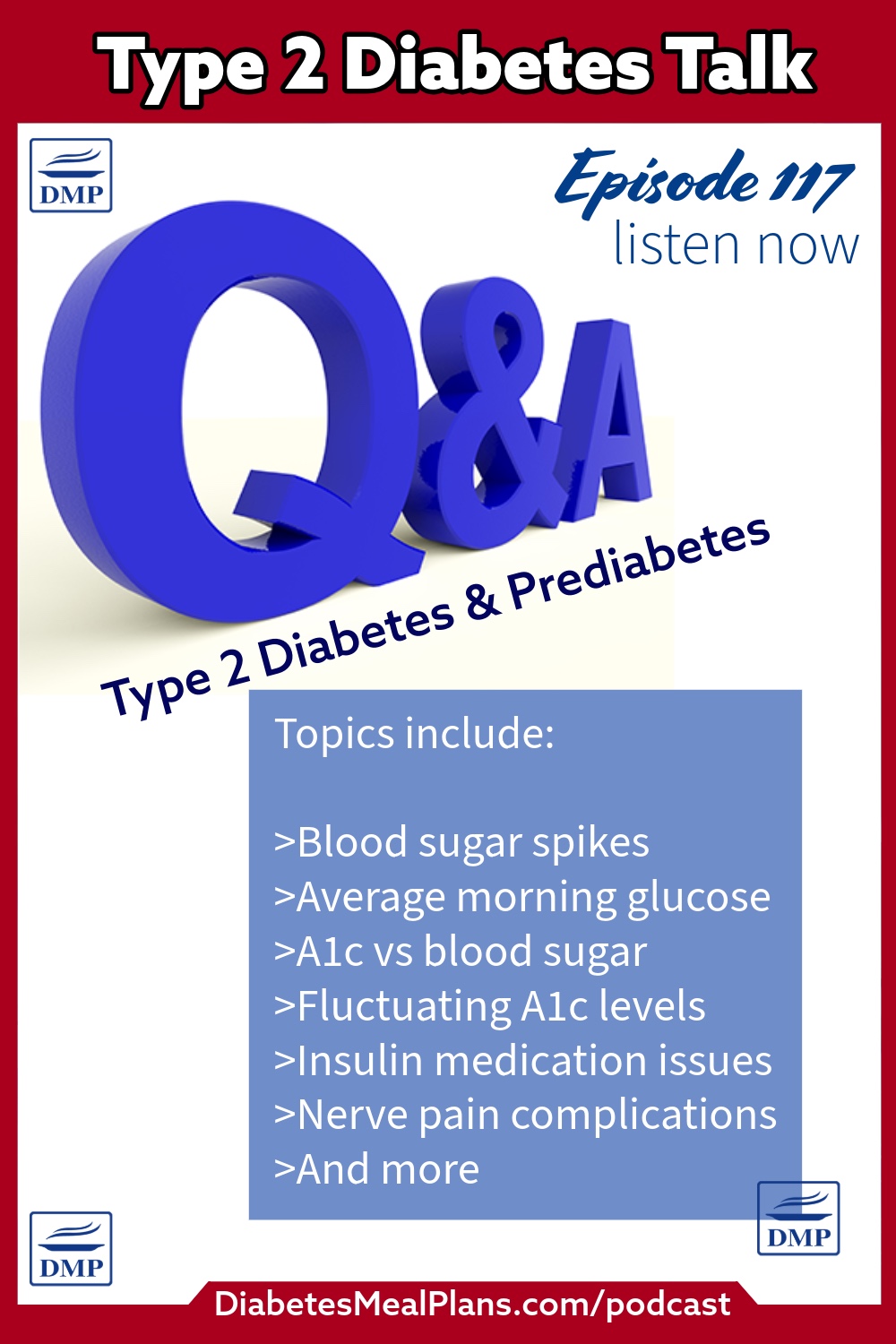
In this episode, Dr Jedha answers real listener questions about blood sugar, A1c, CGM readings, fasting glucose, and diabetes complications. You’ll learn how to interpret your numbers properly, what’s normal, what matters most, and where to focus your efforts for better long-term control.
LISTEN TO THE PODCAST
Support the podcast by leaving a 5-star rating and review on Apple, Spotify or our Website – Thank You!
Post-Meal Blood Sugar Rises: What’s Normal and What’s Not
One listener shared that she lowered her A1c from 7.2 to 5.2 but still saw her blood sugar rise after eating, even after cutting back on rice and pasta. This situation is very common.
A rise after eating is normal. Every time you eat, glucose enters the bloodstream. This happens in people with diabetes, prediabetes, and normal metabolism. What matters is not whether blood sugar rises, but how high it goes and how long it stays elevated.
A temporary rise followed by a return toward baseline is how the body is designed to work. Persistent elevation that lingers for hours is the real concern.
If your A1c has dropped into the low-5 range, that tells us your body is clearing glucose effectively overall. One practical step is to stop fixating on individual spikes and instead look at patterns: does your blood sugar come back down within a reasonable timeframe? If it does, your approach is working.

Why Fasting Blood Sugar Can Stay High
High morning fasting glucose is another major frustration, even when daytime numbers look good. This pattern is often driven by the dawn phenomenon.
In the early morning hours, hormones like cortisol and glucagon rise to help you wake up. In people without diabetes, insulin rises alongside them to keep glucose stable. In prediabetes and type 2 diabetes, this insulin response is often blunted, allowing the liver to release glucose and push fasting levels higher.
While fasting glucose does affect A1c, an A1c above 7% usually reflects broader insulin resistance, particularly in the liver. Improving fasting glucose isn’t about “fixing mornings” alone, it’s about improving metabolism overall.
One key step to improve fasting levels is to look at the full day: evening meals, late-night snacks, total carbohydrate intake, sleep quality, stress levels, and exercise timing all influence morning glucose.
Blood Sugar vs A1c: Two Measures, Two Purposes
Confusion around blood sugar versus A1c is extremely common.
Blood sugar is a snapshot. It shows how much glucose is in your bloodstream at a specific moment. This is what you see on a finger-prick meter or CGM.
A1c reflects your average blood sugar exposure over roughly three months. It does not show daily fluctuations. Both measures are valuable, but they tell different parts of the story.
Daily glucose monitoring helps you see how food and lifestyle choices affect you in real time. A1c shows whether those daily patterns are improving your long-term risk. When the two don’t seem to align, it usually means you’re missing context, not that one of them is “wrong.”
Why A1c Can Fluctuate Even When Habits Don’t Change
Several listeners described A1c moving between values like 5.5 and 5.9 despite consistent routines. This is normal.
A1c is influenced by more than glucose alone. Stress, poor sleep, illness, inflammation, pain, and seasonal changes can all shift averages. Iron levels, vitamin B12 status, and red blood cell lifespan also affect A1c results.
The key takeaway is to focus on trends over time, not single lab results. Small shifts don’t undo your progress, they’re a signal to consider the broader picture of health.
Struggling with Blood Sugar While Using Insulin
Managing blood sugar while using insulin can feel discouraging. While insulin lowers glucose short-term, it does not correct insulin resistance. In type 2 diabetes, increasing insulin can sometimes worsen resistance over time, leading to a cycle of rising doses and stubborn numbers.
The encouraging news is that insulin does not mean you’re stuck. Blood sugar still responds strongly to nutrition, carbohydrate intake, meal timing, activity, and weight changes. Many people are able to reduce insulin requirements by improving metabolic health, even if insulin remains necessary initially.




Food Myths and Monitoring Tools: What Actually Matters
A common myth addressed in this episode is that venison is “bad” for diabetes. It isn’t. Venison is a lean protein and has minimal impact on blood sugar. Protein does not raise glucose the way carbohydrates do. Venison is perfectly fine to eat with diabetes.
How to Monitor Blood Sugar
When it comes to monitoring, both finger-prick meters and CGMs can be effective.
CGMs provide continuous trend data, while finger-prick testing offers targeted snapshots. The best option is the one you’ll use consistently to guide decisions.
Early Nerve Symptoms and When to Pay Attention
Toe or foot nerve pain can be related to diabetes, but it’s not something to self-diagnose. Nerve symptoms often become noticeable at night, but many conditions can cause similar sensations.
What matters most is long-term glucose exposure. When blood sugar improves early enough, nerve symptoms can stabilize or even improve. You can also use natural treatment strategies for neuropathy.
Transcript
Click Here To View
Hello wonderful people and thanks for joining me for episode 117.
Today’s episode is a Q&A, and the questions you’ll hear are ones I think many people will relate to. They highlight some of the most common areas of confusion around blood sugar, A1c, CGM readings, fasting levels, and complications, so my goal today is to help shed some light on these questions and bring clarity, context and understanding.
If you’re one of our members and have questions, you can search our huge members library or bring your questions to the monthly member check in where you can get direct support from me and our expert nutrition team. For our listeners with questions, head to Type2DiabetesTalk.com/message to send in your question.
Ok, let’s get into the first question.
Debora asked: I have lowered my A12c from 7.2 to 5.2 but when I eat my sugar goes up. I’ve almost given up rice pasta etc what else can I do?
Debora, this is a really important point to clear up. It is completely normal for blood sugar to rise after eating. That rise does not mean something is going wrong. Every time we eat, glucose enters the bloodstream. Even in people without diabetes, blood sugar goes up after meals. The difference is not the rise itself, it’s how high it goes and how quickly it comes back down.
Your A1c of 5.2 tells us your overall blood sugar exposure is now low. That means, on average, your body is handling glucose well. Seeing a rise after meals doesn’t cancel that out. It is perfectly normal for blood sugar to rise after meals and fluctuate daily, it is never going to be one constant number, that’s not the way blood sugar works.
What we don’t want is blood sugar staying high for hours, or climbing higher and higher across the day. A temporary rise after a meal followed by a return toward baseline is normal, that’s how the body works.
So the key message is this: post-meal rises are expected. Persistent elevation is the problem, not the rise itself. If you’ve lowered your A1c from 7.2 to 5.2, you’ve already demonstrated that your blood sugar is coming back down effectively, so whatever you’re doing, keep on doing that as it’s working!
Tom said: I do a pretty good job of controlling my post- prandial numbers but I can’t budge my morning fasting numbers. My average numbers in the morning are 150+. I always have a spike in the morning. My last A1C was 7.1. I take metformin only. I feel that if I could solve the morning problem, I could get that down.
What you’re describing is a classic morning fasting rise, often called the dawn phenomenon. In the early morning hours, hormones like cortisol and glucagon rise to help the body wake up. In someone without diabetes, insulin automatically rises to keep glucose stable. In type 2 diabetes, that insulin response is blunted so the liver releases glucose and blood sugar climbs higher, before you even eat.
Fasting glucose can have an influence on A1c. If your mornings start high every day, it keeps that average elevated even if meals are well controlled. But your A1c is at 7.1% and you’re taking Metformin so that’s still quite high. A1c reflects 24-hour glucose exposure over ~3 months. It is rare that fasting glucose alone explains an A1c of 7.1 if post-meal glucose truly stays in range all day. It points to persistent insulin resistance, certainly liver insulin resistance and liver glucose output. But let’s just say that if we focus on the morning numbers. Well, fasting numbers improve when overall insulin resistance improves, particularly liver insulin resistance, and when overall metabolism improves.
That means looking at things like total daily carbohydrate load, nutrition and food quality, evening eating patterns and late snacks, sleep quality and stress (both strongly affect morning glucose), exercise timing, supplements, and, in some cases, timing or dose of metformin. There’s actually a lot you can do and we’ve covered some morning blood sugar information in episode 38 so I’d recommend listening to that. If you’re one of our members, you can find a detailed Healthmap that walks you through the most effective strategies to lower fasting levels.
Elliot said: A1c vs Blood Sugar I could not understand what you were saying – it was very unclear. Sorry.
What Elliot is referring to is episode 74 where I covered the difference between A1c and blood sugar. So firstly, don’t be sorry Elliot. The episode did cover things quite clearly but it can just take some time to wrap your head around things, especially at first.
Blood sugar and A1c – these both measure the same thing but in a different way. Blood sugar, also known as blood glucose, is the amount of glucose circulating in your bloodstream at a given moment. This is tested with a finger prick monitor or CGM and it tests your day to day blood sugar levels.
A1c, also referred to as hemoglobin A1c, HbA1c, or glycated hemoglobin, is a blood test that provides an average of your blood sugar levels over the past three months. This test is one that’s usually ordered by your medical doctor and tested via a blood draw at the pathology. A1c can’t measure day to day levels, but it measures the average glucose on your blood over three months. That’s the key difference.
Both tests are helpful. Because you do blood sugar monitoring on a daily basis, it provides immediate feedback on how your nutrition and lifestyle are affecting your body, so you can adjust things in real time. A1c gives you an assessment of your overall blood sugar control over a period of time. So essentially, if your daily blood sugar levels are within range, your A1c will be within range as well.
I’d recommend you go back and listen to episode 74 again, as it is explained in that podcast in detail, but perhaps this simpler explanation will also help you get your head around it.
Judith said: OK in December 2024 my hemoglobin was 5.5 and then in April when it was checked, it was 5.9. I started then eliminating high carbs, sugar, and anything else that could affect it. My exercise level has always been high. I do 10,000 steps a day and I do a lot of physical activity. In July 2025 the hemoglobin was back down to 5.5 continuing with exactly the same routine, then I had it checked in November and it’s back up to 5.9 and nobody can tell me why, can you?
Judith, this is actually a really common pattern, and it doesn’t mean you’re doing anything wrong.
An A1c moving between 5.5 and 5.9 can happen even when routines don’t change. A1c isn’t a fixed score, it’s an average that can shift with relatively small changes over a few weeks. Things like stress, poor sleep, illness, pain, inflammation, or even a busy or disrupted period of life can push average blood sugar up slightly without any obvious dietary changes. Seasonal changes can also play a role, many people see higher readings later in the year.
Another piece people aren’t told about is that A1c isn’t only influenced by glucose. Changes in iron levels, B12, or how long red blood cells circulate can move A1c up or down without a true change in day-to-day blood sugar. The key takeaway is this: your body clearly responds well and your A1c management looks good. These small rises don’t cancel out the work you’re doing. It might indicate you need a slight change in routine on some level. If anything, it’s a sign to look beyond carbs and steps and consider the bigger picture, sleep, stress, recovery, and trends over time, not one result in isolation.
Geeta said: I am diabetic type 2 on insulin and struggling to keep sugar levels down
I’m sorry to hear this, Geeta. And you’re certainly not alone, this is something I see a lot.
One of the challenges with insulin is that while it lowers blood sugar in the short term, it doesn’t fix the underlying issue. In many people with type 2 diabetes, insulin resistance is already high, and adding more insulin often makes that resistance worse over time. That can make blood sugar harder, not easier, to control. This often leads to a frustrating cycle: blood sugar rises, insulin is increased, numbers improve briefly, then creep back up again. It can feel like you’re constantly chasing your levels.
The good news is that insulin doesn’t mean you’re stuck. Blood sugar still responds very strongly to food choices, total carbohydrate intake, meal timing, physical activity and weight changes, even when insulin is being used. Many people are able to lower their insulin needs over time by addressing those factors and improving how their body responds to insulin. And even if you’re taking insulin, many people can work toward getting off it, or at least reducing dosages, which is ideal.
If you’re struggling despite being on insulin, it usually means the focus needs to shift away from simply adding more insulin and toward reducing insulin resistance and improving metabolism overall. This is something we work through step by step with members. It can take some focused effort but there is certainly always a way to improve numbers.
Dale said: I heard venison was not good for diabetic. Is this true?
Short answer: no — that’s not true.
Venison is actually a very lean source of protein and, on its own, it has virtually no impact on blood sugar. Protein does not raise blood glucose in the way carbohydrates do, so from a blood sugar point of view, venison is not a problem. In fact, there’s nothing about venison itself that makes it “bad” for diabetes. if you enjoy venison, go ahead and eat it, it’s a nutrient-rich healthy food.
Eileen asked: What is the best device to monitor my daily blood sugar levels?
Eileen, there are two main ways people with diabetes monitor their daily blood sugar:
1. Traditional finger-prick glucose meter
This is what most people think of first. You use a small lancet to prick your finger, put a drop of blood on a test strip, and the meter gives you a number. It tells you what your glucose level is right then — before a meal, after a meal, or any time you choose. It’s simple, reliable, and great for checking specific points in the day.
2. Continuous glucose monitor (CGM)
A CGM is a small sensor you wear on your skin that checks glucose levels every few minutes. It shows you trends — how your sugar is changing over the day and night — without repeated finger pricks. You can see how food, activity, stress and sleep affect your numbers in real time.
Both tools have value. Finger-prick meters give you data points when you need them and you can log those numbers to see trends over time. CGMs give you a broader picture of patterns and trends with automatic measurement over time. Both types of testing can achieve the same outcome.
Some people find CGMs especially useful for understanding how different meals or activities impact their glucose, but you can use finger-prick testing to do the same and keep a log. Finger-prick testing is generally cheaper than CGM monitoring. Either option can help you keep daily sugar levels under better control.
Before we get to our next question, let’s hear a testimonial from one of our members.
Sun asked: My CGM shows 1 hour after eating often over 8 mmol if I eat carbohydrates. But by 2 hours drops under 7.8. Am I prediabetic?
This is a really good question, Sun, and the short answer is: if your levels are normal at 2-hours post, you wouldn’t be diagnosed with prediabetes.
So here’s the thing. It’s completely normal for blood sugar to rise after eating carbohydrates. Even in people without prediabetes or diabetes, the 1-hour can rise and sometimes go over 8 mmol/L, which is 144 mg/dL. That early rise on its own doesn’t officially diagnose anything. If your blood sugar is coming back down by the 2-hour mark and is under 7.8 or 140, that tells us your body is clearing glucose effectively. That’s a good sign. Prediabetes isn’t diagnosed based on a single post-meal spike. It’s diagnosed using fasting glucose, A1c, or an oral glucose tolerance test — not CGM readings alone.
But, in episode 114, we did cover the potential importance of a one hour post-meal blood glucose test. According to research, if levels are frequently above 8.6 mmol/L or 155 mg/dL at that one hour mark, this could suggest higher risk of prediabetes and issues with metabolism, even if fasting glucose and A1c look great. It still doesn’t diagnose anything, but it could be worthwhile to pay more focused attention to your eating plan and lifestyle to ensure no issues develop down the track. Listen to episode 114 for more info about this.
Jim said: I’m starting to get toe nerve pain. It’s mainly when I lay down in bed and I have to get up. Is this a diabetes complication and why does this happen when I lie down?
Jim, toe or foot nerve pain can be related to diabetes, but it’s important not to jump straight to worst-case conclusions. Nerve pain linked to diabetes often shows up as tingling, burning, pins-and-needles, or sharp discomfort in the toes or feet. It can be more noticeable at night or when you lie down, partly because there are fewer distractions and you’re more aware of sensations. Changes in circulation and how nerves fire at rest can also make symptoms feel stronger when you’re in bed.
That said, not all toe or foot pain is diabetic nerve damage. Things like pressure on nerves, footwear, back or spinal issues, circulation changes, vitamin deficiencies, or even foot structure can cause similar symptoms. What matters most is blood sugar exposure over time. Nerve irritation tends to develop when glucose levels have been running high for prolonged periods of time. If blood sugar improves, especially early enough, nerve symptoms can stabilize and sometimes improve or even disappear, we commonly see this with our members.
So the answer is: yes, it can be diabetes-related, but it’s not something to self-diagnose. New or changing nerve symptoms are always worth discussing with your medical doctor or seeing a podiatrist so they can rule out other causes and check things like circulation, sensation, and nutrient status. The earlier this is looked at, the more options there are to slow or prevent progression. If it does turn out to be neuropathy, I covered natural treatment in episode 35.
That’s all for today. I hope today’s Q&A helped clear up some of the confusion and frustration that can come with blood sugar numbers. The big takeaway is this: trends matter more than single readings, and there is almost always a logical explanation even when it doesn’t seem obvious at first.
If you have a question, head to Type2DiabetesTalk.com/message to submit it. If you found this episode helpful, please share it with someone who might need it, and don’t forget to subscribe so you don’t miss future episodes.
Thanks for listening, and I’ll see you in the next episode.
Dr Jedha, over and out.

Subscribe to Type 2 Diabetes Talk on: Apple | Spotify | Amazon Music | Audible | YouTube | Podcast Index | Player FM | and more…
Leave a Reply