


Table of Contents[Hide][Show]
- What Are Pork Rinds Nutritionally?
- Why Low Carbohydrate Foods Help Blood Sugar
- Do Pork Rinds Affect Insulin Or Metabolism?
- Pork Rinds, Cholesterol, And Heart Health
- Can Pork Rinds Help Control Appetite?
- The Downsides To Keep In Mind
- So Are Pork Rinds Good For People With Diabetes?
- How To Include Pork Rinds More Wisely
- The Bottom Line
Pork rinds, also called chicharrones, have become a popular low carbohydrate snack, especially among people trying to keep blood sugar stable. But are they actually a good choice for people with prediabetes or type 2 diabetes?
Let’s walk through the nutrition, the blood sugar impact, and what the research tells us in a clear, practical way.

What Are Pork Rinds Nutritionally?
Pork rinds are made by frying or air puffing pork skin. The result is a crunchy snack that is almost zero carbohydrate, high in fat, moderate in protein, very low in fiber, and often high in sodium.
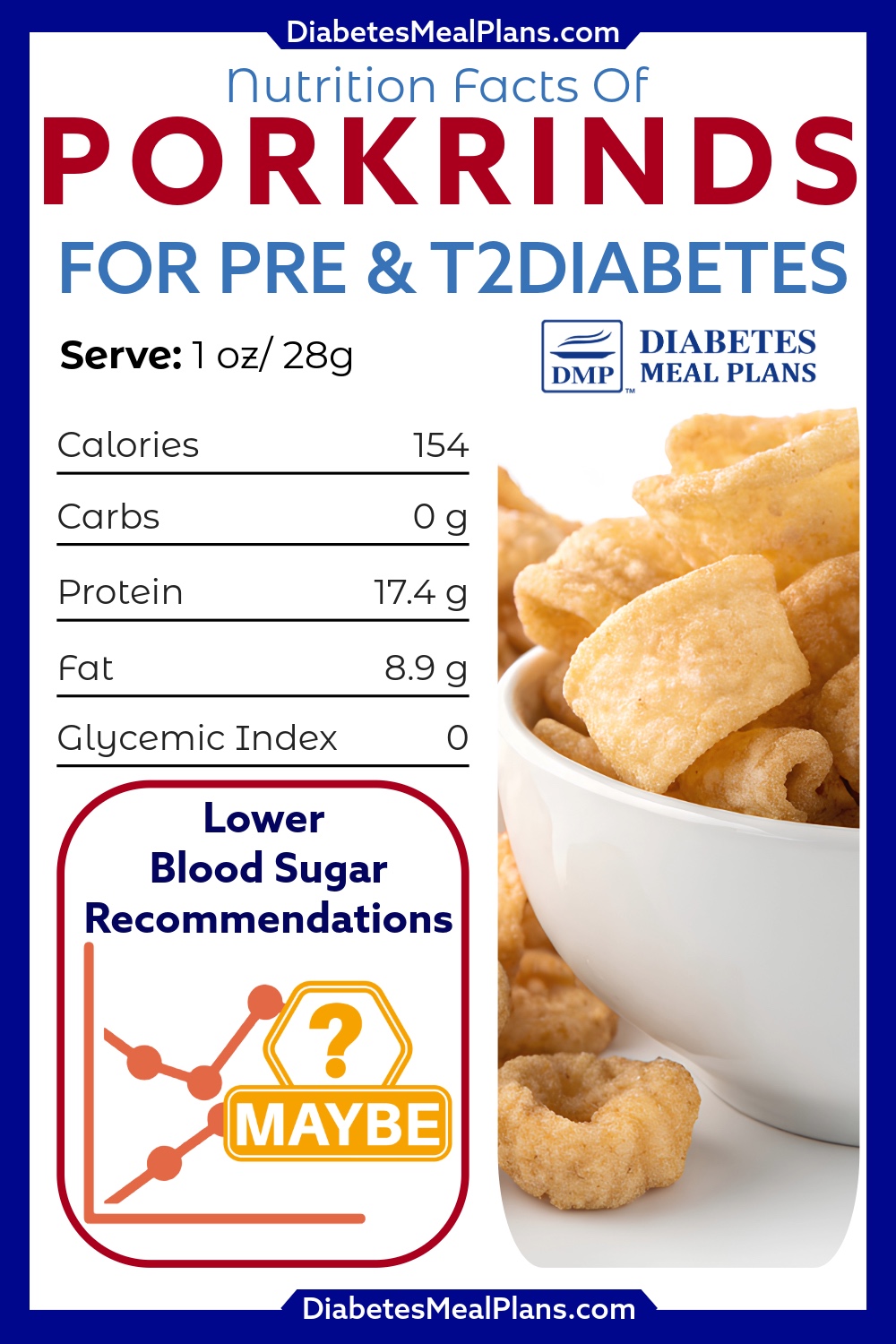
A typical one ounce or 28 gram serving:
- zero grams of carbohydrate
- 17.4g protein
- 8.9g fat
- 154 calories
From a blood sugar perspective, the lack of carbohydrate means pork rinds do not directly raise glucose levels. That’s why many people notice no spike after eating them.
Why Low Carbohydrate Foods Help Blood Sugar
Strong evidence shows that reducing carbohydrate intake improves blood sugar levels, A1c, insulin resistance, and triglycerides.
Multiple randomized controlled trials have shown that lower carbohydrate eating patterns outperform higher carbohydrate diets for blood sugar control in people with type 2 diabetes.
So in isolation, a zero carbohydrate snack like pork rinds will not worsen blood sugar. That’s a positive.
Do Pork Rinds Affect Insulin Or Metabolism?
Protein and fat do not spike blood sugar, but protein does stimulate some insulin release (minimal). This is a normal physiological response and not harmful. It helps move nutrients into cells and does not negatively impact metabolic health.
Pork rinds are a high protein food, which can help support a healthy metabolism.
That said, pork rinds do lack micronutrients (vitamins and minerals) that support metabolic health such as fiber, magnesium, potassium and antioxidants.
Large population studies consistently show that diets higher in whole foods like vegetables, nuts, seeds, and quality proteins are associated with better insulin sensitivity and lower cardiovascular risk.
So while pork rinds will not spike blood sugar or have a negative impact on insulin or overall metabolism, they are not an optimal nutrient dense food. Nutrient dense protein-rich foods like beef, chicken, and tofu are a better choice to improve your health.




Pork Rinds, Cholesterol, And Heart Health
Many people assume pork rinds are high in saturated fat. They actually contain more monounsaturated fat, which is considered a ‘heart healthy’ fat.
- Total fat: 8.9 g
- Monounsaturated fat: 4.2 g
- Saturated fat: 3.2 g
- Polyunsaturated fat: 1 g
Research suggests saturated fat affects people differently depending on insulin resistance, overall diet quality, and triglyceride levels. Many people see improvements in cholesterol markers when blood sugar control improves, even when fat intake increases.
There is no evidence to suggest pork rinds negatively impact cholesterol or heart health.
Can Pork Rinds Help Control Appetite?
High protein, low carbohydrate snacks tend to increase fullness and reduce hunger later in the day. Research shows protein improves satiety and can help prevent overeating.
For some people, pork rinds can help curb cravings, replace high carbohydrate snack foods like chips and crackers, and make it easier to stick to your diabetes eating plan.
If pork rinds help you avoid sugary or refined carbohydrate snacks, that is a positive shift.
The Downsides To Keep In Mind
Pork rinds are a processed food, contain no fiber, are often high in sodium, and are easy to overeat because they are calorie dense.
Fiber plays a major role in improving blood sugar control, supporting gut health, and lowering cardiovascular risk.
Because pork rinds contain no fiber, they should not replace whole food snack options like nuts, seeds, Greek yogurt, or vegetables paired with protein.
So Are Pork Rinds Good For People With Diabetes?
Pork rinds do not raise blood sugar and can help manage sugar cravings, but they do not provide much nutritional value and are best limited to small-moderate amounts, on occasion, not as an everyday food.
How To Include Pork Rinds More Wisely
If you choose to eat pork rinds, keep portions small, and pair them with fiber rich foods like guacamole, salsa or vegetables.

It’s also important to choose brands with no sugar and minimal additives.
The Bottom Line
Pork rinds will not spike blood sugar, which makes them a better option than reaching for junk foods like chips, especially when you crave that crunch.
Pork rinds offer a healthy dose of protein and a moderate amount of fat, which is appetite-satisfying; they provide little nutritional benefit in terms of vitamins and minerals.
If living with prediabetes or type 2 diabetes, pork rinds are fine to eat and enjoy, but they are not the best choice to rely on as an every day food.

Stephanie
I’ve watched my numbers go down as I eat pork rinds. It’s mind-blowing to watch.
I eat them with a meal as something crunchy, and it’s very helpful.