


Table of Contents[Hide][Show]
If you’re wondering how quickly can A1c change, the answer might surprise you.
A1c can begin to decrease within weeks when your average blood sugar improves. However, a test after three months gives a clearer picture of your progress.
Understanding this timing can help you set realistic expectations, and recognize the progress you’re making before your next blood test.
A1c Test Explained
A1c, also called HbA1c (short for hemoglobin A1c), measures the proportion of hemoglobin in your red blood cells that has glucose attached to it. Hemoglobin is the protein that carries oxygen around your body.
So in simpler terms we could say A1c measures ‘the amount of sugar on your blood.’
The more glucose circulating in your blood, the more attaches to hemoglobin.
Because red blood cells typically live for about 120 days, A1c reflects your blood glucose exposure over roughly the previous two to three months. However, those months don’t contribute equally: the most recent weeks have a greater influence on your result.
Think of A1c as a moving picture of your blood sugar over time. When your glucose levels improve, that picture starts changing, but it still includes some of your earlier, higher readings.
This explains why your glucose meter might show encouraging improvements before your A1c fully reflects them.





Can A1c Change in Two Weeks?
Yes, measurable changes can occur within two weeks, although an early result may show only part of the improvement.
In one study of people with type 2 diabetes following a change in oral diabetes medication, researchers measured A1c at two, four, eight, and 12 weeks.
Average A1c decreased from 8.7% at the start to:
- 8.6% after two weeks
- 8.4% after four weeks
- 8.2% after eight weeks
- 8.1% after 12 weeks
Something important to keep in mind here is this study examined medication changes, rather than nutrition and diet changes. With nutrition and diet changes, A1c reductions can be much greater over 12-16 weeks.
But this study demonstrates an important point: A1c doesn’t stay fixed for three months and then suddenly drop. It can change progressively as blood glucose improves.
An early test also shouldn’t be treated as your final result. If you’ve only recently changed your eating or lifestyle habits in the past two weeks, your A1c will still reflect the 10-12 weeks before you started, which means the result could still be high.
Can Changing Your Diet Lower A1c Within a Few Months?
Absolutely yes!
My T2Diet research provides a practical example.
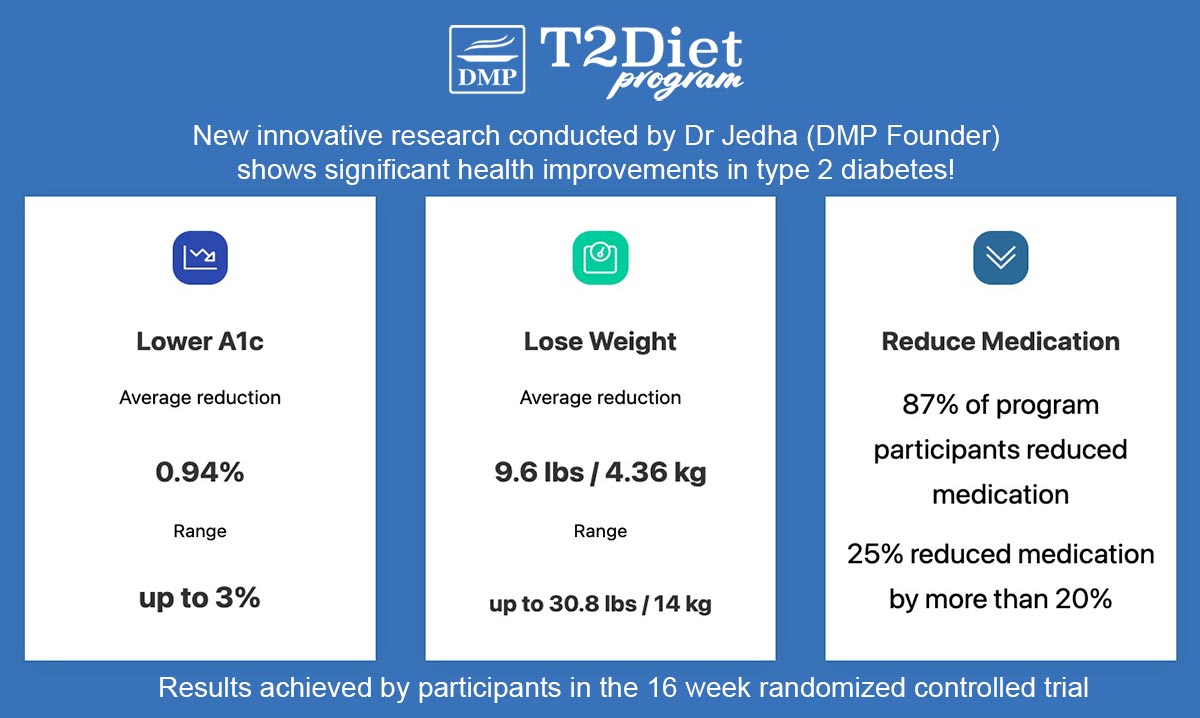
In our randomized controlled trial, we enrolled 98 adults with type 2 diabetes. Participants received either standard care alone or standard care alongside our online T2Diet Program.
After 16 weeks, participants in the T2Diet group achieved an average A1c reduction of 0.94%, while some participants achieved up to 3% in the 16 weeks. Participants also improved their weight and reduced diabetes medication requirements compared with standard care alone.
Many of our members have also seen significant reductions in their A1c levels within 3-4 months.
Why Some People See Bigger A1c Changes Than Others
There is no single timetable or guaranteed A1c reduction.
Your starting point matters. Someone beginning with an A1c of 10% has more room for a large numerical decrease than someone starting at 6%.
Your result also depends on how much your average glucose changes and how consistently that improvement is maintained. Different treatments, individual health circumstances, and medication adjustments can affect the outcome as well.
For someone with prediabetes, a smaller decrease may represent important progress. And frequently people with prediabetes can reach a normal A1c level within 3-4 months.
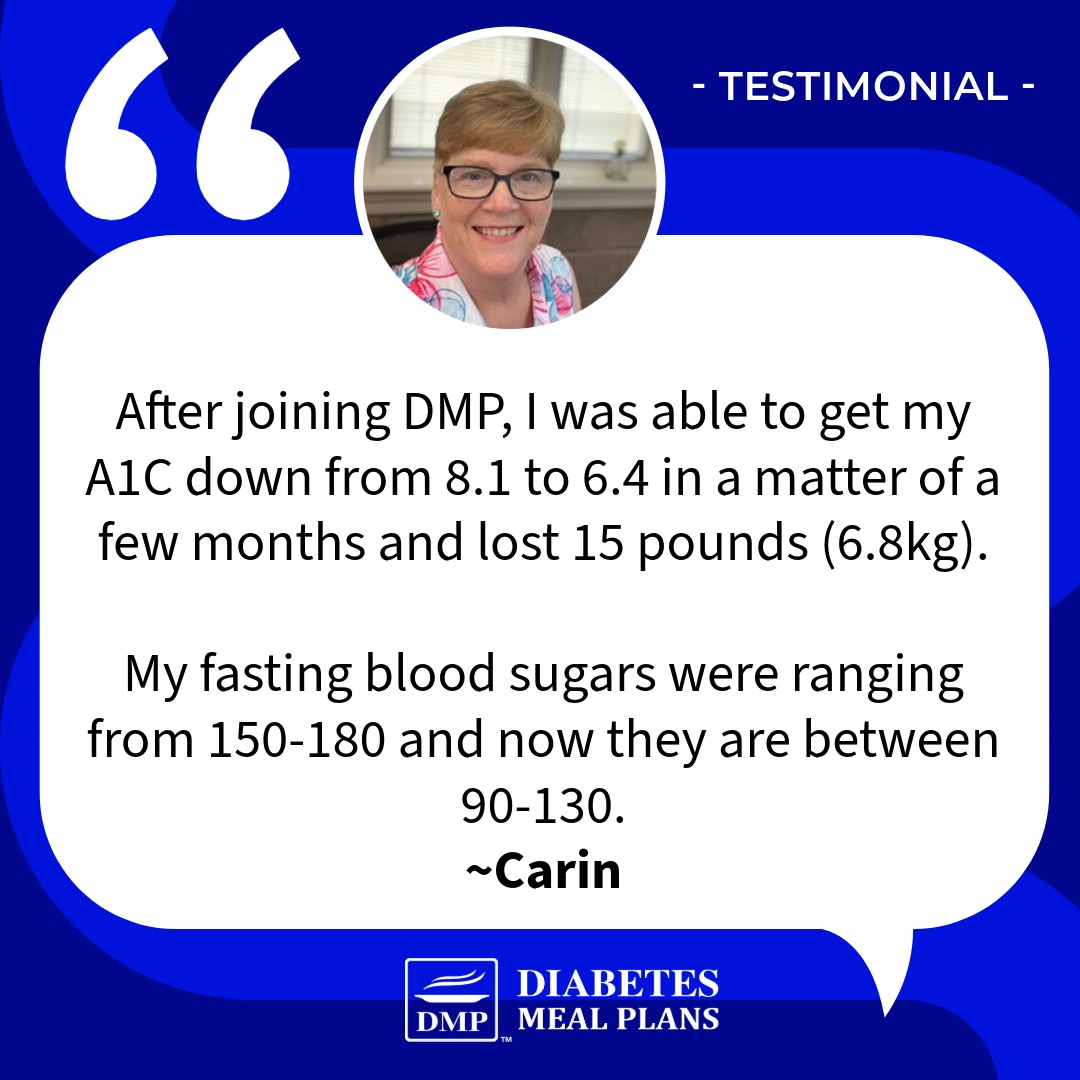
“My A1c was 6.0 when I started, and now afew months later it’s 5.5—out of prediabetes range! I’ve also lost 13 ponds, which wasn’t my main goal.” ~Lisa
Comparing that change with a dramatic reduction in someone who started with much higher glucose isn’t particularly helpful.
When it comes to A1c, the most useful comparison is your own pattern over time, rather than comparing it to someone else.
What Can You Track While Waiting For Your Next A1c Test?
You don’t have to wait for your next laboratory result to learn whether your daily choices are helping.
You can use home monitoring to look for patterns in fasting and after-meal glucose. For example:
- Are similar meals producing smaller glucose rises?
- Are readings improving across several days or weeks?
- Which meals consistently help you stay closer to your target range?
- Are you having low readings that need a medication review?
Avoid judging everything by one unusually high or low number. Use your readings to identify repeatable patterns.
Importantly, your after-meal glucose matters more than your fasting levels. See the chart below, your after meal levels share a close relationship with your A1c result.
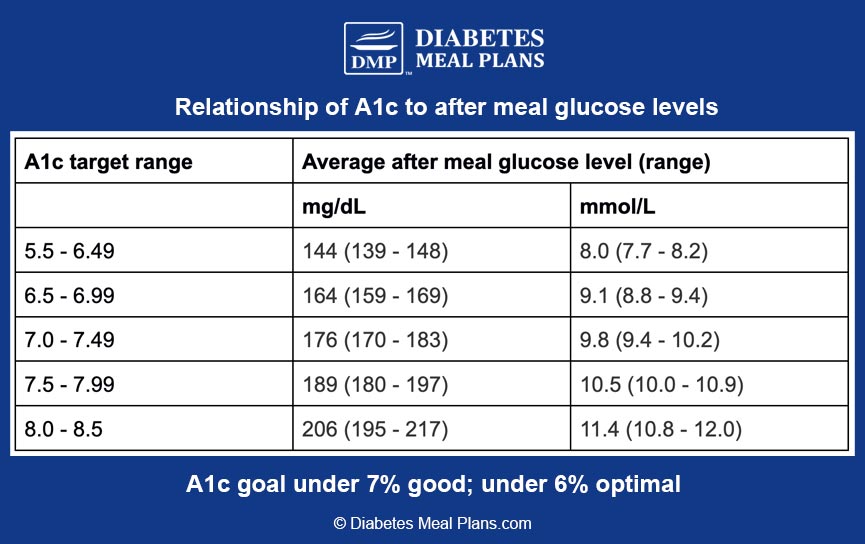
To lower your A1c, focus on an after meal level below 140 mg/dL or 7.8 2-hours after meals.
How Can You Lower A1c?
Make some changes to your nutrition and diet plan.
Start with changes you can repeat at ordinary meals. Reducing large portions of bread, rice, pasta, breakfast cereal, and other carbohydrate-rich foods, while building satisfying meals around protein, nonstarchy vegetables, and appropriate amounts of healthy fats.
PIC: https://diabetesmealplans.info/wp-content/uploads/2024/08/DMP-Plate-method.jpg
The aim is to follow an eating pattern that provides good nutrition and supports lower glucose levels and one that you enjoy enough to continue.
Practical education matters: people need help turning dietary advice into everyday meals – – that’s what we help our members do with our weekly meal plans and nutrition service.
Give Your Changes Time and The Right Support
A1c can start changing within weeks, but you will see the most useful representation of your result when it is taken after 3-4 months. And if you continue beyond there, you can continue to improve your A1c or maintain it.
Importantly, sustained improvement is built through the choices you repeat. You don’t need to make every meal perfect. You need a practical approach, a way to recognize what’s helping, and support to keep moving forward.
Want help putting this into practice? Inside DMP Membership, you’ll find meal plans, recipes, food guides, and proven nutrition support to help you build meals that support better blood sugar.
Leave a Reply