


Table of Contents[Hide][Show]
- Why Is a Glucose Tolerance Test Performed?
- What Does the Test Measure?
- How Can a Glucose Tolerance Test Diagnose Diabetes?
- Interpreting Prediabetes Glucose Tolerance Test Results
- Interpreting Type 2 Diabetes Glucose Tolerance Test Results
- Is the Glucose Tolerance Test Still Useful?
- What Happens If Your Results Are Abnormal?
If you’ve recently been told you have elevated blood sugar, prediabetes, or risk factors for type 2 diabetes, your healthcare provider may recommend a glucose tolerance test.
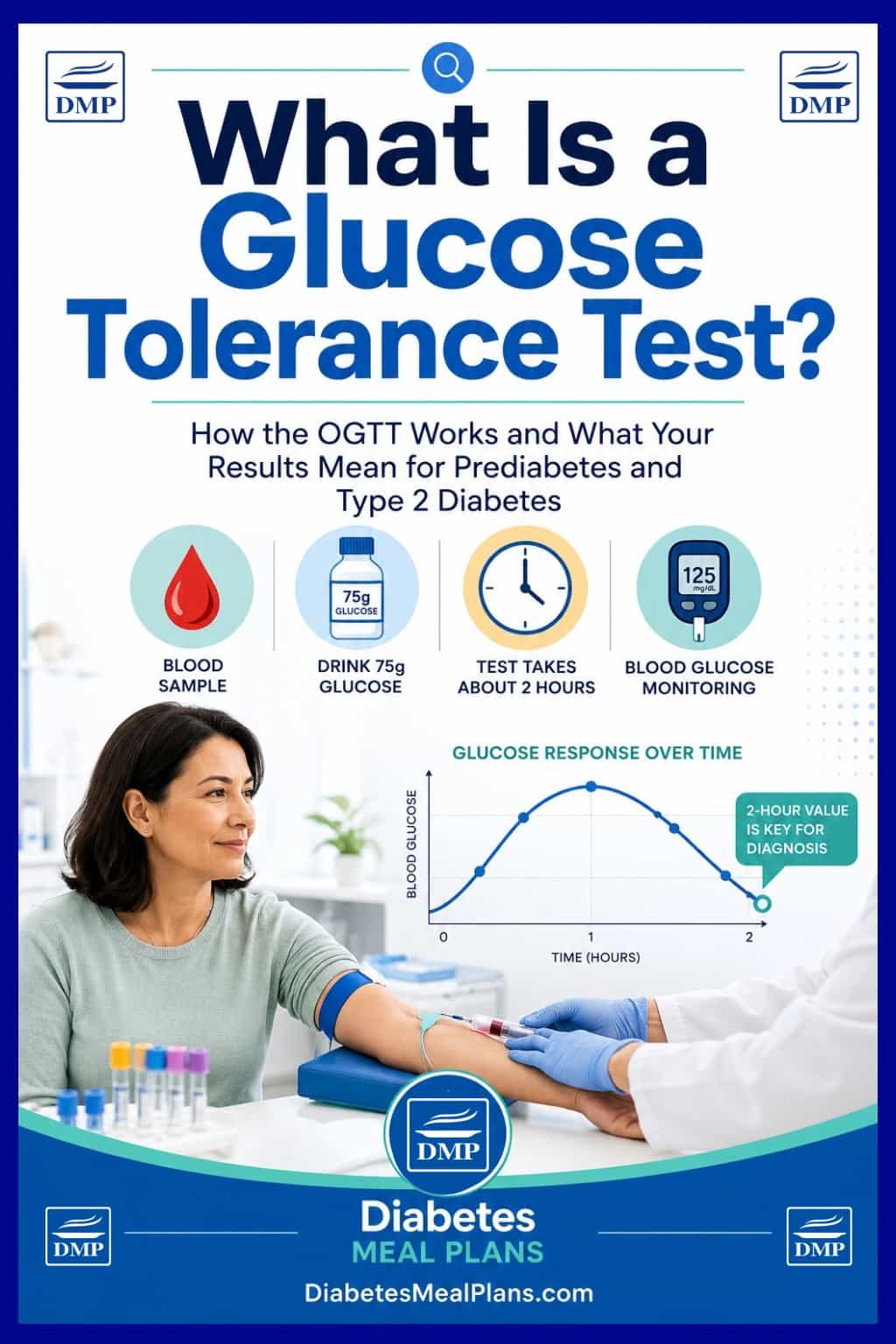
A glucose tolerance test (GTT), also called an oral glucose tolerance test (OGTT), measures how well your body handles a large amount of glucose over a period of time.
It provides valuable information about how effectively your body clears glucose from the bloodstream and can help diagnose both prediabetes and type 2 diabetes.
In some cases, a glucose tolerance test can identify blood sugar problems that may not be detected by a fasting blood sugar test alone.
Why Is a Glucose Tolerance Test Performed?
When you eat carbohydrates, they are broken down into glucose, which enters the bloodstream. In response, the pancreas releases insulin to help move glucose into cells where it can be used for energy.
In people developing insulin resistance or type 2 diabetes, this process becomes less effective. Blood sugar remains elevated for longer periods after eating because the body struggles to manage the glucose load.
A glucose tolerance test challenges your body with a measured amount of glucose and then tracks how your blood sugar responds over time.
Healthcare providers may recommend a glucose tolerance test if:
- Fasting blood sugar results are borderline
- HbA1c results are inconclusive
- Symptoms of diabetes are present despite normal fasting glucose
- Prediabetes is suspected
- There is a strong family history of diabetes
- Gestational diabetes screening is required during pregnancy
How Is a Glucose Tolerance Test Administered?
The standard oral glucose tolerance test is relatively simple but takes approximately two hours to complete.
Step 1: Overnight Fast
You will usually be asked to:
- Fast for at least 8–12 hours
- Drink only water during the fasting period
- Avoid smoking and vigorous exercise before the test
A fasting blood glucose measurement is taken first.
Step 2: Drink a Glucose Solution
You will then drink a liquid containing 75 grams of glucose.
The drink is very sweet and is designed to provide a standardized glucose challenge.
Step 3: Blood Samples Are Collected
Blood glucose levels are measured at specific intervals after drinking the solution.
For diagnosing diabetes in adults, the most important measurement is usually the blood glucose level taken two hours after consuming the drink.
Some clinics may take additional measurements at 30, 60, or 90 minutes to provide more detailed information about glucose handling.




What Does the Test Measure?
The glucose tolerance test measures your body’s ability to:
- Release insulin appropriately
- Respond to insulin effectively
- Clear glucose from the bloodstream
A healthy person will typically experience a rise in blood glucose after drinking the glucose solution, followed by a steady return toward normal levels as insulin moves glucose into cells.
Someone with insulin resistance, predaibetes or diabetes will usually have blood glucose levels that remain elevated for longer.
How Can a Glucose Tolerance Test Diagnose Diabetes?
Type 2 diabetes often develops gradually over many years.
In the early stages, fasting blood sugar may remain normal because the body compensates by producing larger amounts of insulin. However, after eating or drinking carbohydrates, blood sugar may rise much higher than expected.
This is one reason why a glucose tolerance test can sometimes identify abnormalities that are missed by fasting glucose testing alone.
The test essentially asks a simple question: How well does your body handle a significant glucose challenge?
The answer provides important information about metabolic health and diabetes risk.
Interpreting Glucose Tolerance Test Results
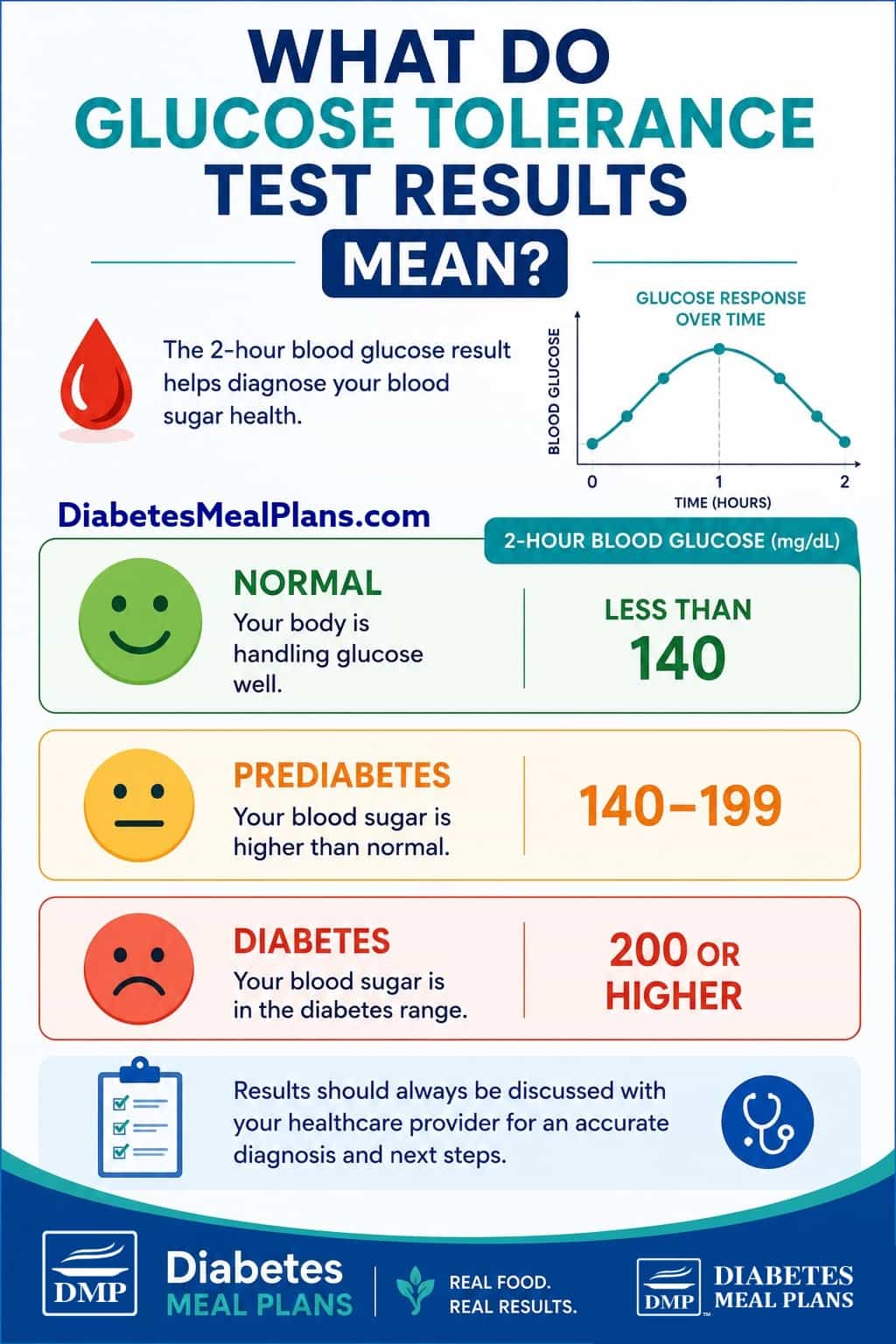
Results are based primarily on the blood glucose level measured two hours after consuming the 75-gram glucose drink.
Normal Glucose Tolerance
2-hour glucose level:
- Less than 140 mg/dL (7.8 mmol/L)
This indicates that glucose is being cleared from the bloodstream efficiently.
Prediabetes (Impaired Glucose Tolerance)
2-hour glucose level:
- 140–199 mg/dL (7.8–11.0 mmol/L)
This range is often referred to as impaired glucose tolerance (IGT).
People with impaired glucose tolerance have a significantly increased risk of progressing to type 2 diabetes, particularly if no nutrition and lifestyle changes are made.
Type 2 Diabetes
2-hour glucose level:
- 200 mg/dL (11.1 mmol/L) or higher
This result is consistent with diabetes and generally requires confirmation with repeat testing unless symptoms and other evidence are already present.
Interpreting Prediabetes Glucose Tolerance Test Results
Many people are surprised to learn that prediabetes can exist even when fasting glucose appears relatively normal.
A person may have:
- Fasting glucose below the diabetes threshold
- HbA1c in the prediabetes range
- Significant blood sugar elevations after consuming carbohydrates
This pattern is common in people with impaired glucose tolerance.
In practical terms, it means the body can maintain acceptable fasting glucose levels but struggles when faced with larger carbohydrate loads.
Research shows that impaired glucose tolerance is associated with:
- Increased insulin resistance
- Higher cardiovascular risk
- Greater likelihood of progressing to type 2 diabetes
- Increased risk of fatty liver disease
The good news is that nutrition and lifestyle changes can be highly effective during this stage.
Reducing carbohydrate intake, improving diet quality, increasing physical activity, improving sleep, and achieving weight loss when appropriate can significantly improve glucose tolerance and reduce diabetes risk.
Interpreting Type 2 Diabetes Glucose Tolerance Test Results
When the two-hour glucose level reaches 200 mg/dL (11.1 mmol/L) or above, it indicates that the body’s ability to regulate glucose has become significantly impaired.
This typically reflects:
- Significant insulin resistance
- Reduced insulin effectiveness
- Potential for pancreatic beta-cell dysfunction
In many cases, blood sugar remains elevated for several hours after meals, contributing to higher HbA1c levels over time.
A glucose tolerance test result in the diabetes range should be proactively treated with nutrition, and sometimes medications.
Glucose Tolerance Test vs Fasting Blood Sugar
Many people wonder why both tests exist.
Fasting Blood Sugar
Measures blood glucose after an overnight fast.
Advantages:
- Quick
- Convenient
- Inexpensive
Limitations:
- May miss early abnormalities
- Does not assess post-meal glucose handling
Glucose Tolerance Test
Measures how the body responds to a glucose challenge.
Advantages:
- Detects impaired glucose tolerance
- Identifies early alterations in your metabolism (metabolic dysfunction)
- Provides more information about glucose handling
Limitations:
- Takes several hours
- Less convenient
- Requires fasting and multiple blood samples
Both tests can be useful, and healthcare providers often interpret them alongside HbA1c results.
Is the Glucose Tolerance Test Still Useful?
Although HbA1c testing is now commonly used for diagnosing diabetes and prediabetes, the oral glucose tolerance test remains one of the most sensitive methods for identifying abnormalities in glucose metabolism.
In fact, some people with normal fasting glucose and near-normal HbA1c levels may still show impaired glucose tolerance during an OGTT.
For this reason, the glucose tolerance test continues to play an important role in diabetes diagnosis and risk assessment.
What Happens If Your Results Are Abnormal?
An abnormal glucose tolerance test doesn’t mean that diabetes progression is inevitable.
Many people with prediabetes can return blood sugar control to normal through nutrition and lifestyle changes, something we help members achieve in the Prediabetes Reset Program.
Strategies that often produce meaningful improvements include:
- Reducing refined carbohydrates and added sugars
- Prioritizing protein at meals
- Increasing non-starchy vegetables
- Losing excess weight if appropriate
- Walking after meals
- Improving sleep quality
- Managing stress levels
The earlier these changes are made, the greater the opportunity to improve insulin sensitivity and normal glucose control.
Conclusion
A glucose tolerance test measures how effectively your body handles a large glucose load over time. Unlike a fasting blood sugar test, it provides insight into how your body responds after consuming carbohydrates.
Results below 140 mg/dL (7.8 mmol/L) at two hours are considered normal. Levels between 140–199 mg/dL (7.8–11.0 mmol/L) indicate prediabetes, while levels of 200 mg/dL (11.1 mmol/L) or higher suggest type 2 diabetes.
For many people, a glucose tolerance test can detect blood sugar problems earlier than fasting glucose alone. Understanding your results can help you take action sooner and potentially prevent progression from prediabetes to type 2 diabetes.
Want to Improve Your Blood Sugar?
Inside DMP Membership, you’ll get step-by-step guidance, meal plans, recipes, courses, and tools designed to help you lower blood sugar, improve HbA1c, and build sustainable habits that support long-term blood sugar control.
Get access to the DMP Membership today.

Leave a Reply