


Being a staple food in the diet, you may be wondering whether rice is good or bad for diabetes. Or if brown rice is better than white rice or basmati rice.
These are great questions to ask, so let’s explore the answers together in detail now.
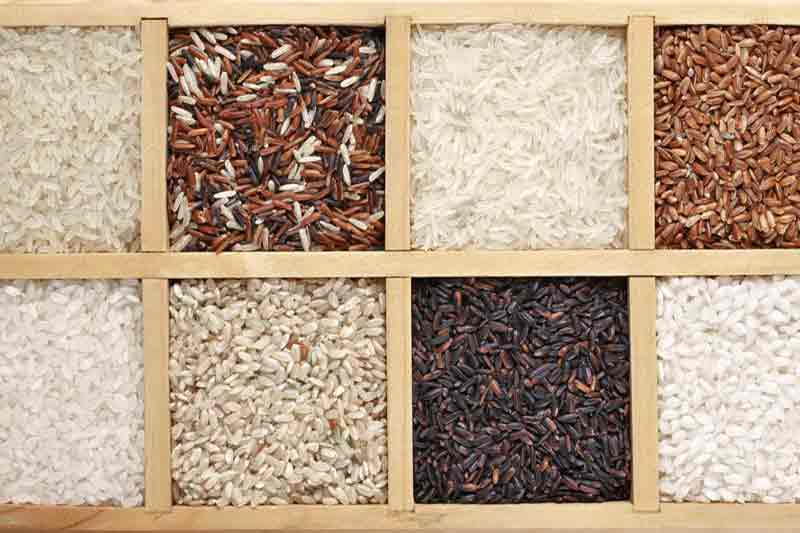
Brown Rice vs White Rice Nutrition Facts
The nutritional status of rice varies depending on the type of rice we’re talking about.
White rice is a more processed product. The refining process removes the bran, the husk, and the germ, leaving you with a refined grain that contains significantly less micronutrients (vitamins and minerals).
In fact, after processing the grain, white rice contains almost zero vitamins, and low levels of minerals. Whereas brown rice, being a whole grain, provides niacin, folate and choline, and the minerals calcium, magnesium, phosphorus, potassium and selenium.
White rice also has a low fiber content of about 0.6 grams per half cup. Whereas, a half-cup serving of unprocessed, whole grain brown rice does have the benefit of around 1.8 grams of dietary fiber.
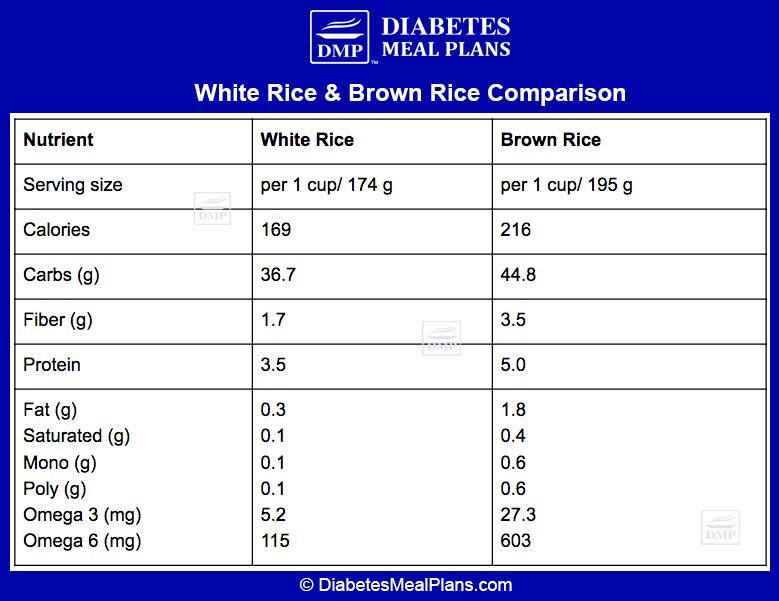
However, even though brown rice may be slightly healthier in terms of the nutritional value, for people with type 2 diabetes and prediabetes, there is still one major disadvantage of all types of rice – the high carbs!
If you check out the nutrition facts above, you’ll notice that a half cup serving of brown rice will yield 22.4 grams of carbs. By subtracting the fiber, this still equates to a pretty hefty net carb intake of 21 grams per half cup, which is not a very big serving – people often consume way more at one sitting!
The nutrient that has the greatest impact on blood sugar and A1c is CARBOHYDRATES.
For most people, eating rice means blood sugar spikes, along with higher blood sugar and A1c levels overall, which is why we encourage you to exclude or minimize rice in your diet.
Since rice is a staple in many people’s diets, this may sound like a difficult thing to do, but it really isn’t because there are still many foods available to you that won’t send your blood sugar soaring. Use lower carb alternatives or replace rice with vegetables and your blood sugar will be happier for it, guaranteed!
The flours made from white and brown rice are carb heavy too, so make sure to skip over these options while baking and go for a low carb alternative like almond flour or flax seed meal.
Glycemic Index of Rice
Glycemic index (GI) foods under 55 are considered low GI, and those above are considered high GI.
As you’ll see in the table below, GI does vary depending on rice variety. Standard white rice is high GI, jasmine rice is the same. Basmati rice is moderate GI. Brown rice is also moderate GI. And wild rice and black rice are both low to moderate GI.
Brown Rice & Rice Products Compared
White rice and brown rice are not the only rice varieties or products, so let’s lay out a few more nutrition facts, focusing on carb content.
| Rice Type, per 1/2 cup | Carbs (g) | Fiber (g) | Net Carbs (g) | Estimated GI | GI Category |
|---|---|---|---|---|---|
| White Rice (short & long grain) | 28–29 | 0.4 | 27.6–28.6 | 85–90 | High |
| Brown Rice (short & long grain) | 23–24 | 1.6–1.8 | 21.2–22.4 | 66 | Moderate |
| Jasmine Rice (white) | 30.0 | 0.4 | 29.6 | 80 | High |
| Basmati Rice (white) | 28.0 | 0.6 | 27.4 | 58 | Moderate |
| Wild Rice | 21.0 | 1.8 | 19.2 | 45 | Low to Moderate |
| Black Rice (forbidden rice) | 23.5 | 2.0 | 21.5 | 45 | Low to Moderate |
| Red Rice | 23.5 | 2.0 | 21.5 | 55 | Moderate |
| Arborio Rice (risotto rice) | 28.0 | 0.9 | 27.1 | 72 | High |
| Sushi Rice (short grain white) | 29.0 | 0.4 | 28.6 | 89 | High |
| Instant White Rice | 28.7 | 0.2 | 28.5 | 90 | Very High |
Regardless of whether a rice is slightly lower in GI, all varieties contain high amounts of carbohydrates for a half cup serve – so again, rice is a food to exclude or minimize in your diabetes diet.
Is Brown Rice Good For Fiber?
What about the dietary fiber, you may ask?
Aren’t whole grains like brown rice meant to be good for getting adequate fiber?
The science-backed answer is — not really, that’s a myth!
You can get ample fiber from other foods that won’t have a negative impact on blood sugar and A1c levels.
Here are some diabetes-friendly high fiber food options:
- 1/2 avocado = 7 g fiber
- 1 cup of broccoli = 2.4 g fiber
- 1 tablespoon chia seeds= 5.5 g fiber
- 1 oz walnuts = 1.9 g fiber
- 1/4 cup raspberries = 2.9 g fiber
- 1 carrot = 1.7 g fiber
- 1/4 cup coconut 1.5 g fiber
Vegetables, nuts and seeds provide plenty of daily fiber to meet your needs.




Research on Rice and Diabetes
Consuming whole grains has been shown to lower risk of developing type 2 diabetes. But once you’re diagnosed with diabetes, whole grains are not suitable for treatment.
In fact, there is no research showing any benefits of whole grains for improving blood sugar control.
According to the American Diabetes Association Standards of Medical Care in Diabetes: “whole-grain consumption is not associated with improvements in glycemic control in type 2 diabetes.” Or in other words, it doesn’t help you regulate blood sugar and A1c – that’s what the research clearly shows.
That said, if you are going to eat rice, choosing brown rice is the best option.
Studies have found that brown rice is superior to white rice because it causes a smaller spike in blood glucose (approx. 19.8%), along with a smaller insulin response (57% lower in fasting insulin). However, this was tested in overweight individuals without diabetes or prediabetes.
Similarly, reviews have found that substituting brown rice for white rice may decrease risk of developing type 2 diabetes. While other researchers have clearly concluded that white rice consumption is associated with an increased risk of developing type 2 diabetes.
Still, brown rice may be superior to white rice, and may help reduce risk of developing diabetes, but in terms of treatment for type 2 diabetes and prediabetes, there is no proven benefit.
On the other hand, research has shown time and time again that adopting a lower carb diet can be an effective and empowering tool for people with type 2 diabetes and prediabetes to regain control of their health.
Low carb diets have been shown to be more effective for improving blood sugar levels than other types of restrictive diets – and no, we’re not talking crazy keto diets or fad diets like carnivore! A low carb diet is NOT a no carb diet!
In our own T2Diet Program Clinical Trial, participants in our healthy low carb nutrition program reduced A1c levels by almost 1%, lost over 9 pounds (4.36kg) and 87% of people reduced medications, in just 16 weeks!
“I just wanted to share my great results having been on this plan for only one month. 3 months ago my A1C was 8.7 and my recent blood work showed it at 7.4. My endocrinologist was very impressed and thinks I will be at the target level by my next testing in 3 months. I am excited to continue on this plan and maybe I can stop one of my injections. Thank you for your dedication to diabetes research and food plans.” ~Gloria G, VIP Member.
Diabetes Rice Substitute
Giving up rice doesn’t mean you have to give up your favorite rice-based dishes and stir-fries – there are always alternative options, always.
Check out this Chicken Massaman Curry.
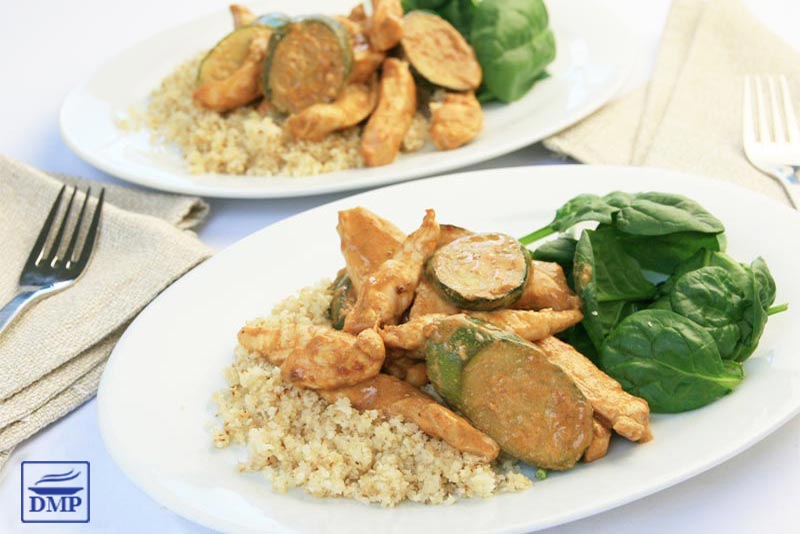
It’s not served on carb-heavy rice, but blood sugar friendly “cauliflower rice.”
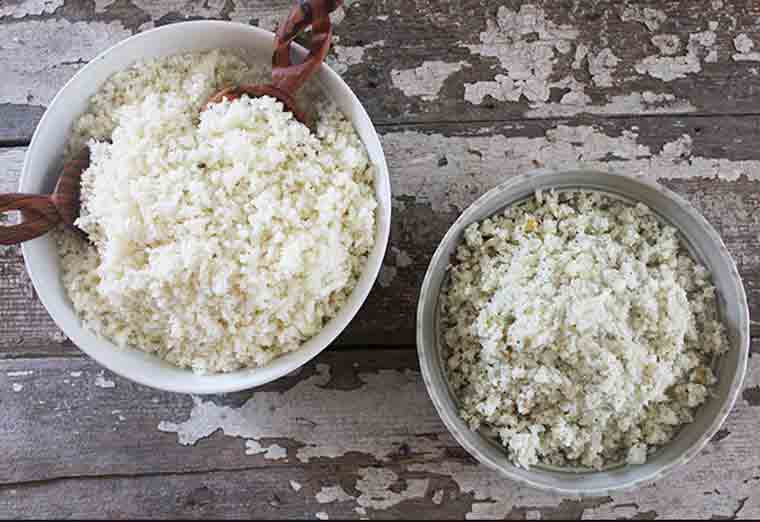
There really are great alternatives for everything!
Check out a few more rice alternatives here.
Conclusion: Can Diabetics Eat Brown Rice?
Some evidence suggests consumption of whole grains such as brown rice may reduce diabetes risk. However, there is no evidence that it helps with treatment.
While some people with type 2 diabetes and prediabetes may be able to tolerate brown, whole grain rice in very small quantities (keep a tight rein on the portion size), we encourage you to steer clear of rice for the most part.
All rice comes under the category of starchy foods, which are best avoided. The mountain of carbs and lack of any proven benefits, just doesn’t make it worth consuming.
Especially since there are so many other beneficial foods and non-starchy vegetables that help you keep blood sugar levels within range after meals – a very important goal!
If you need more rice-free inspiration and are determined to lower blood sugar and A1c, consider joining us as a member.
We provide weekly meal plans, along with hundreds of valuable resources and real support that can help you get the results you deserve.
“You have been so much help to me. My A1c started out around 9.5. With your help, I have lost close to 50 pounds and I have been able to keep my A1C at a 6.” ~JoAnn B.

Mon Gowda
Hi soo how do I substitute my rice consumption ? Mashed potatoes ? Quinoa ? And ???
Dr Jedha
Hi Mon, The answer is, with lots of other nutrient dense foods that are diabetes friendly and support normal blood sugar! Check out our food list here and grab a free copy if you haven’t already. It will help you get started.
Craig hulstrom
My mother is stag 2 diabetic and I am always looking for new food for her she also has no teeth at this point any help would be appreciated
Malorie: Dietitian (MS, RD, CLT)
Hi Craig,
Check out some of our recipes to see which would work for your mom!
Asif
Excellent. Great service. Critically speaking, it focus on Western Food but not over sub-continent. Therefore, less benefit is attained except some common food like fish, eggs, butter, rice. Thanks. Great help
Janet Huyton
Here in the UK, Aldi (amongst most supermarkets) sell frozen cauli rice which my husband wolfs down (cheap and handy for me too!) I pair it with Tesco Chicken Curry.
Thanks for all your tips, it really is hard to come up with ideas for diet controlled diabetes, but I’m determined he’s not having drugs for as long as possible! xx
Jedha
Yes, you can get it in many places around the globe now – makes it much more convenient!