


If you have type 2 diabetes or prediabetes, there is a very good chance your doctor has also talked to you about your blood pressure. The two conditions are deeply connected, and understanding why can help you take a more targeted approach to treating both conditions effectively.
That’s because diabetes can cause high blood pressure. And, the relationship is an interesting one to understand.
Did you know that diabetes and high blood pressure share the same root causes? And they tend to develop together as part of a broader pattern of metabolic dysfunction (your metabolism changing).
Nutrition is your most powerful tool to treat both.

How Common Is High Blood Pressure in Diabetes?
High blood pressure, also known as hypertension, affects up to 75% of people with type 2 diabetes. Studies show that around 4 in 10 people with prediabetes already have high blood pressure. These stats are not a coincidence.
High blood pressure doesn’t suddenly appear after someone develops type 2 diabetes or prediabetes. It often starts much earlier.
Both conditions are driven by insulin resistance. Alongside this, other factors include excess body weight, poor diet, physical inactivity, and chronic inflammation. So, when one develops, the other often follows.
Why Does Diabetes Contribute to High Blood Pressure?
There are several mechanisms at work.
Insulin resistance causes the kidneys to retain more sodium, which increases fluid volume in the blood vessels and raises pressure on the artery walls. Improving insulin sensitivity is one of the most direct ways to address this.
Chronically elevated blood sugar damages the lining of blood vessels over time, making them stiffer and less able to expand and contract normally. Stiffer arteries mean higher blood pressure.
Inflammation associated with insulin resistance further damages blood vessel walls and disrupts their ability to regulate pressure effectively.
Fatty liver, which is common in people with type 2 diabetes, contributes to hormonal changes that raise blood pressure.
Elevated cortisol from stress raises both blood glucose and blood pressure simultaneously, compounding the problem.





Why Does High Blood Pressure In Diabetes Matter So Much?
Having both diabetes and high blood pressure significantly increases the risk of serious complications. The combination puts enormous strain on the heart, kidneys, eyes, and nerves.
Heart disease is the leading cause of death in people with type 2 diabetes, and high blood pressure is one of the most significant drivers of that risk. The two together accelerate the development of atherosclerosis, the hardening and narrowing of arteries that leads to heart attack and stroke. This process starts in prediabetes.
The kidneys are especially vulnerable. High blood sugar damages the tiny blood vessels that filter waste, and high blood pressure compounds that damage. Together they are the leading cause of kidney failure.
Diabetic neuropathy (nerve damage) and eye damage are also accelerated when blood pressure is high alongside blood sugar.
What Blood Pressure Numbers Should You Aim For?
Normal blood pressure is 120/80 mmHg.
For most people with diabetes, the general target is below 130/80 mmHg, though your doctor may set a slightly different goal based on your individual circumstances.
| Category | Blood Pressure (mmHg) |
|---|---|
| Normal | <120 and <80 |
| Elevated | 120–129 and <80 |
| Hypertension Stage 1 | 130–139 or 80–89 |
| Hypertension Stage 2 | ≥140 or ≥90 |
The top number, systolic pressure, reflects the force when your heart beats. The bottom number, diastolic pressure, reflects the pressure between beats. Both matter, but systolic pressure tends to be the more significant risk factor as you age.
Regular monitoring at home gives you a much more accurate picture than occasional readings at the doctor’s office. Blood pressure fluctuates throughout the day, so a pattern of readings is more meaningful than any single number.
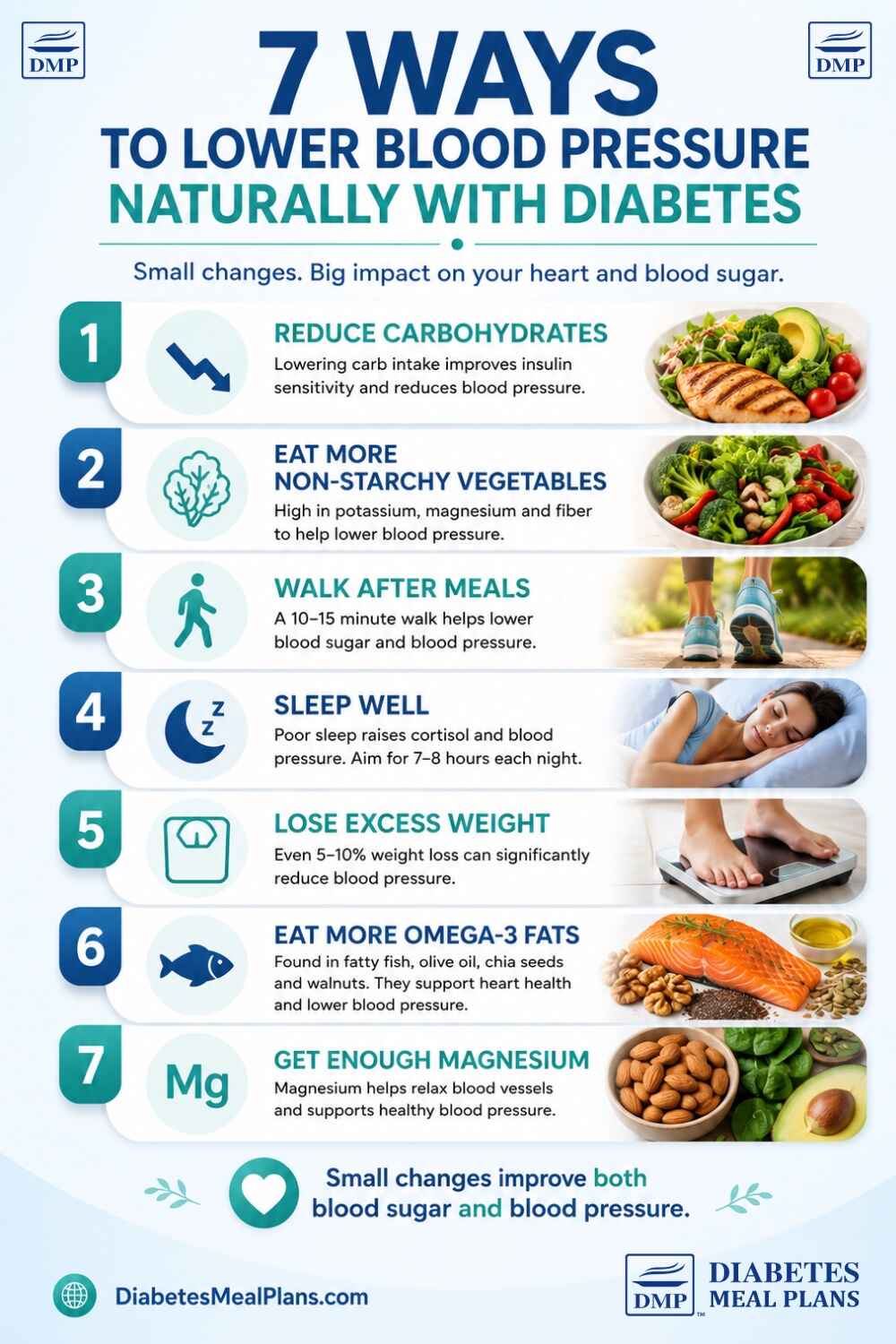
What You Can Do About High Blood Pressure in Diabetes
Nutrition and lifestyle changes that improve blood sugar also improve blood pressure. You are working on both problems at the same time.
Here are some simple actions you can take:
Reducing carbohydrates: lowers insulin levels, reduces fluid retention, and directly improves both blood sugar and blood pressure readings. It is one of the most powerful dietary tools available.
Eating more whole foods and non-starchy vegetables: increases potassium and magnesium intake, both of which support healthy blood pressure. Reducing processed foods and excess sodium also makes a meaningful difference.
Walking and regular exercise: improve the flexibility of blood vessels, reduce insulin resistance, and lower blood pressure. Even a 20 minute walk after meals produces measurable benefits for both blood sugar and blood pressure.
Sleep quality: has a direct impact on blood pressure. Poor sleep elevates a hormone called cortisol, which raises blood pressure overnight, and worsens insulin resistance the following day.
Managing weight: is one of the most impactful steps you can take. Even a modest reduction in body weight produces significant improvements in both blood sugar and blood pressure.
Omega-3 fatty acids from oily fish and fish oil: have been shown to reduce blood pressure and triglycerides.
Magnesium supplementation: research-backed for improving both insulin sensitivity and blood pressure, particularly in people who are deficient.



Conclusion
Diabetes and high blood pressure are not separate problems that happen to coincide. They are driven by the same underlying changes in metabolism, and they are addressed by the same underlying solutions.
Focus on quality nutrition is key. In particular, reducing processed carbohydrates, eating whole nutrient-dense foods, moving regularly, sleeping well, and managing stress. These changes address the root cause of both conditions simultaneously.
Need help getting started with nutrition for blood sugar and blood pressure? Get a copy of Dr Jedha’s recommended food list below, it’s free!
Leave a Reply