


Table of Contents[Hide][Show]
- Myth #1: Diabetes Is Genetic and Nothing You Do Matters
- Myth #3: Type 2 Diabetes Isn’t a Serious Condition Until Complications Appear
- Myth #4: Once You Start Insulin, You Can’t Come Off It
- Myth #5: Lowering Blood Sugar With Medications Prevents Heart Attack or Death
- Myth #6: You Must Lose Weight to Reverse Diabetes
- The Most Important Factor: Food Quality and Carbohydrate Type
Frequently Asked Questions+−
- Can type 2 diabetes really be reversed?
- How long does it take to reverse type 2 diabetes?
- What is the best diet to reverse diabetes?
- Do you need to lose weight to reverse diabetes?
- Is diabetes reversal the same as remission?
- Can type 2 diabetes come back after remission?
- Can metformin or medications reverse diabetes?
- Is type 2 diabetes reversible without surgery?
- What is the fastest way to lower blood sugar naturally?
- How can I know if I’m reversing my diabetes?
- Get Real Results That Last
Did you know that “Is type 2 diabetes reversible?” is one of the most common questions people ask, especially when they’re newly diagnosed or when their blood sugar starts creeping up.
There’s so much mixed messaging, outdated advice, and outright myths that it’s hard to know what’s true anymore.
However, you don’t have to rely on myths and outdated advice because we now have strong, consistent evidence showing that type 2 diabetes can be reversed and go into remission for many people.
Let’s clear up the biggest myths and walk through what the most recent research says.

Myth #1: Diabetes Is Genetic and Nothing You Do Matters
You may inherit a risk, but genes are not destiny. Modern epigenetic research shows that everyday inputs – food, movement, stress, sleep, environment – influence how your genes behave.
Food is information. Stress is information. Lifestyle is information. Even simple daily habits like walking can shift things in a positive direction.
The signals your body receives can switch certain pathways on or off. That’s why even with a genetics and family history, many people never develop diabetes, while others with no history do. The environment you create inside your body matters far more than the genes you started with.
Myth #2: Type 2 Diabetes Is Not Reversible
Many people are told diabetes only “gets worse” – but this is outdated thinking. Today, diabetes remission is a well-recognized outcome in the scientific literature.
Real people experience it every day. Our members have lowered A1c into the normal range, reduced or eliminated medications, and maintained their results long-term.
What research shows
Over the past decade, and especially in newly published 2025 data, studies consistently demonstrate that type 2 diabetes can go into remission through several different approaches.
Here are the three most supported methods:
1. Very Low-Calorie Diets
Trials using ~800 calories/day for short periods, like the Soup & Shake Diet, can trigger remission by reducing liver and pancreatic fat. The downfall is, this type of diet is not easy to sustain and should always be medically supervised, but it works for some.
2. Bariatric Surgery
Often effective but carries long-term risks, nutritional complications, and is generally reserved for severe cases.
3. Low Carbohydrate Diets
A growing body of research shows low carb eating improves insulin sensitivity, lowers A1c, reduce medication needs, and supports sustained remission. This approach is practical, flexible, and evidence-supported long term, something we see every day with our members.
If you are looking for a place to start, grab a copy of our recommended food list (click on the image below and we’ll send it to your email inbox).
2025 Research Update
Data published in 2025 continue to demonstrate the following key findings:
Remission is most achievable when high blood sugar is addressed early (within the first 2–6 years of diagnosis). That doesn’t mean it’s not achievable after living with diabetes 10 or 20 years, it certainly is! Listen to Curtis’s story and Dean’s story.
Low carbohydrate interventions produced the highest rates of sustained remission at 12+ months compared to low-calorie or medication-focused strategies.
People who reduced liver fat, reduced visceral fat, and improved insulin sensitivity—regardless of weight loss amount—had the best long-term outcomes. That’s exactly what we help our members do—target the internal fat and return insulin function to normal.
Researchers emphasized that remission is a metabolic process, not simply a weight-loss outcome. Of course! The cause of diabetes is metabolic, which is why medication can’t help, it’s not a solution, just a bandaid. Nutrition is a long term solution!

Myth #3: Type 2 Diabetes Isn’t a Serious Condition Until Complications Appear
A common misconception is that type 2 diabetes only becomes “serious” once complications like neuropathy, kidney disease, or vision problems show up. But metabolic changes begin years before symptoms are noticeable.
High blood sugar is only one part of the condition. Long before A1c rises, the body is already dealing with insulin resistance, increased inflammation, and accumulating fat in the liver and pancreas. These changes quietly increase cardiovascular risk and can accelerate the progression of diabetes if left unaddressed.
The good news is that acting early in type 2 diabetes — even if your numbers don’t look “that bad yet” — gives you the strongest chance of achieving remission. Research consistently shows that the earlier blood sugar and insulin are improved, the more likely people are to return to healthy metabolic function.




Myth #4: Once You Start Insulin, You Can’t Come Off It
Insulin is sometimes needed, but it’s not a one-way street. Higher insulin levels can increase appetite and support fat storage, making things worse metabolically.
With the right nutrition strategy, many people reduce their dose—and many can safely come off insulin altogether under medical supervision. We see this frequently among members who lower their carbohydrate intake and improve insulin sensitivity with a low carb way of eating.
Myth #5: Lowering Blood Sugar With Medications Prevents Heart Attack or Death
Blood sugar–lowering drugs can be helpful, but they don’t address the metabolic drivers behind diabetes. That’s why major clinical trials have shown that medication alone doesn’t reliably reduce heart attacks or mortality.
What does create meaningful change? Improving the way your body handles glucose through nutrition, stress management, movement, and sleep.
There is enormous power in what you eat. That’s why we specialize in teaching people to eat to treat diabetes – it is much more powerful than any medication!

Myth #6: You Must Lose Weight to Reverse Diabetes
Weight loss helps, but it is not the only path to remission. Improvements in liver fat, pancreatic fat, and insulin sensitivity often occur before significant weight changes.
That’s why people can see fasting glucose drop, post-meal spikes shrink, and A1c improve even before the scales move much.
The Most Important Factor: Food Quality and Carbohydrate Type
The food you eat sends powerful metabolic signals. Some foods raise blood sugar and insulin sharply, mainly high carbohydrate foods.
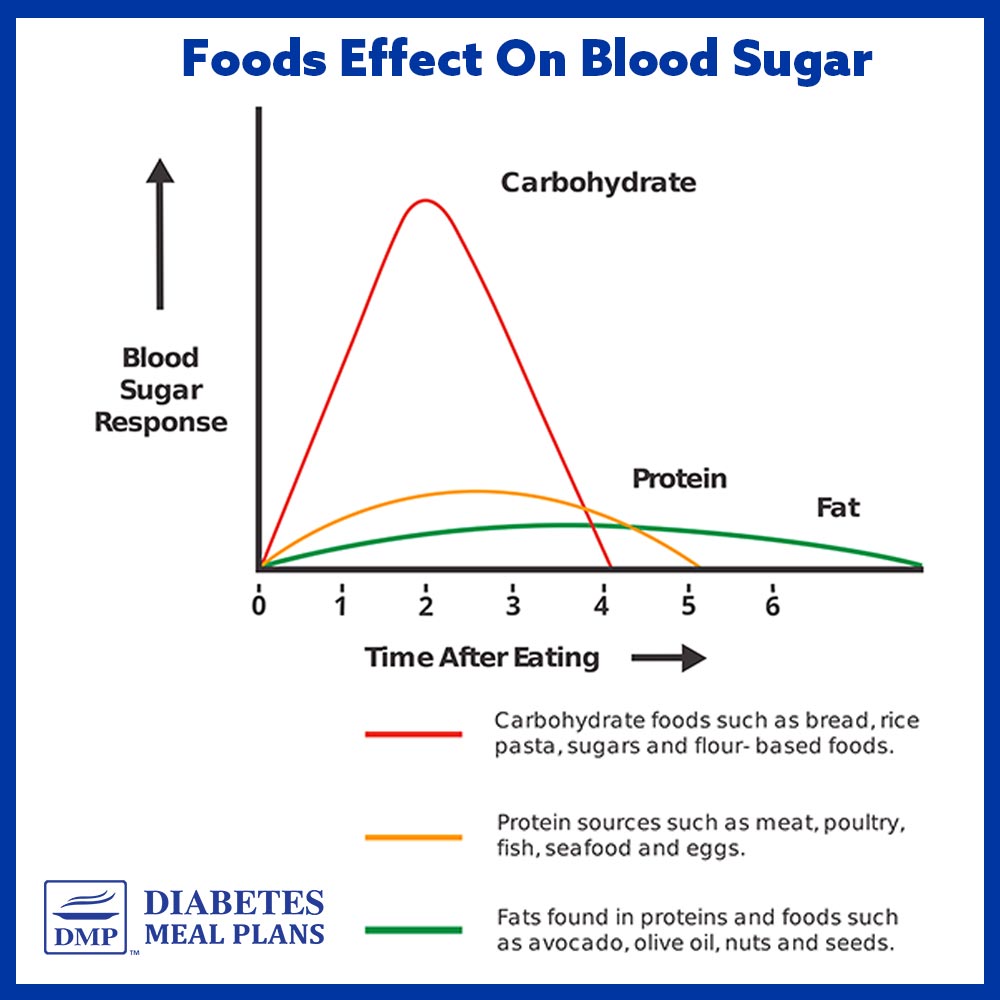
Other foods reduce inflammation, improve insulin sensitivity, and support stable glucose. For practical ideas, see our guide to foods to lower blood sugar.
And not all carbohydrates behave the same. Sugar, bread, and pasta spike glucose dramatically, while carbs from non-starchy vegetables support metabolic repair.
If you’re unsure where to begin, you might like to read about how many carbs per day to aim for, plus ideas for very low carb foods.
REMEMBER: Food is information. Your daily choices shape your metabolic future.
Frequently Asked Questions
Can type 2 diabetes really be reversed?
Many people can achieve remission, meaning blood sugar returns to the non-diabetic range without diabetes medications for a sustained period.
Remission is most likely when high blood sugar is addressed early and when nutrition changes lower insulin levels and reduce liver and pancreatic fat—something we help our members do with nutrition.
While not everyone will achieve remission, many people see major improvements in A1c, weight, energy, and overall metabolic health.
How long does it take to reverse type 2 diabetes?
It varies widely. Many of our members see significant improvements within weeks, others may take several months. Research shows the most successful remission outcomes occur within the first 2–6 years after diagnosis.
But our experience shows that even after 12-20 years living with type 2 diabetes, achieving remission is still possible. Hear stories from our members: Curtis and Dean.
What is the best diet to reverse diabetes?
Studies consistently show low carbohydrate diets are one of the most effective ways to improve blood sugar, lower A1c, and reduce medication need.
Other approaches like very low-calorie diets or bariatric surgery can also lead to remission, but low carb is the most sustainable long term. And we’re not talking no carbs or crazy keto and carnivore diets, which are very restrictive and extreme.
We’re talking a healthy low carb diet that is focused on nutrient-dense whole foods and has a balanced eating plan—like we teach people inside our membership.
Do you need to lose weight to reverse diabetes?
Weight loss helps, but it’s not required. Improvements in liver fat, pancreatic fat, and insulin sensitivity can occur even without major changes on the scale.
That’s why some people see rapid glucose improvements within days or weeks of dietary changes, even before losing much weight.
Is diabetes reversal the same as remission?
They’re often used interchangeably. Clinically, “remission” means blood sugar levels return to the normal range without diabetes medications for at least three months.
Informally, people may call this reversal. What matters most is improving metabolic health so the underlying drivers of diabetes are corrected.
Can type 2 diabetes come back after remission?
Yes, if old habits return or blood sugar rises again. Remission is not a cure, but it can be long-lasting when the nutritional and lifestyle foundations remain in place.
Ongoing monitoring and a balanced low carb lifestyle dramatically reduce the likelihood of relapse.
Can metformin or medications reverse diabetes?
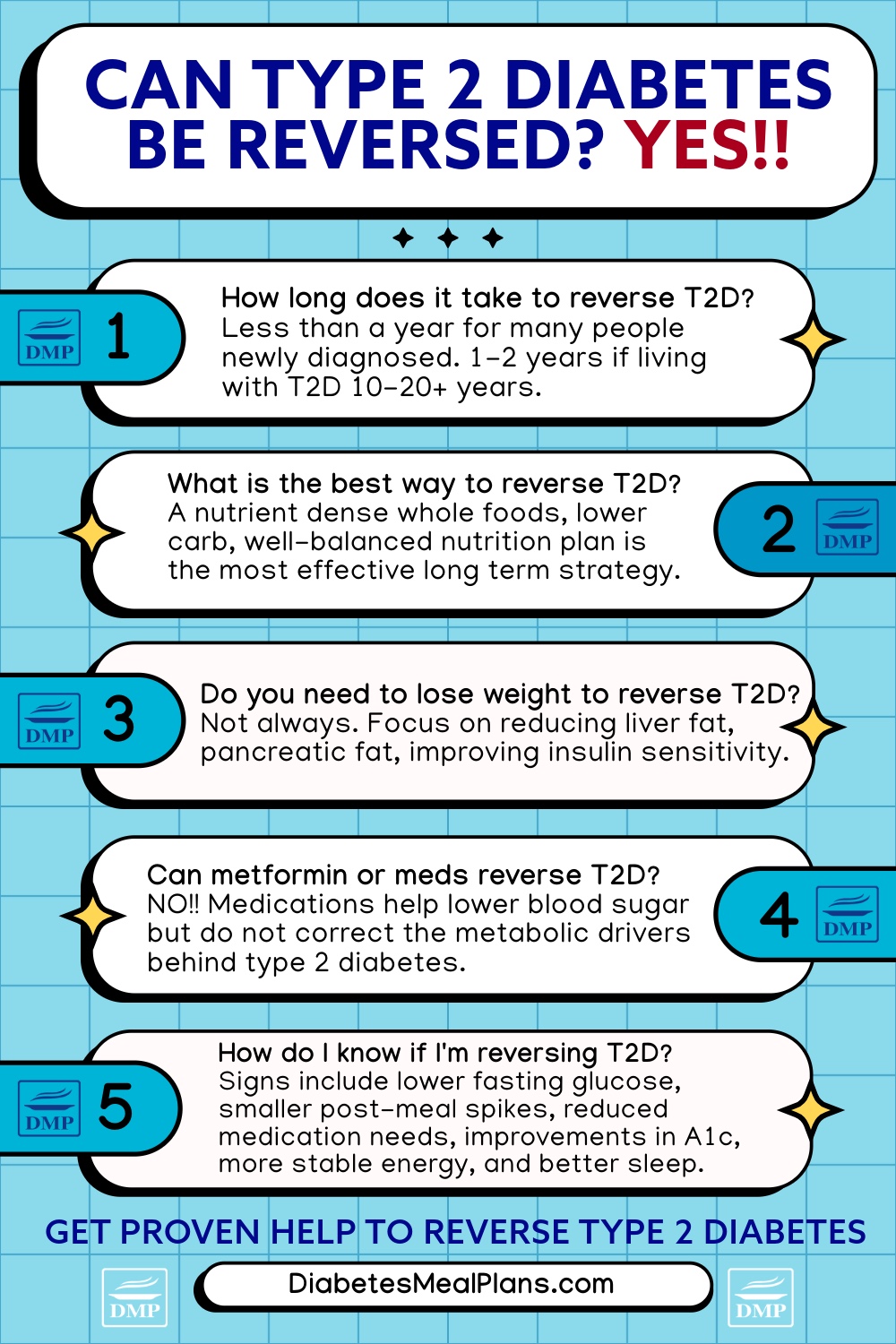
No. Medications help lower blood sugar but do not correct the metabolic drivers behind type 2 diabetes.
Only nutrition and lifestyle changes have been shown to create remission. However, medications may support improvements while you work on the root causes.
Is type 2 diabetes reversible without surgery?
Yes. Most people who achieve remission do so through nutrition changes—especially lowering carbohydrates—and improving sleep, stress, and daily movement. Surgery is generally reserved for more severe cases.
What is the fastest way to lower blood sugar naturally?
Reducing carbohydrate intake is the most reliable way to quickly lower blood sugar.
Pairing meals with protein, healthy fats, and non-starchy vegetables helps flatten post-meal spikes.
Walking after meals can also improve glucose within minutes. For more ideas, explore our list of foods to lower blood sugar.
How can I know if I’m reversing my diabetes?
Signs include lower fasting glucose, smaller post-meal spikes, reduced medication needs, improvements in A1c, more stable energy, and better sleep.
Many people see positive changes within the first few weeks of adjusting their diet and nutrition plan.
Let us help you reverse your type 2 diabetes > join us as a member today.
Get Real Results That Last
We see remarkable improvements in our members every day:
- Gloria lowered her A1c by 1.3% in one month
- Susan lowered A1c by 1.2% in six months
- Leisa dropped her blood sugar from the 300s to normal in 30 days
- Sheryl achieved a normal A1c for the first time since 2007
These aren’t isolated stories—they reflect what the research now confirms: remission and reversal of type 2 diabetes is possible for many—and we’re helping people achieve this every day!
If you want a clear, evidence-based way to work on the drivers of diabetes, this is exactly what our membership is designed for – consider joining us today.

Tom Maher
I have tried your program and listened to many it the podcasts and they have been very helpful. I do a pretty good job of controlling my post- prandial numbers but I can’t budge my morning fasting numbers. My average numbers in the morning are 150+. I always have a spike in the morning. My last A1C was 7.1. I take metformin only. I feel that if I could solve the morning problem, I could get that down.
Dr Jedha
Hi Tom, Have you listened to episode 38, there are some good tips in that as well. We can also help you troubleshoot this further inside the membership, if you ever consider joining us as a member.
Tom Maher
Thank you! I am going to join as a member.
Lovely B Griffin
Heyy my name is lovely griffin im 32 years old nd just recently on March 12th my blood sugar levels is 426 I did a follow-up at the doctor’s office in my A1C was a 6.0 right at prediabetic I am so grateful and blessed to get another chance is prediabetic reversible. Will i stop full blown diabetes I eat right I don’t eat no pastas no rice or bread I asked your size I have lost almost 10 lb and my sugar levels have been great
Emily - Dietitian (MS, RD)
It sounds like you’re making a lot of positive choices that can definitely prevent your prediabetes from turning into full blown diabetes. Continue eliminating the high carb foods you mentioned, and make sure to continue eating lots of vegetables and healthy fats. This should help lower your A1c to within range, and help with any additional weight loss that may be needed.
As far as the 426 mg/dL blood sugar, make sure to take note of circumstances surrounding the high reading. Was it something you ate? Extreme stress or sickness? Forgot medication? This will help you prevent it from reoccurring.
Flory
Which foods should i eat regularly in order to reduce my sugar level?
Emily - Dietitian (MS, RD)
Flory, based on lots of research we encourage people to follow a low carbohydrate diet for best control over their blood sugar. This Diabetes Friendly Food List should help reduce your sugar levels.
Ron Yorksie
Hi Jedha
Very informative piece. Thanks.
One thought- Is it possible to add the Canadian measurements along with the US ones?
Not a big deal but rather than stopping to compare measurements, it’d be easier to keep reading your advice.
Thanks
Ron
Emily - Dietitian (MS, RD)
Ron which measurements are you referring to? I quickly skimmed Jedha’s article but must have missed it. We usually aim to present blood sugar both in terms of mg/dl and mmol/L, but we welcome any additional suggestions for improvement. Thanks!
Pouewin
What about africain foods ( plantain,cassava,Ikea stew,eggplant stew,African mangoes stew,peanut stew ..so on) mixing some foods can reduce the glycemic load?
Thank you.
Emily - Dietitian (MS, RD)
To help reduce the glycemic load, you can pair carbohydrate containing foods with either protein and/or fat. For example, if you’re going to indulge in some fruit then we recommend you pair it will some cheese or peanut butter to provide that balance of carbs and protein and fat.
I am not familiar with all the dishes that you listed, however things like plantains, cassava, and mangoes are not foods we would typically recommend- much too high in carbohydrates. You may try making a refined version of African stew using any ingredients from this list.
Vst
What’s carb? Why can’t it be put straight away in names of food items n the portion each time and how many times in a day? Does reverse mean the diabetic can start normal diet like a non diabetic?
Emily - Dietitian (MS, RD)
A carb, or carbohydrate, is a nutrient that we eat that gives your body energy (calories) by being broken down into sugar. However all carbs are not created equal as some are much better for diabetics than others. Which brings us to your next question: the reason they cannot just put ‘carb’ in the ingredient list is because there are MANY different types of carbs. Just a few examples include wheat, starch, rice, barely, sugar, fructose, or any vegetables.
However, if you’re looking at a nutrient label it will clearly label the grams of carbohydrate per serving. So next time you’re in your kitchen grab a box of whatever you have on hand and flip it over to check for the grams of carbs per serving. Many of our members find consuming between 50-80 grams of carbs daily yields the best results.
Even if your sugar levels return to “normal,” your best bet is to continue with a lower carbohydrate diet as once you start consuming sugary junk again it is likely that your blood sugar levels will quickly return to the diabetic range.
Dave LeBlanc
Good article, but I think it would be helpful to distinguish between type 1 diabetes and type 2 diabetes. Type 1 is not reversible, type 2 is reversible, curable, fixable, or whatever you wish to call it. Diet and exercise worked for me.
Jedha
As the name of this website suggests Dave, we are all about TYPE 2 Diabetes. You’re right of course, Type 1 Diabetes is not reversible https://diabetesmealplans.com/374/type-1-vs-type-2-diabetes/