


Do your morning blood sugar numbers feel like a mystery? You felt proud of the food choices you made at dinner but woke up to a higher blood sugar than expected. And you didn’t eat overnight, and yet, still those numbers are high!
Morning readings are one of the most frustrating parts of managing prediabetes or type 2 diabetes, but there are effective solutions.
Our members have access to a step-by-step Healthmap Guide on Lowering Fasting Blood Sugar, and every time we come across new research or strategies we add it to the Healthmap.
One effective strategy is to look at your last meal of the day and how your body handles it overnight. New research confirms that your evening meal plays a bigger role than most people realize.

The Evening Meal’s Hidden Impact
Our bodies don’t process food the same way morning, noon and night. In the evening, your internal “biological clock” makes you less sensitive to insulin.
That means the same bowl of rice or slice of bread (not that we recommend those foods) can cause a bigger blood sugar spike at dinner than at lunch.
We’ve known for sometime that the time you eat in the evening is important to your morning numbers. Eating at least two hours before bed and avoiding snacking after the last meal is important.
It is also important to consider what you eat, as scientists found that the way blood sugar rose after the last eating occasion (often a late dinner or evening snack) strongly predicted fasting glucose the next morning.
In other words, a big spike at night often means a higher reading when you wake up.
Biological Fasting vs. Clock Fasting
Traditionally, “fasting” glucose is measured by how long you’ve gone without eating, usually from bedtime to morning. But researchers now argue that this isn’t the full picture.
Researchers have introduced the concept of the “Biological Overnight Fast (BOF).”
Instead of just counting hours, BOF starts only once your blood sugar has returned to baseline after dinner. That could be two, three or even more hours after your last bite, depending on what you eat.
This BOF discovery means your body may not truly be “fasting” until well after you’ve finished eating.
Researchers found that once the post-dinner blood sugar spike had settled, the average glucose during the true overnight fasting window was in the high 80s to low 90s mg/dL (4.4-5.0 mmol/L).
In other words:
- If your blood sugar control stayed steady in that healthy “normal” range overnight (typically 70–99 mg/dL/ 3.9-5.5 mmol/L), your fasting glucose in the morning will likely be normal.
- But if your blood sugar ran higher during the night (say from a carb-heavy dinner or reduced insulin sensitivity), your morning fasting reading also came in higher.
This just emphasizes the importance of what you eat at your evening meal.





Focus on Carbs
It’s easy to wonder why morning blood sugar runs high even after what feels like a “reasonable” dinner. The simple answer is carbohydrates.
Carbs are the main nutrient that raise blood sugar, and in the evening your body is naturally less efficient at handling them.
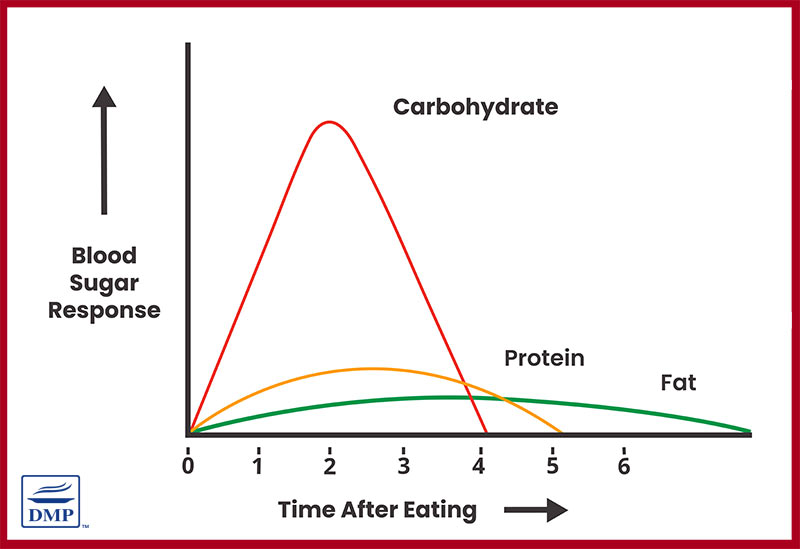
That means a carb-heavy dinner or snacking in the evening is much more likely to keep your glucose elevated through the night and show up as a higher reading in the morning.
When carbs are limited at dinner, and replaced with a balanced nutrient dense meal with protein, non-starchy vegetables and healthy fats, blood sugar usually stays steadier overnight.
This steadiness is what helps keep fasting glucose lower by morning. In fact, research shows that the size of the glucose rise after your last meal of the day is one of the strongest predictors of what your fasting glucose will look like the next day.
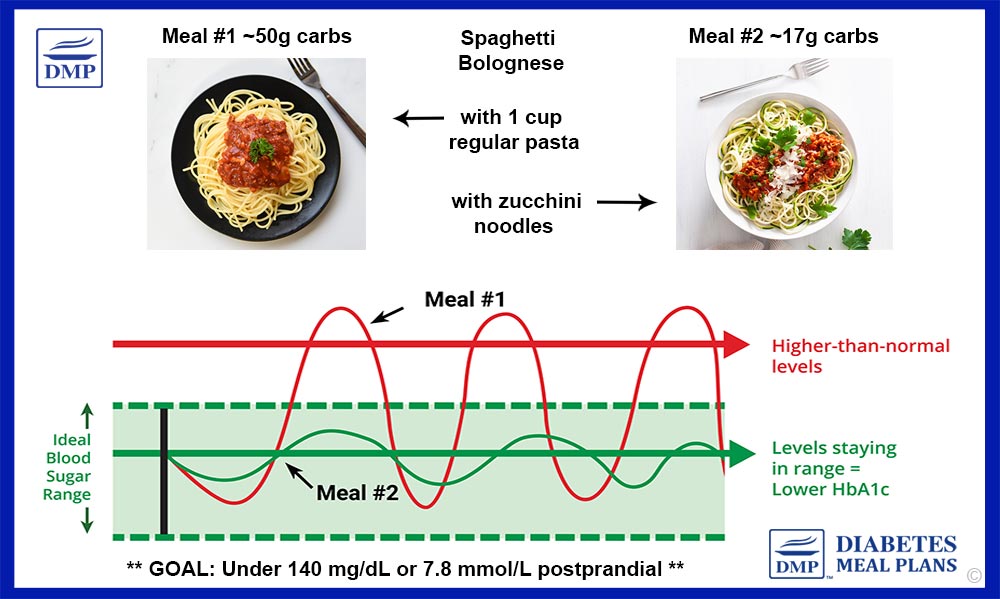
The takeaway: if your morning numbers are higher than you’d like, dinner carbs are one of the first places to look.
Why This Matters for Prediabetes
If you have prediabetes, your body is already showing early warning signs that it struggles with blood sugar control.
Morning fasting glucose is one of the most important markers to watch, because when it creeps up, the risk of progressing to type 2 diabetes rises sharply.
Research now shows that your evening meal plays a crucial role in this, so choose your meals wisely to ensure higher levels don’t spill over into the morning. Over time, this pattern can push fasting glucose higher and higher.

Changing what you eat at night is something you can directly control – see more tips on this below.
Researchers suggest the benefit of simple changes to your evening meal, will potentially stop prediabetes from advancing to type 2 diabetes.

Why This Matters for Type 2 Diabetes
For people already living with type 2 diabetes, fasting glucose is often the hardest number to bring down. You might manage well during the day, only to wake up with higher readings that won’t budge.
This is not just frustrating, it also matters for long-term health!
Evening meals are a big part of the reason for many people. Studies show that the blood sugar rise after your last meal of the day is a strong predictor of what your fasting number will be the next morning, so you want to prevent setting off a chain reaction of higher overnight glucose and stubborn morning highs.
Changing what you eat at night is something you can directly control – see more tips on this below.
For many people, this simple shift can lower A1c, reduce the need for medications and improve overall health outcomes.
Chronotype and the “Night Owl” Effect
Another fascinating piece of the puzzle is your chronotype, which refers to whether you’re a morning person or a night owl.
Researchers suggest that night owls may process evening meals even less efficiently, since their circadian rhythms are shifted.
This could partly explain why some people are more vulnerable to high morning glucose than others, even when eating the same foods.
Technology Is Changing the Game
Continuous glucose monitors (CGMs) are giving researchers new insights into these overnight patterns, which is a great thing!
By pairing CGMs with machine-learning algorithms, researchers can now automatically identify data we couldn’t track before in large groups of people.
In the future, we hope to see new research arising that provides more insights into lowering fasting blood sugar levels.
Practical Tips for Better Morning Numbers
Here’s what you can take from the science:
- Keep dinners lighter in carbs: Avoid starches like rice, pasta or bread late at night. Pair healthy carbs with protein and healthy fats to blunt spikes and ensure baseline levels return faster.
- Experiment with earlier eating: Try finishing your last meal at least two hours before bed to give your body time to clear glucose before true fasting begins.
- Track your patterns: If you have access to a CGM or glucose monitor, track how different dinners affect your morning glucose. Even fingerstick testing before bed and on waking can give clues.
- Think beyond food: Exercise, sleep and stress all affect insulin sensitivity.
- A short walk after dinner is amazing for lowering post-meal blood sugar levels
- Better sleep habits, even one poor night of sleep can affect insulin sensitivity
- Stress reduction through yoga, breathing, relaxation and mindfulness can all improve morning numbers
- Personalize it: If you know you’re more insulin resistant, you may need to be stricter with evening carbs. If you’re more sensitive, you may have a little more flexibility. Only your numbers will tell you what’s what, so make sure you track!
Of course, there are many other effective strategies to lower morning blood sugar, but the above tips relate to your evening meal specifically – and that’s a great place to start.

Conclusion
Morning blood sugar isn’t just about what you had for breakfast, it’s about how your body handled last night’s meal.
Your evening choices, your insulin sensitivity and your body clock all shape your fasting glucose.
But, one of the key areas you can pay closer attention to is dinner timing and composition.
Try it yourself – reduce carbs in your evening meal and eat dinner earlier – you may find that your mornings start looking a lot brighter within no time at all!
JOIN US AS A VIP MEMBER TODAY – access our step-by-step Healthmap Guide on Lowering Fasting Blood Sugar, and a whole new level of support to lower A1c and medications too!

Leave a Reply