


Table of Contents[Hide][Show]
- LISTEN TO THE PODCAST
- Is Red Meat Bad for Prediabetes? What the Research Really Says
- Not All Research Tells Us the Same Thing
- What Happens When Researchers Test Red Meat?
- Why Processed and Unprocessed Meat Matter
- Red Meat Is Often Nutritionally Misunderstood
- One Practical Step You Can Take
- Conclusion
- Transcript
For years, we’ve been told that red meat increases the risk of prediabetes and type 2 diabetes. But does the science actually support that claim?
In this episode, we separate headlines from evidence and explore what clinical trials really show about unprocessed red meat, blood sugar, and metabolic health.
LISTEN TO THE PODCAST
Support the podcast by leaving a 5-star rating and review on Apple, Spotify or our Website – Thank You!
Is Red Meat Bad for Prediabetes? What the Research Really Says
If you’ve been told to avoid red meat because you have prediabetes or type 2 diabetes, you’re certainly not alone. For years, headlines have linked red meat with an increased risk of diabetes, leaving many people wondering whether they should remove it from their eating plan altogether.
But is the evidence really that straightforward?
Not All Research Tells Us the Same Thing
Much of the concern about red meat comes from observational studies. These studies follow large groups of people over many years and look for links between what they eat and the health conditions they develop.
Many have found that people who eat more red meat also have a higher risk of developing type 2 diabetes.
However, an association does not prove cause and effect.
People who eat more red meat often differ in many other ways. They may have a higher body weight, exercise less, eat fewer vegetables, consume more ultra-processed foods, or have an overall lower-quality diet. This makes it difficult to determine whether red meat itself is responsible for the increased risk.
Randomized controlled trials provide stronger evidence because researchers assign participants to specific diets and then measure changes in blood sugar, insulin sensitivity, and other metabolic markers.
What Happens When Researchers Test Red Meat?
When scientists have actually studied people eating red meat under controlled conditions, the findings have been remarkably consistent.
A meta-analysis of 21 randomized controlled trials found that eating red meat did not significantly affect fasting blood glucose, fasting insulin, insulin sensitivity, HbA1c, or other markers related to diabetes risk.
Researchers have also studied adults with prediabetes specifically.
In one trial, participants consumed around 5 oz / 150 grams of lean beef each day without any worsening of insulin sensitivity or carbohydrate metabolism.
Another study compared unprocessed beef directly with poultry in adults with prediabetes. After four weeks, there were no meaningful differences between the two groups in blood sugar control, insulin sensitivity, pancreatic beta-cell function, blood lipids, or markers of inflammation.
Taken together, these studies challenge the idea that simply eating unprocessed red meat causes blood sugar levels to worsen.




Why Processed and Unprocessed Meat Matter
One important point often overlooked is that many studies group processed and unprocessed meats together.
A grilled steak, roast beef, or lamb chop is nutritionally very different from foods such as bacon, hot dogs, salami, or other processed deli meats.
Many observational studies report stronger associations between processed meats and diabetes risk than they do for unprocessed red meat.
This distinction matters because headlines frequently simplify the message to “red meat increases diabetes risk,” without explaining which types of meat were actually studied.
Red Meat Is Often Nutritionally Misunderstood
Many people avoid red meat because they believe it is simply “full of saturated fat.”
While red meat does contain saturated fat, it also contains a substantial amount of monounsaturated fat—the same type of fat found in foods such as olive oil and avocados. In fact, monounsaturated fat makes up the largest proportion of fat in many cuts of beef.
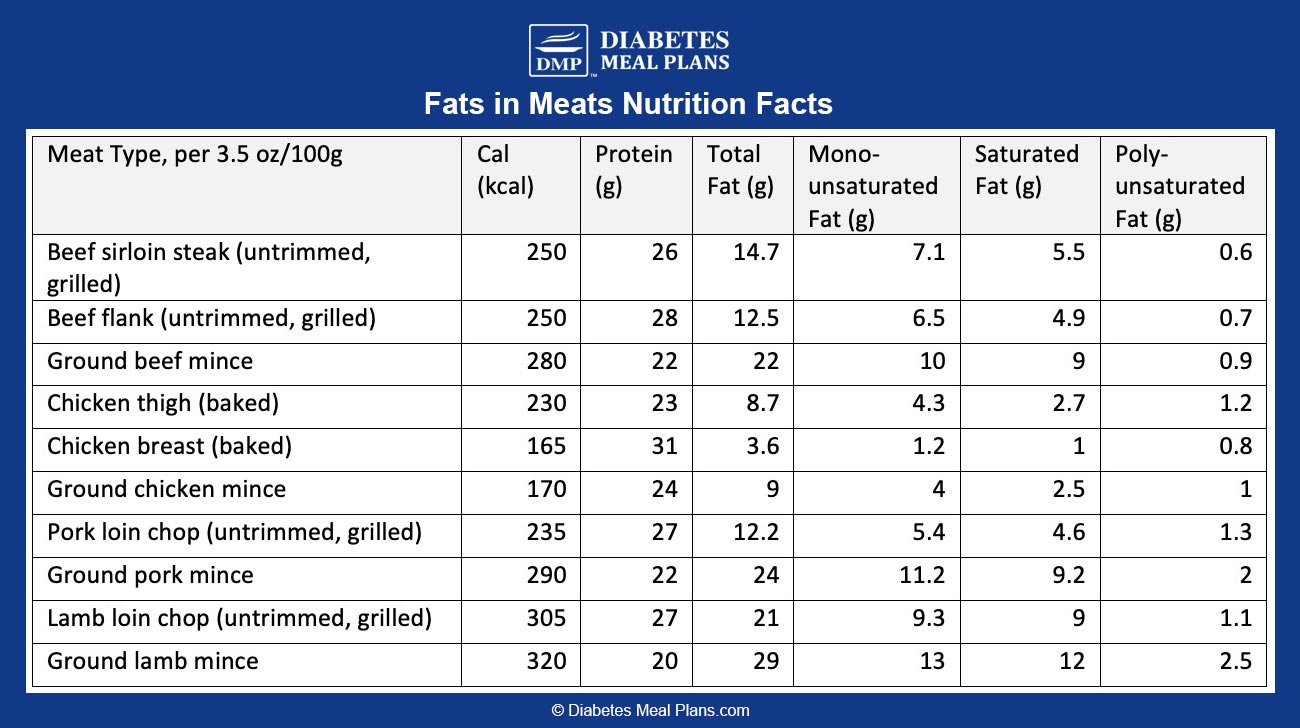
Red meat is also an excellent source of high-quality protein and provides nutrients that are important for good health, including vitamin B12, iron, zinc, and selenium.
For people with prediabetes or type 2 diabetes, adequate protein can help improve satiety, preserve muscle mass during weight loss, and reduce reliance on refined carbohydrate foods.
One Practical Step You Can Take
Rather than focusing on eliminating one whole food, focus on the quality of your overall eating plan.
Build meals around minimally processed foods, include adequate protein, manage post-meal blood sugar levels, and choose an eating plan that is both satisfying and sustainable.
If you enjoy unprocessed red meat, current evidence does not suggest that it needs to be avoided simply because you have prediabetes or type 2 diabetes.
Conclusion
Nutrition headlines often make individual foods appear either completely healthy or completely unhealthy. The reality is usually much more nuanced.
Current clinical trials do not show that eating unprocessed red meat worsens blood sugar control or insulin sensitivity in people with prediabetes or type 2 diabetes.
Rather than fearing a single whole food, focus on the overall quality of your eating plan. That’s where the strongest evidence lies for improving blood sugar, supporting weight loss, and reducing your risk of progressing to type 2 diabetes.
Transcript
Click Here To View
For years we’ve been told that eating red meat increases your risk of diabetes. But when scientists actually put people with prediabetes on diets containing beef and measure what happens to their blood sugar, insulin, and metabolism, the results tell a very different story.
Hello wonderful people, thanks for joining me for episode 126.
Today we’re exploring an interesting topic that comes up frequently, and also one we see in news headlines across the Wild West Web…red meat.
If you have prediabetes, chances are you’ve heard or read this advice before, something along the lines of “Eat less red meat.” “Choose chicken instead.” “Replace red meat with whole grains and plant-based foods.”
It’s become so common that many people simply accept it as fact, that red meat should be avoided and is “bad” for you. In fact, if you base your judgement solely on the headlines and articles you read across the Wild West Web, red meat has almost been put into the same category as added sugar or ultra-processed foods.
But when you stop and think about it, it raises an interesting question. How did a whole food that humans have eaten for thousands of years become one of the foods most blamed for modern conditions like prediabetes and type 2 diabetes?
Well, instead of taking things on face value, it’s worth asking whether the fear of red meat is actually supported by the evidence, don’t you think?
Because here’s something that often gets lost in the conversation. When researchers say “red meat,” they’re frequently grouping together very different foods. We’re talking about everything from a lean steak or lamb chop through to hot dogs, bacon, salami, and other highly processed meats. Then there are all the other lifestyle factors that often travel alongside higher red meat intake. People who eat more red meat in observational studies may also be more likely to eat fast food, consume fewer vegetables, smoke, exercise less, or have a higher body weight. So, is red meat itself causing the problem? Or is red meat simply being found alongside other behaviors that increase risk of type 2 diabetes?
Because those are two very different questions.
And as you’ll see in this episode, once researchers move from observing people to actually putting people on controlled diets and measuring what happens to their blood sugar and insulin levels, the story becomes much more complicated.
Why does the research seem so confusing? Well, the answer comes down to understanding that not all research is created equal. Most of the scary headlines about red meat come from what’s called observational studies. Researchers ask large groups of people what they eat and then follow them over many years. If people who eat more red meat develop more diabetes, an association is found.
But here’s the important part. An association doesn’t prove cause and effect. Imagine you found that people carrying umbrellas were more likely to get wet. That doesn’t mean umbrellas make people wet. They’re simply associated with rainy weather. The same thing can happen in nutrition research. People who eat more red meat may also differ in dozens of other ways. They might exercise less, smoke more, eat fewer vegetables, consume more ultra-processed foods, or have a higher body weight. It’s difficult to separate the effect of one food from everything else that comes with it.
Randomized controlled trials work differently. Researchers assign people to specific diets and then measure what happens. This type of study can’t answer every question, particularly what happens over decades, but it is much better for answering a simple question: Does eating more red meat actually worsen blood sugar control or insulin sensitivity?
And when we look at those trials, the answer is surprisingly consistent.
So what happens when people actually eat red meat? When researchers have put this question to the test, the results have been surprisingly consistent.
A meta-analysis of 21 randomized controlled trials found that eating red meat did not significantly affect fasting glucose, fasting insulin, insulin sensitivity, insulin resistance, HbA1c, beta-cell function, or GLP-1 levels. And this wasn’t just in healthy people. Some of the studies included people with metabolic syndrome or type 2 diabetes.
Researchers have also looked specifically at people with prediabetes. In one study, adults with overweight or obesity and prediabetes consumed about 150 grams of lean beef each day in place of carbohydrate foods. After four weeks, markers of insulin sensitivity and carbohydrate metabolism remained unchanged.
Then a newer study compared what happened when people with prediabetes ate either unprocessed beef or poultry. Participants consumed around 6 to 7 ounces per day of either beef or poultry as part of their usual eating pattern, that’s about 170-200g per day. So the people ate either beef or poultry. After four weeks, the researchers found no meaningful differences in pancreatic beta-cell function, glucose control, insulin sensitivity, blood lipids, or markers of inflammation. So when we look at this data, which asks a direct question and tests actual health markers, we can see that the outcomes challenge the idea that simply eating unprocessed red meat causes blood sugar to worsen.
If that were true, we would expect to see at least some consistent deterioration in these metabolic markers when people are asked to eat more beef. So far, that simply hasn’t been shown in controlled trials. Red meat does not have a negative impact on blood sugar or metabolic markers.
So Why Do Observational Studies Keep Finding Higher Risk?
This is where nutrition science gets messy. Observational studies consistently report that people who eat more red meat have a higher risk of developing prediabetes or type 2 diabetes. So, we shouldn’t just ignore those findings.
But we also have to ask an important question: What exactly are these studies measuring? They’re measuring entire patterns of living. For example, imagine two people. One eats steak alongside vegetables, eggs, Greek yogurt, and mostly minimally processed foods. The other eats more burgers, fries, pizza, sugary drinks, and takeaway meals. Both people may end up in the “higher red meat intake” category. Yet their overall dietary patterns are completely different.
That’s one of the biggest challenges in nutrition research. Foods don’t exist in isolation. They come packaged with other habits and behaviors. Even researchers acknowledge that people who consume more red meat often differ in many ways beyond the meat itself. They may have a higher body weight, consume less fiber, be less physically active, or have other lifestyle factors that influence metabolic health.
And then there’s another issue. Many observational studies combine unprocessed red meat and processed meat into the same category. But a lean steak and a hot dog are not nutritionally identical foods. We actually covered this in episode 45 where we also spoke about red meat. In the food frequency questionnaires that get used in these population studies, unprocessed red meats often get categorized with meat sandwiches or mixed dishes, so essentially we’re not looking at unprocessed red meat like beef or lamb, we could actually be looking at beef or pork sandwiches or burgers (not just the patties but the bread and the buns) or beef lasagna or beef bolognese with spaghetti, for example.
So when we see an association between red meat intake and diabetes risk, we have to be careful about jumping to the conclusion that eating a steak is causing someone’s blood sugar problems. The reality is that the higher risk seen in observational studies may be partly due to the meat, partly due to processed meats, partly due to carbohydrate intake, partly due to overall diet quality, and partly due to other lifestyle factors. And that’s why the picture is far more complicated than the headlines suggest.
Then there’s the issue of cross contamination between unprocessed meats like beef, lamb chops, or ground beef mince, in comparison to processed meats like bacon or deli meats. Many observational studies report stronger associations between processed meats and diabetes risk than they do for unprocessed red meat.
And when researchers talk about possible mechanisms, such as nitrates, nitrites, advanced glycation end products, or compounds formed during processing and preservation, these concerns don’t necessarily apply equally to a plain piece of beef. Yet the headlines often don’t make this distinction.
People simply hear: “Red meat increases diabetes risk.” And suddenly, a grilled steak and a hot dog are treated as though they’re metabolically identical foods. They’re not. So if we’re trying to understand whether unprocessed red meat is bad for prediabetes, we shouldn’t automatically assume that evidence relating to heavily processed meats applies equally to a piece of beef or lamb on your dinner plate.
I also think red meat is one of the most misunderstood foods nutritionally.
Ask most people why they avoid red meat and you’ll often hear: “It’s full of saturated fat.” And yes, red meat does contain saturated fat. But that’s only part of the story. Unprocessed beef also contains a substantial amount of monounsaturated fat, the same type of fat that we celebrate in foods like olive oil and avocados. In fact, in many cuts of beef, monounsaturated fat actually makes up the largest proportion of the fat.
Now, I’m not saying steak is the same as olive oil. They’re completely different foods with different nutritional profiles. But I do think it’s interesting that one food containing saturated fat is often labelled unhealthy, while another food that also contains saturated fat is widely considered one of the healthiest foods you can eat. Nutrition is rarely that black and white. And fat isn’t the whole story anyway.
Red meat is also rich in high-quality protein and provides nutrients that are important for metabolic health, including iron, zinc, selenium and vitamin B12. For people with prediabetes, adequate protein can help support satiety, preserve muscle mass during weight loss, and make it easier to build meals that don’t rely heavily on refined carbohydrates.
I just wanted to make this point because red meat is frequently perceived as being “full of saturated fat”, and this is a key example of an oversimplification of a much more nutritionally complex food. And we know there are many similar nutrition myths like this that get thrown around like gospel, but they simply aren’t based on evidence.
One thing I think often gets forgotten in nutrition discussions is that foods don’t exist in a vacuum. Whenever someone says, “Eat less of this food,” the obvious question should be: Compared with what? Because if you’re replacing a steak with salmon, eggs, Greek yogurt, beans, or other minimally processed protein foods, that’s one conversation. But if you’re replacing a steak with cereal, crackers, pretzels, low-fat snack foods, or other highly processed carbohydrates that spike your blood sugar, that’s an entirely different conversation. And this is particularly important for people with prediabetes.
Prediabetes isn’t caused by eating steak. It’s fundamentally a problem of impaired glucose regulation and insulin resistance. So the foods that deserve our attention are the ones that substantially impact those processes.
So then, Should You Avoid Red Meat If You Have Prediabetes?
Remember, we’re all about evidence over opinion and so based on the evidence, the answer is no – there’s no convincing evidence that eating unprocessed red meat is inherently harmful for people with prediabetes. There’s no convincing evidence that it worsens blood sugar or any metabolic markers that would increase a person’s risk of diabetes.
If you enjoy a steak, lamb chop, or ground beef mince as part of your overall healthy eating plan, there’s no good evidence to suggest that food alone is driving your blood sugar higher or pushing you toward type 2 diabetes – none.
For people with prediabetes, the things that consistently matter most are:
- Building meals around minimally processed foods
- Including adequate protein
- Managing post-meal blood sugar levels
- Losing excess body fat if needed
- And creating an eating plan that is satisfying and sustainable
And unprocessed red meat can fit within that approach.
I don’t think people with prediabetes need to fear a whole food simply because headlines have repeatedly suggested it’s harmful. The science is more nuanced than that, and that’s exactly why it’s so important to look beyond the headlines and follow the evidence.
If you’re one of our members, head to the members library where we’ve included some additional resources on different meats and their nutritional profile, and remember you can bring your questions and challenges to the monthly member check ins.
That’s all from me today, see you in the next episode.
Dr Jedha, over and out.
Subscribe to Type 2 Diabetes Talk on: Apple | Spotify | Amazon Music | Audible | YouTube | Podcast Index | Player FM | and more…
Leave a Reply