


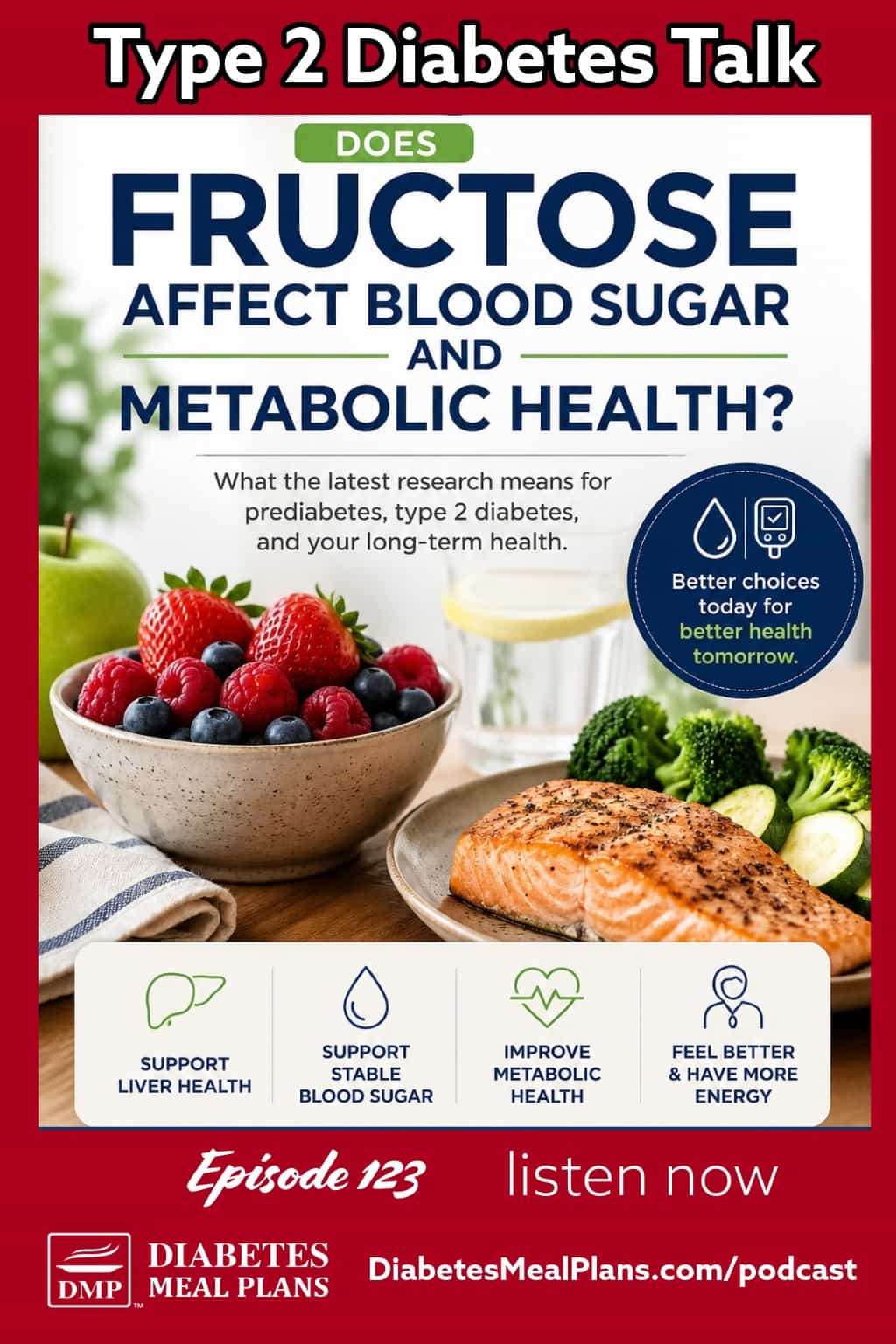
We’ve been told for years that “a calorie is a calorie,” but emerging research suggests some sugars may affect the body differently than others.
In this episode, you’ll learn what fructose is, why scientists are once again putting it under the spotlight, and the practical steps that can help support better blood sugar, liver health, and metabolic health if you have prediabetes or type 2 diabetes.
LISTEN TO THE PODCAST
Support the podcast by leaving a 5-star rating and review on Apple, Spotify or our Website – Thank You!
What Is Fructose?
Fructose is a naturally occurring sugar found in foods such as fruit, honey, and some vegetables. It’s also one of the sugars found in ordinary table sugar, called sucrose.
In fact, table sugar is 50% glucose, 50% fructose.
Fructose is also present in high-fructose corn syrup, which is commonly used in soft drinks, energy drinks, fruit juices, sweetened coffees, desserts, confectionery, sauces, and many ultra-processed foods.
Whenever fructose appears in headlines, many people immediately assume fruit is the problem. But that’s generally not what researchers are concerned about.
The fructose found in an apple, berries, or a peach comes packaged with fiber, water, vitamins, minerals, and beneficial plant compounds. It takes time to chew, digest, and absorb, and most people don’t consume excessive amounts from whole fruit.
The bigger concern is what has happened to our modern food environment.
Today, many foods and beverages deliver large amounts of sugar rapidly, require very little chewing, and are incredibly easy to overconsume.




Why Fructose Affects the Body Differently
For many years, nutrition advice suggested all calories were essentially equal. The thinking was simple: consume more calories than you burn and weight gain occurs.
While calories certainly matter, research increasingly shows that different nutrients can influence the body in different ways.
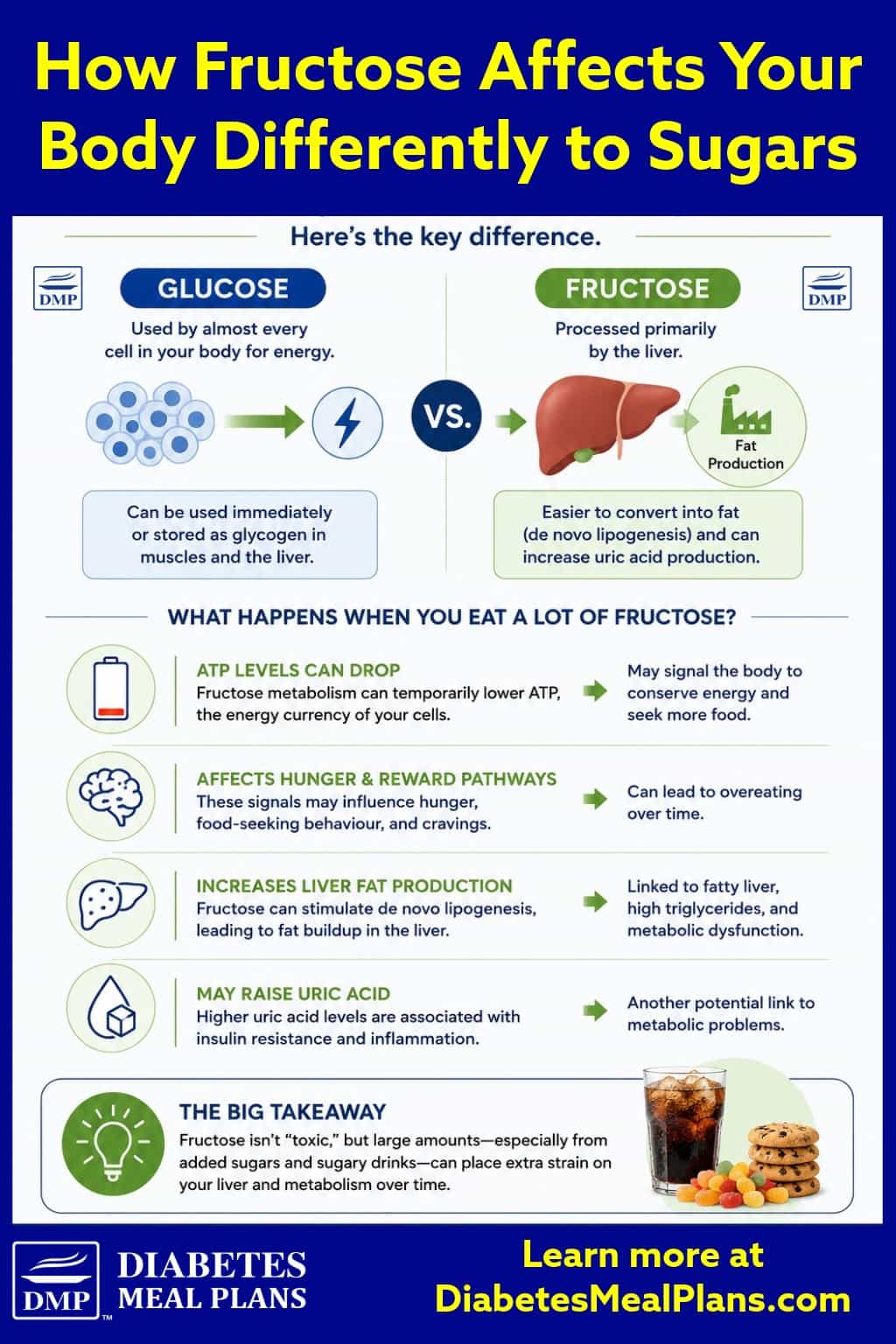
Unlike glucose, which can be used by almost every cell in the body, fructose is handled differently. Most fructose is processed by the liver.
Researchers describe fructose as acting not just as an energy source but also as a metabolic signal that may influence pathways involved in fat production, energy storage, hunger, and food-seeking behavior.
One mechanism involves ATP, often called the energy currency of the cell.
When fructose is metabolized, ATP levels can temporarily decline. Researchers believe this may trigger responses that encourage the body to conserve energy and seek additional food.
In simple terms, the body may interpret this as a signal that resources are becoming scarce, even when food is actually abundant.
Fructose metabolism can also increase uric acid production and stimulate fat production within the liver, a process known as de novo lipogenesis.
Over time, these changes may contribute to fatty liver, elevated triglycerides, insulin resistance, and metabolic syndrome.
This doesn’t prove fructose alone causes obesity or type 2 diabetes.
However, many researchers believe fructose is a major contributor that promotes overeating and metabolic dysfunction more readily than other sugars.
Fructose, Fatty Liver, and Insulin Resistance
One reason fructose has become such an important area of research is its connection to fatty liver disease.
Fatty liver is incredibly common among people with prediabetes, type 2 diabetes, obesity, and insulin resistance.
Your liver plays a central role in regulating blood sugar and managing energy storage. When excess fat accumulates in the liver, many of these functions can become impaired.
Researchers have consistently observed that diets high in added sugars, particularly from sugar-sweetened beverages, are associated with increased liver fat and higher triglyceride levels.
Fructose receives special attention because it is processed primarily by the liver, where much of it can be converted into fat.
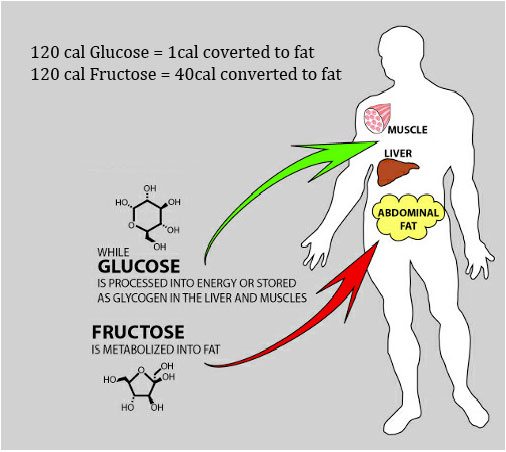
This is one reason fatty liver and insulin resistance often occur together. They tend to feed into one another, creating a cycle that becomes increasingly difficult to break.
Why Food Quality Matters More Than Calories Alone
A useful way to think about nutrition is that your body doesn’t experience nutrients in isolation.
Every meal is a package of information.
The foods you eat influence hunger and fullness, blood sugar levels, insulin release, inflammation, liver fat accumulation, and energy regulation.
Consider two meals that contain similar calories. One meal consists of a soft drink, cookies, and a candy bar. The other consists of salmon, vegetables, avocado, and nuts.
On paper, the calories may be comparable. But the way your body responds will be very different.
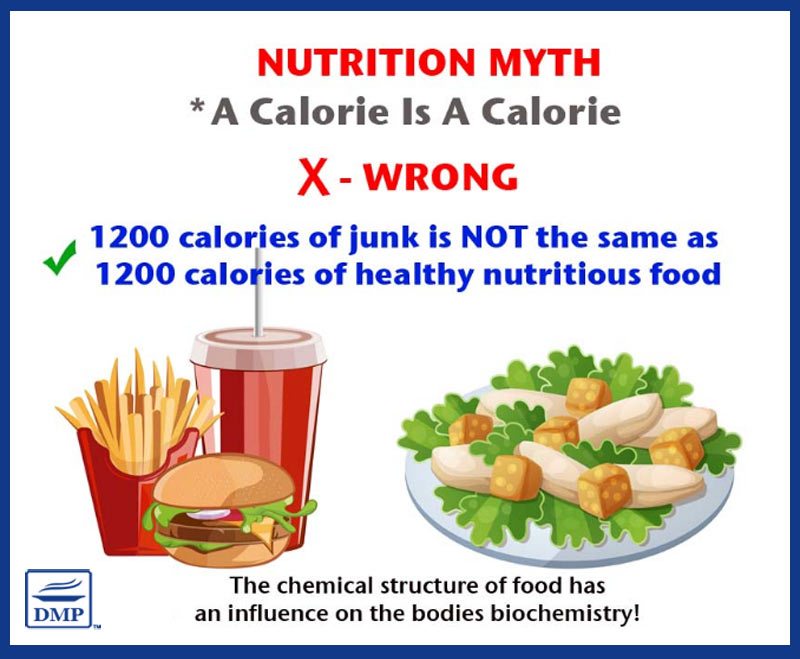
One meal is likely to leave you hungry again quite quickly. The other provides protein, fiber, healthy fats, vitamins, minerals, and far greater feeling of fullness and satisfaction.
This is why the statement that “a calorie is a calorie” doesn’t tell the whole story.
Calories matter. But the source of those calories matters too.
Practical Steps to Support Better Metabolic Health
The practical message from this research is remarkably similar to what we’ve been discussing for years.
Rather than obsessing over every gram of fructose, focus on reducing the foods that place the greatest burden on your metabolism.
One of the most effective steps you can take is to reduce or eliminate sugary drinks where possible.
It can also help to:
- Limit desserts and confectionery
- Be mindful of added sugars hidden in processed foods
- Choose whole, minimally processed foods more often
- Build meals around quality protein and non-starchy vegetables
- Include healthy fats that support satiety and stable blood sugar levels.
Most importantly, remember that fruit generally isn’t the biggest challenge for most people.
The common thread behind metabolic disease isn’t someone eating berries after dinner or having an apple at lunch.
It’s the increasing dominance of ultra-processed foods and sugar-sweetened beverages that make it remarkably easy to consume large amounts of sugar and energy with very little fullness in return.
The Big Takeaway
The latest research doesn’t suggest fructose is uniquely toxic or that fruit should be avoided.
Instead, it reinforces something we already know.
Modern dietary patterns often contain large amounts of added sugars delivered through highly processed foods and drinks that are easy to overconsume and may place significant strain on metabolism.
When it comes to your eating plan, the goal isn’t perfection. It’s creating an eating pattern that supports stable blood sugar, healthy liver function, satiety, and long-term metabolic health.
Focus on whole foods, quality protein, non-starchy vegetables, and reducing the major sources of added sugar.
Those simple changes may not generate sensational headlines, but they consistently help improve metabolic health, whether your goal is lowering A1c, reducing insulin resistance, or supporting your long-term health with prediabetes or type 2 diabetes.
Need help to improve your diabetes health? Join us as a member today.
Transcript
Click Here To View
Dr Jedha, Host
We’ve been told for years that “a calorie is a calorie,” but what if some sugars affect the body differently than others? Listen up as we discuss one interesting sugar that blows this myth in two.
Hello wonderful people, thanks for joining me for episode 124. We’ve been told for years that “a calorie is a calorie,” but what if some sugars affect the body differently than others?
What I’m about to share today is nothing new, it’s something that’s been known for sometime. But a new paper published is once again putting fructose under the spotlight, suggesting it may act less like a simple sugar and more like a metabolic trigger involved in obesity, fatty liver, insulin resistance, and chronic disease.
Today, we’re unpacking what fructose actually is, how it behaves differently inside the body, why modern diets may be creating problems our biology wasn’t designed for, and most importantly, what this means in practical everyday life.
Let’s start with a basic question: what exactly is fructose?
Fructose is a type of sugar that occurs naturally in foods. You’ll find it in fruits, honey, and even some vegetables. It’s also one of the two sugars that make up ordinary table sugar, known as sucrose. When you consume table sugar, you’re getting roughly equal amounts of glucose and fructose.
Fructose is also found in high-fructose corn syrup, a sweetener commonly used in soft drinks, confectionery, baked goods, sauces, and many ultra-processed foods.
Now, whenever fructose comes up in the media, there’s often a tendency for people to immediately think fruit is the problem. But that’s not really what researchers are concerned about.
The fructose found in a whole apple, peach, or handful of berries arrives packaged with fiber, water, vitamins, minerals, and other beneficial compounds. It takes time to chew, digest, and absorb. Most people are not consuming excessive amounts of fructose from whole fruit.
The bigger concern is what has happened to our food environment over the past several decades.
Today, fructose is often consumed in large amounts through sugar-sweetened beverages, soft drinks, energy drinks, sweetened coffees, fruit juices, desserts, confectionery, syrups, and countless ultra-processed foods. These foods deliver sugar quickly, require very little chewing, and are often easy to overconsume.
This distinction is important because when scientists talk about fructose contributing to metabolic disease, they’re generally not talking about someone eating an apple after lunch. They’re talking about dietary patterns characterised by high intakes of added sugars and highly processed foods.
In fact, if we look at where most added sugars come from in modern diets, sugary drinks remain one of the largest contributors. These beverages can deliver large amounts of fructose in a matter of minutes, often without creating the same feeling of fullness that comes from eating whole foods.
So while fructose itself isn’t new, and it’s certainly not a newly discovered sugar, researchers have become increasingly interested in whether the body responds differently to fructose compared to other sugars, particularly when it’s consumed in large amounts through modern processed foods.And the reality is, fructose is doing much more than simply adding extra calories to our diet.
For many years, the dominant view was that all calories were essentially the same. Whether those calories came from fat, protein, glucose, or fructose, the thinking was that weight gain and metabolic disease simply resulted from consuming more energy than the body needed. That’s not the case. While calories certainly matter to some degree, different nutrients can influence the body in different ways, there is no doubt about that. And this is where fructose has attracted so much attention.
Unlike glucose, which can be used by almost every cell in the body, fructose is handled quite differently. Most fructose is processed by the liver, and it enters metabolic pathways that are less tightly regulated than those used for glucose.
Fructose acts as more than just a source of energy. Researchers describe it as a metabolic signal capable of activating biological pathways that favor fat production, energy storage, and increased food seeking behaviour.
One of the mechanisms they discuss involves ATP, which stands for adenosine triphosphate. You can think of ATP as the energy currency of your cells. Every process in your body relies on ATP to function.
When fructose is metabolized, ATP levels can temporarily fall. Researchers believe this may trigger a series of responses that encourage the body to conserve energy and seek additional food. In simple terms, the body may interpret this as a signal that resources are becoming scarce, even when food is actually abundant.
Fructose metabolism can also increase uric acid production and stimulate pathways involved in fat creation within the liver, a process known as de novo lipogenesis. Over time, these changes may contribute to fatty liver, elevated triglycerides, insulin resistance, and other features of metabolic syndrome.
Now before anyone panics, it’s important to remember that these are biological mechanisms. A mechanism by itself does not prove that fructose is solely responsible for obesity or type 2 diabetes. Human health is far more complex than that.
What makes these findings interesting is that they may help explain why certain foods seem to drive hunger, weight gain, and metabolic dysfunction more readily than others.
And today in our modern environment, many people consume highly palatable, calorie-dense foods around the clock. In the environment we live in today, sugar-sweetened beverages, desserts, takeaway foods, snack foods, and ultra-processed products are never more than a few minutes away. And that leads to overconsumption of fructose with the potential to activate these biological pathways that can contribute to metabolic diseases such as obesity, fatty liver disease, prediabetes, and type 2 diabetes.
One of the reasons fructose has become such a hot topic in metabolic health research is its connection to fatty liver disease and insulin resistance.
If you’ve listened to my podcast for a while, you’ll know that I often describe fatty liver as one of the major warning signs that metabolism is starting to go off track. Fatty liver is incredibly common, particularly among people with prediabetes, type 2 diabetes, obesity, and insulin resistance.
The liver plays a central role in processing nutrients, regulating blood sugar, and managing energy storage. When excess fat begins accumulating in the liver, it can interfere with many of these important functions.
Researchers have long observed that diets high in added sugars, particularly from sugar-sweetened beverages, are associated with increased liver fat and higher triglyceride levels. Fructose has received particular attention because it is primarily processed by the liver, where some of it can be converted into fat.
The authors of this new review suggest that fructose may contribute to several processes involved in fatty liver development. These include increased fat production within the liver, reduced cellular energy availability, and metabolic changes that can promote insulin resistance over time.
Insulin resistance occurs when the body’s cells become less responsive to insulin, making it harder for glucose to move from the bloodstream into the cells where it can be used for energy. As insulin resistance worsens, blood sugar levels begin to rise and the pancreas is forced to produce increasing amounts of insulin to compensate.
This is one of the reasons fatty liver and insulin resistance are often seen together. They tend to feed into one another, creating a cycle that becomes increasingly difficult to break.
Now, it’s important to keep this in perspective.
This doesnt mean that eating a piece of fruit causes fatty liver. Nor does it mean that fructose alone explains why someone develops insulin resistance or type 2 diabetes.
What matters most is the overall dietary pattern.
For example, drinking several soft drinks each day delivers a large amount of rapidly absorbed sugar directly to the liver, and a lot of fructose. The same can be true for sweetened coffees, energy drinks, fruit juices, sports drinks, desserts, confectionery, and many ultra-processed foods that contain significant amounts of added sugar, and fructose.
By contrast, whole fruit contains fiber, water, and nutrients that slow consumption and digestion. Most people become full long before reaching the levels of fructose typically seen in studies examining excessive sugar intake.
In other words, the concern is not fructose in isolation. The concern is chronic overexposure to added sugars within a modern food environment that makes overconsumption remarkably easy.
For people with prediabetes, type 2 diabetes, fatty liver, or elevated triglycerides, this distinction is particularly important. One of the most effective ways to improve metabolic health is often not through obsessing over every gram of fructose, but by reducing the major sources of added sugar and ultra-processed foods that place the greatest burden on the liver and metabolism.
And that’s where the practical take-home message begins to emerge. Reducing fruit can be beneficial for diabetes and we spoke about fruits to avoid in episode 84. But fruit overall isn’t generally people’s challenge. An apple is not simply a delivery system for fructose. It also contains fibre, water, vitamins, minerals, and plant compounds. It requires chewing, takes up space in the stomach, and contributes to feelings of fullness. All of these factors influence how the body responds to that food.
Consider the difference between eating two apples and drinking a large soft drink. Both contain sugar, but they are very different eating experiences. Most people would feel quite satisfied after eating two apples. The soft drink, however, can often be consumed in a matter of minutes with very little impact on hunger.
Calories are not just calories, because the food matrix and what that food contains influences your body differently.
It’s important to pay closer attention to the foods and beverages that deliver large amounts of sugar with very little nutritional value in return. It’s the sweetened beverages, processed foods, and added sugars that have become a routine part of modern eating patterns. Those are the kinds of foods you want to get out of your eating plan.
As interesting as the fructose research is, there’s a danger in focusing too heavily on any single nutrient.
Nutrition science has a long history of searching for the one thing responsible for chronic disease. At various times, fat was blamed, then saturated fat, then cholesterol, then carbohydrates, and now sometimes sugar. Yet human metabolism is far more complex than any one nutrient acting alone.
The reality is that obesity, fatty liver, prediabetes, and type 2 diabetes develop through the interaction of many factors. Diet plays a major role, but so do physical activity levels, sleep quality, stress, genetics, muscle mass, age, medications, and overall lifestyle patterns.
This doesn’t mean fructose is irrelevant. The biological mechanisms discussed in this latest review are certainly plausible and supported by a growing body of research. But fructose is unlikely to be the entire story.
For example, two people could consume the same amount of fructose and have very different outcomes depending on their overall metabolic health. Someone who is physically active, maintains a healthy weight, sleeps well, and eats a largely whole-food diet may respond very differently compared to someone with significant insulin resistance, fatty liver, poor sleep, and a highly processed diet.
This is one reason why I encourage people to focus less on individual nutrients and more on overall dietary patterns and the quality of their nutrition plan.
A useful way to think about it is that your body doesn’t experience nutrients in isolation. Every meal is a package of information. The foods you eat influence hunger, satiety, blood sugar, insulin levels, inflammation, liver fat accumulation, and energy regulation simultaneously.
Take two meals that contain the same number of calories. One might consist of a sugary soft drink, a packet of cookies, and a candy bar. The other might be salmon, vegetables, avocado, and a handful of nuts. On paper, the calories may be similar, but the way your metabolism responds is going to be very different.
One meal is likely to leave you hungry again quite quickly. The other is likely to provide protein, fiber, healthy fats, vitamins, minerals, and a much greater sense of fullness.
This is why the old statement that “a calorie is a calorie” doesn’t tell the whole story. Calories matter to some degree, but the source of those calories can influence how much we eat, how hungry we feel, and how our metabolism responds.
The real lesson from this fructose discussion isn’t that we should obsess over every gram of sugar. It’s that the modern food environment contains many foods and beverages that are remarkably effective at driving overconsumption and metabolic dysfunction.
When we step back and look at the bigger picture, the common thread isn’t fruit. It’s the increasing dominance of ultra-processed foods, sugar-sweetened beverages, and dietary patterns that make it easy to consume large amounts of energy with very little satiety.
And that’s where some of the most powerful opportunities for improving metabolic health are found.
So, what should we take away from all of this?
First, while this new review has generated headlines, the idea that fructose may contribute to metabolic disease is not new. Researchers such as Richard Johnson, Robert Lustig, and others have been exploring these mechanisms for many years. What this paper does is bring together a large body of evidence and reinforce the idea that fructose may act as more than simply a source of calories.
Second, the biggest concern is not whole fruit. The evidence continues to support the inclusion of whole fruits as part of a healthy eating plan.
Third, the real concern is the amount of added sugar many people consume through sugar-sweetened beverages, desserts, confectionery, syrups, and ultra-processed foods. These products can deliver large amounts of sugar very quickly, often without creating the same feelings of fullness that whole foods provide.
From a practical perspective, the message remains remarkably similar to what we’ve been discussing for years.
Reduce or eliminate sugary drinks where possible. Be mindful of added sugars hidden in processed foods. Prioritize whole, minimally processed foods. Build meals around quality protein, non-starchy vegetables, healthy fats, and other nutrient-dense foods that support satiety and stable blood sugar levels.
Most importantly, don’t get distracted by sensational headlines. Nutrition science rarely comes down to one nutrient being solely responsible for disease. The bigger picture still matters.
Thanks for joining me today. If you found this discussion helpful and enjoy the podcast, please head to the website Type2DiabetesTalk.com/review to share your thoughts and help promote it to others.
Until next time, keep learning, keep questioning, and keep focusing on what actually works.
Dr Jedha, over and out.

Subscribe to Type 2 Diabetes Talk on: Apple | Spotify | Amazon Music | Audible | YouTube | Podcast Index | Player FM | and more…
Leave a Reply