


Table of Contents[Hide][Show]
- LISTEN TO THE PODCAST
- CHAPTERS
- Why Natural Sugar Still Impacts Blood Sugar
- Fruits That Are Best Avoided or Minimized
- High-Carb Fresh Fruits to Watch Out For
- Better Fruit Choices (In Small Portions)
- Keep Portion Size in Check
- Smart Pairing for Better Blood Sugar Control
- Test Your Own Response
- Final Thoughts
- Transcript
If you’ve been told to “just eat more fruit” for better health, but you’re living with prediabetes or type 2 diabetes, that advice might feel confusing — even frustrating. After all, fruit is natural, right? So why does your blood sugar spike?
In this episode, we explore a common yet misunderstood topic: fruit and blood sugar — especially, which fruits are best avoided or limited when you’re trying to lower your A1c and manage your blood sugar naturally.
You’ll learn why certain fruits may be sabotaging your progress, how they impact blood glucose (even without added sugar), and what practical steps you can take to still enjoy fruit — wisely and in balance.
LISTEN TO THE PODCAST
CHAPTERS
1:31 Natural sugars in fruit
3:01 Dried fruit facts
6:59 Fruit snacks and rolls a no-no
7:52 Canned fruit dangers
9:50 Highest carb/sugar fruits to avoid with diabetes
18:40 Better fruit choices in brief19:18 Blood sugar tips when eating fruit
Support the podcast by leaving a 5-star rating and review on Apple, Spotify or our Website – Thank You!
Why Natural Sugar Still Impacts Blood Sugar
Fruit is full of health-promoting nutrients like vitamin C, potassium, fiber, and antioxidants. But fruit also contains a natural sugar called fructose, and while “natural” sounds harmless, fructose has some unique effects in the body that are especially important for people with insulin resistance or metabolic dysfunction.
Unlike glucose, fructose is metabolized almost entirely in the liver. When you eat too much of it — especially in combination with a high-carb diet — it can be converted into fat (triglycerides), stored in the liver, and contribute to insulin resistance and fatty liver. Over time, this can make managing your blood sugar even harder.
So even though fruit is natural, too much of the wrong kinds can raise blood sugar and insulin levels — and work against your health goals.
Fruits That Are Best Avoided or Minimized
Let’s start with the top offenders. These fruits are high in sugar and carbohydrates, and tend to spike blood sugar significantly.
Dried fruits like raisins, dates, dried mango, and banana chips are extremely concentrated sources of sugar.
Just 1/4 cup of raisins contains 33g carbs and 26g sugar! And since they’re small and sweet, it’s very easy to overeat them. Many also contain added sugars and preservatives, making them even worse for blood sugar. Best to avoid or keep these to rare occasions.
Fruit snacks, rolls, and juice are often marketed as healthy, but they usually contain more sugar than soft drinks. Even 100% fruit juice, with no added sugar, is still packed with natural sugar and lacks the fiber to slow it down.
For example, one small glass of orange juice has 25g of carbs and 20g of sugar — about the same as a can of cola.
Canned fruits might say “no added sugar” and “packed in juice,” but the juice itself is sugary. A half-cup of canned pineapple contains 15g sugar and 16g carbs — all from fruit sugar.





High-Carb Fresh Fruits to Watch Out For
Some fresh fruits are better left out of the daily rotation because of their sugar and carb content.
Here’s the run down:
- Mangoes contain up to 45g carbs and 40g sugar in a single fruit.
- Watermelon has a high glycemic index of 75, 22-24g carbs and 17g sugar per wedge, with very little fiber.
- Bananas contain 23g carbs and 12g sugar per small fruit.
- Apples and pears often land in the 20–25g carb range with high fructose content.
- Oranges and grapes are easy to overeat and have been shown in experiments to spike blood sugar significantly, sometimes for hours.
Better Fruit Choices (In Small Portions)
If you love fruit, don’t worry — there are still some options that can work better for blood sugar control.
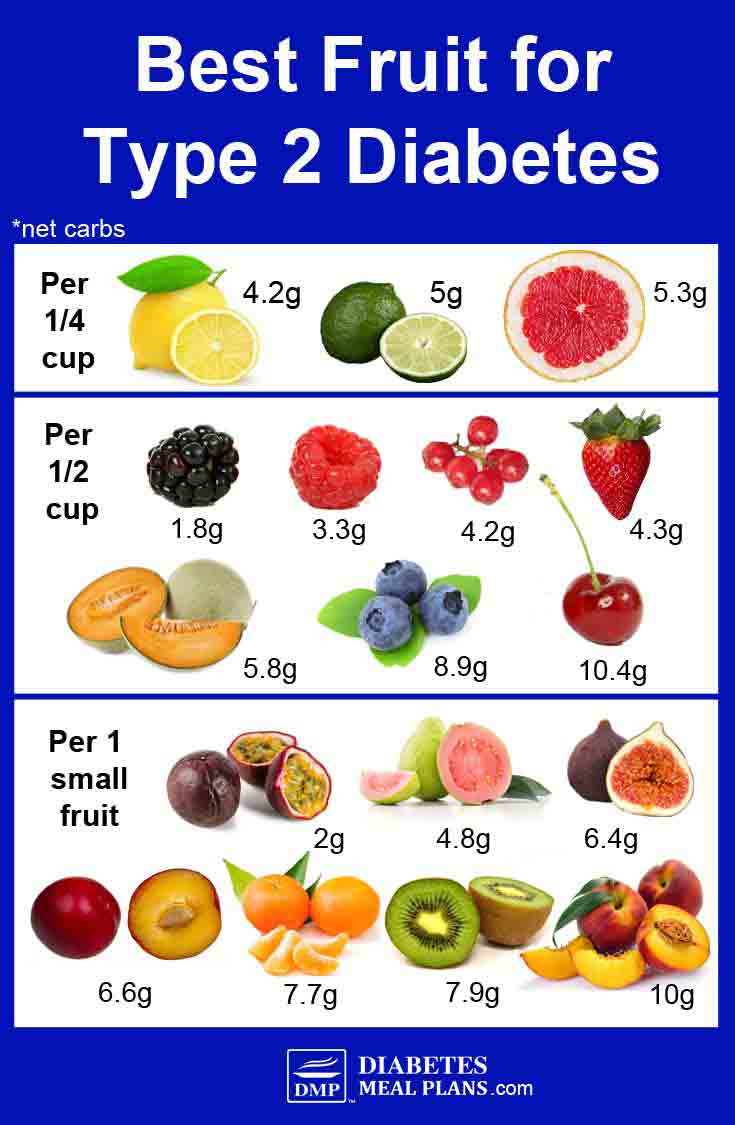
Berries like raspberries, strawberries, blueberries, and blackberries are lower in sugar and carbs and offer excellent fiber and antioxidants.
A few slices of cantaloupe or rockmelon, cherries, kiwi, passionfruit, guava, mandarin, or a small plum or apricot can also be reasonable options in small quantities.
Keep Portion Size in Check
Here’s one key step to improve your health: Stick to no more than 10g of carbs per fruit serving.
This might look like half a small apple or pear, half cup of berries, a few slices of melon, or one small kiwi or plum. And only one serving per day is best, especially if your A1c is still elevated or you’re aiming to reduce medication.
Smart Pairing for Better Blood Sugar Control
Another practical step? Pair fruit with fat or protein.
This slows down the absorption of sugar, reducing the spike in your blood glucose.
Try eating berries with cheddar cheese, berries with cottage cheese, kiwi with a handful of almonds, or peach with a tablespoon of nut butter.
Test Your Own Response
Everyone’s body is different. One person might tolerate a half an apple just fine, another might spike 60 mg/dL (or 3.0 mmol/L).
If you’re not sure, test your blood sugar levels to see if that fruit might not be working for you.
Final Thoughts
Fruit is not off the table completely — but it’s not a free food either.
If you’re working to lower your A1c, improve insulin sensitivity, or reduce medication use, it’s smart to be selective. Choose low-carb fruits, eat them in small portions, and always think about your full daily carb intake.
And remember: You’re not giving up fruit forever. You’re choosing a way of eating that works with your body, not against it — and that’s what long-term success is built on.
For members: You’ll find the detailed fruit guide and printable carb/sugar charts for easy reference inside the members library.
Transcript
Click Here To View
Dr Jedha, Host
Hello and welcome to episode 84. Fruit, it’s often considered a “healthy” food, right? Certainly, fruit can be a part of a balanced eating plan, even in diabetes. Fruit is nutrient dense, containing vitamins, minerals, fiber, and valuable polyphenols and antioxidants. But the thing is, fruit also has a fairly high sugar content. So, when it comes to fruit there are some limitations, which can be a bit disappointing for some people who do love their fruit.
01:31
Although fruit is a natural food source, it is important to keep in mind that fruit is high in carbohydrates and natural sugar, predominantly fructose. This can be slightly problematic for a few different reasons. All forms of sugar and carbs can increase your blood sugar levels – natural or not, sugar is sugar and your body is going to have to deal with that. In terms of fruit, it contains high levels of fructose, some fruits are much higher in fructose than others. Fructose is a type of sugar that behaves much differently in our bodies than the other types of sugars. Fructose is primarily metabolized in our liver. The liver, under too much sugar load, turns any excess sugar into triglycerides that get stored in fat cells throughout the body, or can contribute to fatty liver, among other things. Of course, fructose in added sugar and processed foods is the most problematic contributor to metabolic issues like this, but it’s good to have the awareness that fruit is high in sugar and fructose. Whether that’s natural sugar or not, it can still negatively impact blood sugar levels, and that’s what we’re here to learn about today, the types of fruits to avoid.
For our members, I want to mention that there is a detailed fruit guide and printable charts you can find alongside this episode, in the members library.
03:01
Okay, the first fruit we’re going to tackle today is not one fruit but more a fruit category and that is dried fruit.
Dried fruits have been around for thousands of years, loved for their sweetness and long shelf life. But how do these fruits go from being fresh and juicy to dried? How does this influence their sugar content? And when it comes to dried fruit, are these a fruit to avoid?
The process of taking a fresh fruit to a dried fruit can be as simple as air-drying in the sun or using more modern methods like dehydrators and freeze-drying. Essentially, drying fruit removes the water content, concentrating the fruit’s natural sugars and nutrients into a much smaller package.
Many dried fruit products on the market also have added sugar. Adding sugar to dried fruits makes them more appealing, especially for fruits that may lose some of their natural sweetness during the drying process – fruits like cranberries, blueberries, and cherries. Sugar acts as a preservative by inhibiting the growth of microorganisms. This helps in extending the shelf life of dried fruits.Some fruits may darken or lose their vibrant color during drying. Sugar, along with sulfur dioxide (a common additive in dried fruits), can help retain the fruit’s original color, making it more visually appealing to us as consumers. Clearly choosing dried fruits without added sugar is a better choice but it still doesn’t mitigate their high sugar content, so let’s look closer at the nutrition of dried fruits.
- A few pieces of dried mango, 34g carbs, 2g fiber, 24g sugar content.
- 1/4 cup dried banana, carbs 26g, 3g fiber, 14g sugar.
- 1/4 cup raisins, 33g carbs, 1g fiber, 26g sugar.
- 1/4 cup dried cranberries, 33g carbs, 3g fiber, 29g sugar.
- 1/4 cup dried apricots, 18g carbs, 2g fiber, 15g sugar.
As you can see, these high levels of carbs in dried fruit make them problematic for blood sugar control. Let’s take a fresh apricot as an example, 1 fresh apricot is around 4g carbs, 0.7g fiber, around 3g sugar. Dried apricot is about the same for only one piece – 4g carbs, a little less fiber at 0.5g, and around 3g sugar. While you might eat one fresh apricot and feel satisfied, chances are you’re not going to eat one dried apricot – with the sweetness, it’s very easy to keep eating a lot more.
Dried fruits are considered low to moderate in terms of the glycemic index. The GI of dried mango is 40-60, the GI of dried apricot is 30, and the GI of dried banana is 44. But it’s the carbs you need to be concerned about because lower GI or not, if a food is higher in carbs, it can still impact your blood sugar. Dried fruits can provide some fiber, vitamins, minerals, and antioxidants to the diet. But the thing to keep in mind is that you can find these nutritional factors in many other foods. In general, our recommendation is to avoid or minimize dried fruits.
06:59
Fruit Snacks and Rolls are obviously also a no no. You may think it’s strange that I mention this but it is surprising how many people think fruit products are healthy options. While marketed as fruit-based, these products usually contain added sugars along with other ingredients to modify texture and taste, and they are not healthy foods. For example, one fruit roll up product I looked at contained Corn Syrup, Sugar, as the first two ingredients, along with a whole list of other crap and 12 gram carbs, 7 grams sugar. Definitely a fruity thing to avoid. Many fruit snacks and lollies/candy, definitely another fruity thing to avoid.
07:52
Canned fruits. This is another place people get stuck. A can of fruit may say it has no added sugar and is hosted in 100% juice. That doesn’t make it diabetes friendly. For example, a can of pineapple chunks in 100% pineapple juice with no added sugar contains 16g carbs, 15g sugars for a half cup serve. It’s basically all sugar! Same thing goes for canned mango, peaches, apricots, mandarin oranges, mixed fruit combos etc – the canned fruits are best avoided.
There’s also another important thing to note in this discussion about fruit—fruit juice. Fruit juice is jam packed with hidden sugars and simple carbohydrates that quickly spike blood glucose levels. For example, a single glass of orange juice—just one cup—contains 25 grams of carbs and 20 grams of sugar, which is about the same as a can of regular cola. And that’s 100% juice with no added sugar. Fruit juice is definitely another fruity thing to avoid for optimal blood sugar control.
09:50
Now let’s drill down on some nutrition facts for the highest carb/sugar fruits, which are also the fruits to avoid with diabetes.
Mangoes are the highest carbohydrate and highest sugar fruits. Per mango, you’re looking at around 35-45g carbs and 30-40g sugar. They do contain a good amount of fiber, from 3.5 – 5.5g, but that fiber is certainly not enough to mitigate the impact of all those carbs and the high level of sugar. Out of all of the fruits, mangoes also contain the highest amount of fructose, 32.4 grams. Overall, I’m sorry to say that mango is off the list of foods to eat. Riper fruits can contain more condensed simple sugars and impact blood sugar even more. For example, in one experiment, a medium ripe mango led to a spike of 25 mg/dL/ 1.4 mmol/L, while a very ripe mango spiked blood sugar by 48 or 2.7.
Watermelon is the next fruit to avoid. One wedge of watermelon contains around 22-24g carbs, 17g sugar, with 11.3g of that being fructose, and just 1.1 g fiber. Another red flag is watermelon’s high glycemic index of 75. High GI foods like this will cause a sharp rise in your blood glucose very quickly, which is what you want to avoid. In one experiment where a healthy adult ate 8oz/225g of watermelon with around 15g carbs, it led to a spike of 49 mg/dL or 2.7 mmiol/L. Now this is in a healthy adult so in diabetes, this spike will likely be much greater, so watermelon is a fruit that is best avoided.
The next fruit is a very popular fruit and that is bananas. Unfortunately, bananas are the next fruit to avoid. One small banana contains around 23g of carbs, 12g sugars of which around 7.1 grams is fructose and 2.6g fiber. Bananas have a medium glycemic index of around 55-60. But it’s really all those carbs that are the biggest issue, so these are best avoided, or at the very least minimize your portions to 1/4 or 1/2 a banana. We often get asked about green bananas or plantains, which unfortunately are still too high in carbohydrates, sugar and fructose, and the cooking increases their glycemic index too, so we encourage you to avoid these as well.
The old saying goes that an apple a day keeps the doctor away – well, that may not be so true if you are living with diabetes, as apples are a high carb, high sugar fruit that may negatively impact your blood sugar and insulin function. One small red apple with the skin contains around 23g carbs and 19 g sugars, with around 9.5g of that being fructose and around 3.6g fiber. Apples can range from 15g to 35g carbs and 3-5g fiber, depending on the apple and its size. While many people think apples are a safe diabetes food, for most people they will see significant spikes. In one experiment comparing green and red apples, the participant started at around 95 mg/dL (5.3 mmol/L), the green apple raised blood sugar by 34 (1.9), the red apples 45 (2.5), so the participants levels went up to 127 (7.1) by eating the green apples and 145 (8.1) by eating the red apples. Now, this was a healthy participant without diabetes who also saw the red apples spike their blood sugar above the ideal range, so with diabetes, you may see a much higher spike and of course it’s dependent on your starting levels.
Similar to apples, pears are high in carbs, sugar and fructose. One small pear is around 22g carbs, 14g sugar, 11.8g fructose and 4.6 g fiber. In one experiment in a person with type 2 diabetes, eating a pear, had minimal impact. In another experiment eating a pear caused a spike of around 60 mg/dL (3.3 mmol/L) from baseline. In that same experiment, the pear was paired with a source of fat and had very little impact on blood glucose.
Oranges are another fruit that often needs to be avoided. One navel orange contains about 18g carbs, 12g sugar and 3 g fiber and a medium amount of fructose, 6.1 g. And sorry to say, oranges are not great in terms of blood sugar control. In a couple of experiments the spike from eating one orange was around 40 or 2.2. For orange juice that was around 20% higher. Some experiments have also indicated that oranges and perhaps other fruits lead to a longer sustained blood sugar effect, with higher levels over a number of hours. And again, the thing to keep in mind is that experiments are often in healthy people, people that don’t have insulin resistance or blood sugar issues.
Grapes are another fruit to be wary of. In terms of nutrition, 20 grapes is around 18g carbs, 15.5g sugar, and very little fiber, less than one gram. The sugar in grapes is predominantly fructose, around 12 g. Experiments with grapes and blood sugar vary. In one experiment the rise was around 35 md/dL or 1.9 mmol/L, in another it was 83 or 4.6, then in another experiment, others have shown minimal impact on blood glucose response. What we can take from this is that, when it comes to fruits, they can have a different response in different people, so if you want to test suitable fruits for you individually, it’s best to use a glucose monitor to test how any particular fruit influences your blood sugar levels.
18:40
Better fruit choices? While we’re not going into this in detail, as this episode is about fruits to avoid, let’s just shortlist a few of the best fruit options. Go for: citrus like lemon and lime, fresh berries like raspberries, cranberries, cherries or strawberries, guava, a few slices cantaloupe melon otherwise known as rockmelon, passionfruit, kiwi fruit, mandarin, plum or apricot.
19:18
And here are two important points to keep in mind:
The first thing is, portion size matters: when it comes to fruit, get your sweet fix in small portions. If you do not portion control, you’ll find your blood sugar will be negatively affected. It is best to choose the fruits I just mentioned but it may be okay for you to eat half a small apple or half a small pear, some people can tolerate that. When eating fruit, think about the carb content and limit it to a maximum of 10g per serve, because remember, there are simple sugars in fruit that you want to minimize. And you don’t want to be eating too many servings of fruit throughout the day.It is best to stick to just one serve a day, in appropriate portion sizes.
Secondly, here’s a great blood sugar tip: Eat your fruit with a source of protein or fat. This will help prevent blood sugar spikes, slowing down the uptake of sugars from the fruit. For example: pair your fruit with cottage cheese, cheddar cheese or a small handful of nuts or a tablespoon of nut butter.
So here’s a quick recap of fruits to minimize or avoid:
- Dried fruits (raisins, mango, banana chips, dates) – all dried fruits contain condensed amounts of sugar
- Fruit juices (even 100% juice)
- Canned fruits in juice or syrup
- Packaged fruit snacks and fruit rolls
- High sugar fruits like mangoes, watermelon, bananas, apples, pears, oranges and grapes, unless you eat them in small moderated portions and also test to see how they individually affect you.
Let’s wrap this up by coming back to a simple truth.
Yes, fruit can be healthy — but not all fruit is friendly for blood sugar. With diabetes or prediabetes, your goal is to lower insulin demand, reduce blood sugar spikes, and support your liver, metabolism, and weight. And high-sugar fruits — whether natural or dried, juiced or canned — can interfere with that goal. Ultimately, fruit isn’t off the table completely — but certain fruits are best avoided or at least minimized, especially if your blood sugar is still too high or you’re trying to bring your A1c down without medications. It’s okay to be selective with your choices. In fact, it’s smart. But you need to know your options and your limits, so I hope this episode has helped clear up at least some of the confusion about fruit.
For our members, there will be a detailed fruit guide and printable charts you can find alongside this episode inside the members library.
That’s all for now.
Dr Jedha, over and out.


Subscribe to Type 2 Diabetes Talk on: Apple | Spotify | Amazon Music | Audible | YouTube | Podcast Index | Player FM | and more…
Laverne Tyler
Thank you very helpful