


Table of Contents[Hide][Show]
- LISTEN TO THE PODCAST
- Rebuilding Insulin Sensitivity and Still Enjoying Treats
- Why Blood Sugars Spike Out of the Blue
- Are Sugar-Free Sodas and Energy Drinks Safe
- The Role of Protein Powders
- Building a Better Breakfast for Blood Sugar
- What if Your A1c Stays High Even on Insulin?
- Is Berberine Hard on the Liver?
- Transcript
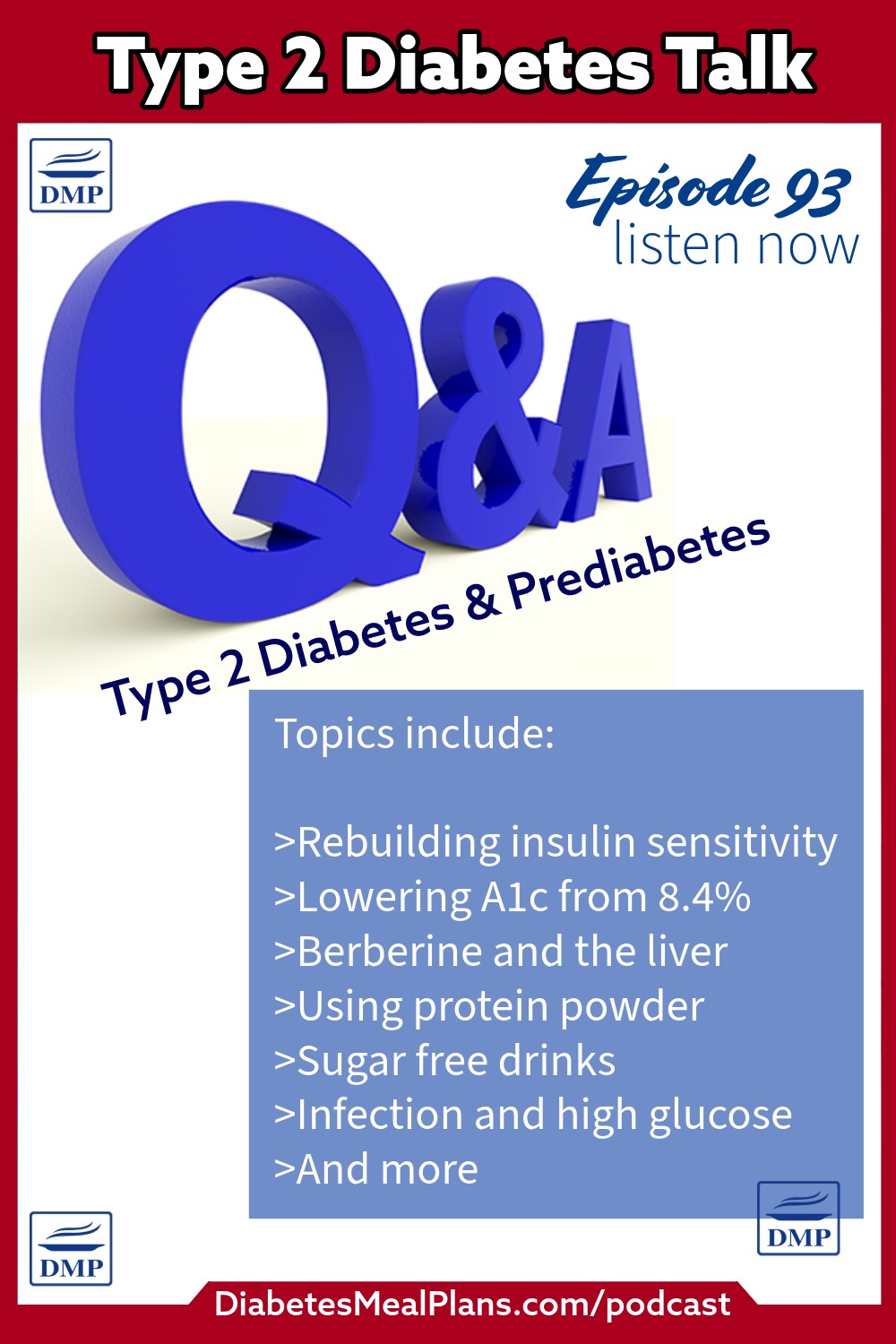
In this Q&A episode, we answer your most pressing questions about managing blood sugar, rebuilding insulin sensitivity, why your A1c might stay high even on insulin, making smarter food choices, what the truth is about berberine and liver health, and how to rethink breakfast for better blood sugar.
LISTEN TO THE PODCAST
Support the podcast by leaving a 5-star rating and review on Apple, Spotify or our Website – Thank You!
Rebuilding Insulin Sensitivity and Still Enjoying Treats
Can you rebuild insulin sensitivity and still enjoy the occasional treat? Absolutely. Improving insulin sensitivity is one of the most powerful goals you can aim for when managing type 2 diabetes or prediabetes. If you are already controlling your blood sugar with diet and exercise alone, that is a strong sign your body is responsive to positive change.
Pregnancy, however, does naturally reduce insulin sensitivity due to hormonal shifts, particularly in the second and third trimesters. This is why gestational diabetes is common. The good news is this is typically temporary. Once hormones stabilize after childbirth, insulin sensitivity often improves again, especially if you maintain healthy eating and stay active.
Long term, rebuilding insulin sensitivity comes down to consistently lowering the load on your insulin system. That means keeping carbohydrates lower, focusing on nutrient-dense whole foods, staying physically active in ways that fit your lifestyle, and prioritizing quality sleep and managing stress.
Once your insulin system is healthier and more flexible, enjoying an occasional treat becomes far less risky. During pregnancy it makes sense to be more cautious, but remember this does not last forever, and you are building a foundation for enjoying those moments in the future without guilt or harm.
Why Blood Sugars Spike Out of the Blue
Sometimes your blood sugar can spike even if you have not changed your food at all. Infections are a common culprit.
When your body fights an infection, it releases stress hormones like cortisol and adrenaline. These hormones push your liver to release extra glucose into your bloodstream, meaning your blood sugar can spike, sometimes dramatically, even if you are eating the same as usual.
If your readings suddenly jump to levels like 400 or 500 mg/dL, over 22 mmol/L, it is crucial to see your healthcare provider straight away. Extremely high blood sugar levels can become dangerous quickly, especially when combined with infection.
In these situations, temporary medication adjustments may be needed until things settle. Once the infection clears, it is worth revisiting your nutrition and daily habits to help keep those numbers consistently lower.
Even in these scary moments, it is not your fault, your body is simply responding to stress.
Are Sugar-Free Sodas and Energy Drinks Safe
This is a question that sparks a lot of debate. Sugar-free drinks do not raise blood sugar directly because they lack real sugar. On paper, they are clearly better than full-sugar sodas. But most contain artificial sweeteners like aspartame, sucralose, ace-K, or sometimes stevia and monk fruit.
While they do not spike glucose, research suggests some sweeteners may still influence insulin response, gut health, cravings, and even long-term weight regulation.
Many people find that regularly consuming sweet-tasting drinks keeps their sugar cravings and desire for sweetness high, which can lead to more snacking or less satisfaction with truly healthy foods.
Energy drinks, even sugar-free ones, pose additional concerns because of caffeine and stimulants, which can increase blood pressure, disrupt sleep, and worsen insulin resistance over time.
An occasional diet soda is unlikely to cause harm, but making it a daily habit could work against your broader health goals.




The Role of Protein Powders
For many people with type 2 diabetes or prediabetes, getting enough protein, especially at breakfast, is a game changer. Protein helps stabilize blood sugar, supports muscle, reduces inflammation, and improves insulin sensitivity.
Whey protein is particularly powerful. Studies show it can reduce post-meal blood sugar spikes and improve insulin response. Even small amounts before or with meals can help.
Just be sure to choose whey protein powders without added sugars, gums, or unnecessary additives.
Building a Better Breakfast for Blood Sugar
A common trap is starting the day with porridge and fruit. Although often seen as healthy, this combo can deliver 40 to 60 grams of carbs in one go, spiking blood sugar, especially in the morning when insulin sensitivity is lowest.
Switching to plain Greek yogurt with some berries, nuts, or seeds provides a better balance of protein, fat, and moderate carbs. About half a cup of Greek yogurt is a good start, offering around 11 grams of protein and fewer carbs. Still, aim to add more protein or healthy fat to keep your blood sugar steady.
What if Your A1c Stays High Even on Insulin?
Dorothy shared that after 20 years with type 2 diabetes, she is on daily insulin but still sees an A1c of 8.4 and post-meal blood sugars rarely below 8, even after walking for an hour. This shows ongoing insulin resistance, which is common after many years.
The key to breaking this cycle is shifting the strategy, not just adding more medications. Often, it means lowering carbohydrates further, especially at breakfast when insulin resistance is highest.
Focusing on protein, healthy fats, and non-starchy vegetables, and reducing packaged or processed foods, can make a big difference.
Since walking helps, short walks after each meal may lower spikes more effectively than one long daily walk. Even after decades, your body can respond to better nutrition and movement, helping reduce insulin needs and lowering A1c over time.
Is Berberine Hard on the Liver?
Lynette said her doctor warned that berberine might be hard on the liver, suggesting only taking it every other day. However, research does not back this up.
In fact, clinical trials on standard doses of berberine — usually 500 mg two or three times daily — show no consistent evidence of liver harm.
Some studies even suggest berberine improves liver enzymes in people with fatty liver, prediabetes, or type 2 diabetes. Rarely, very high or prolonged use could stress the liver, but this is unusual.
If you have liver disease or take multiple medications, check with your doctor, but for most people, using berberine as studied is safe and often beneficial for both blood sugar and liver health.
It is important to choose clean berberine supplements at the recommended dosage. Here’s a few good options.



Transcript
Click Here To View
Dr Jedha, Host
A big shout out to Sarah, Dorothy, Lynette, Mary, Sarah and Sharon for today’s questions, which I’m sure you’re going to find helpful too.
Hello and welcome to another Q&A episode, answering questions directly from listeners, all about real-life challenges managing blood sugar, insulin sensitivity, food choices, and natural treatments.
We’ll be covering everything from whether it’s possible to rebuild insulin sensitivity and enjoy occasional treats again, to blood sugar spikes from infections, whether sugar-free drinks are safe, and how to build a better breakfast when you’re trying to reverse diabetes with food alone.
These are incredibly valuable questions and if you’ve been wondering about any of these things yourself, you’re going to find today’s episode both practical and empowering.
Remember, if you have a question yourself, please send it in. Head to Type2DiabetesTalk.com/message – and leave me an email or voice message so we can include your question in a future Q&A.
First up, we’ve got a question from Sarah.
Sarah asked: Is it possible to rebuild insulin sensitivity so that one day I can enjoy some occasional treats again safely? I have type 2 diabetes and so far I am managing to regulate with just diet/exercise and I am terrified by the thought of having to one day go on insulin. I am also currently pregnant so having to be extra cautious about my carb intake and the extra restrictions of what I have to avoid while pregnant has been very challenging. I don’t live in an area with great access to healthy food options and don’t have much time during the week to cook or grocery shop.
Absolutely, rebuilding insulin sensitivity is possible, and it’s a powerful goal to work toward. The fact that you’re already managing your blood sugar with diet and exercise alone is a really strong sign that your body is responsive to positive change. That gives you a great foundation.
Pregnancy definitely adds another layer and you’re right to be cautious. Hormonal shifts during pregnancy naturally reduce insulin sensitivity, so what you’re feeling is valid. But keep in mind, this reduced sensitivity during pregnancy is usually temporary. Once your hormones stabilize postpartum, insulin sensitivity often improves again, especially if you’re continuing with healthy nutrition and movement.
Long term, improving insulin sensitivity comes down to multiple factors, particularly being proactive with your nutrition and lifestyle – I won’t go into detail here, as we’ll be covering specific strategies to improve insulin sensitivity next week in episode 94, so be sure to listen to that.
Now, you mentioned treats – we often encourage people to include treats from time to time – it’s normal. Enjoying the occasional treat isn’t going to send things completely off course, because consistency is more important than perfection when it comes to blood sugar. Plus, you can change your definition of what a treat means for you. Instead of sugar-filled icecream, maybe a few pieces of dark chocolate could be enjoyed, or a decadent piece of chocolate mud cake that you make at home – on that note, if you’re one of our members, we have an incredible chocolate mud cake recipe. The point is, having a treat isn’t off limits.
You’re also said you’re dealing with limited access to food and time constraints, which are real barriers, but there are always ways around this. For example, using frozen vegetables and stocking up with proteins like fish and meats you can freeze. Or perhaps you can consider ordering food on the internet and trying to carve out more time on the weekend to batch cook would be a good strategy to focus on.
And lastly, I want to say this: being terrified of insulin is a common fear but people with type 2 diabetes never go on insulin. Insulin as a medication isn’t the common first step, so by being proactive, you’ve likely got nothing to worry about.
Dorothy said: I have type 2 diabetes I am on 15 units of insulin daily but my readings 2 hours after breakfast are anywhere between 8 and 12 (144-220) and after lunch they are the same unless I test 3 hours plus. I can never get below 8 and to get that I have to walk for at least 1 hour. I have been a diabetic for 20+ years I weigh 68kg (149 pounds) do not eat sweets or drink soda. I see an endocrinologist and all she suggests is further medication which does nothing. I stopped taking tablets because they caused terrible heartburn and chronic constipation. My last blood HBA1C was 8.4. Any suggestions
Dorothy, an A1c of 8.4 tells us that your average blood sugar is elevated, which of course is obvious given your high post-meal levels.
Since you’re already on insulin and had a poor experience with tablets, one key area to look at is food timing and composition, particularly carbohydrates. Even if you’re not eating sweets or drinking soda, there may still be hidden carbs or starches raising your levels, especially at breakfast and lunch. For example, things like fruit, cereal, toast, rice cakes, crackers, and even low-fat yogurts can spike blood sugar. It’s often not about “eating healthy” in the traditional sense, it’s about eating in a way that works for your blood sugar. I would try keeping a food diary for a few days to a week and then drilling down into that to try to determine what’s going on for you. You might want to try lowering your carbohydrate intake more significantly.
Many people see the biggest improvements by focusing on protein, healthy fats, and non-starchy vegetables, things like eggs, avocado, meat, fish, leafy greens, mushrooms, and zucchini, to name a few. And that’s the other critical component, is the quality of foods you eat. Do a pantry audit and see how many packaged foods you’re eating – it may just be a bit more than your body needs, so shifting quality can make a real difference in budging those numbers. If you need more help with your nutrition and troubleshooting this, please consider joining us as a member where you’ll have all the resources you need and you can use the monthly member check ins to further troubleshoot specifics.
Also, since walking helps you, that’s a really good sign. Your body is still responsive to lifestyle. So try taking a short 10-minute walk after each meal because we know this helps lower those post-meal spikes more effectively, and that’s going to help lower your A1c as well. Listen to episode 89 for more on walking strategies.
Lynette asked: I asked my Dr. about Berberine, she said to take it every other day because it’s hard on the liver. ???
Here’s what we know from the research: in clinical trials where people take standard doses of berberine (usually 500 mg, two to three times daily), there’s no consistent evidence of liver damage in people with healthy liver function. In fact, some studies suggest berberine may even help improve fatty liver markers and liver enzymes in people with metabolic syndrome, prediabetes or type 2 diabetes.
Evidence does not support the idea that standard doses of berberine are “hard on the liver.” In fact, multiple meta‑analyses and randomized controlled trials show it either improves or does not alter liver enzyme levels, even in people with non alcoholic fatty liver or hepatitis B.
Rarely, very high or long-term dosing may slightly stress the liver, but this is not typical. People on other medications should be aware of possible interactions related to liver enzyme metabolism, and anyone with existing liver disease should check with their doctor. But overall saying berberine is ‘hard on the liver’ at the recommended dosages, isn’t supported by evidence.
Mary asked: What about protein powder? Should I be using it?
Great question, Mary!
When you have type 2 diabetes or prediabetes, getting enough protein is very important. It helps with blood sugar stability, appetite control, muscle maintenance, reducing inflammation, and improving insulin sensitivity. Many people don’t get quite enough, especially at breakfast, which is where protein powder can come in handy. Research shows us that whey protein powder in particular, is a rich source of amino acids, and bioactive substances and it has been shown to have unique benefits for managing blood sugar, so it can make a great addition to your meal plan. In fact, even small amounts of whey protein before or with meals can enhance your body’s insulin response, reduce blood sugar spikes, and improve hormonal responses. And you can use whey protein as a meal replacement as well, making a protein shake. Our members who use whey protein have seen these benefits and also improved energy as well. We talked a bit about whey protein in episode 68.
So the answer is protein powder can be very useful, with science-backed benefits for diabetes. Just be mindful of what’s in the powder, many are loaded with sugars or artificial additives and a whole list of ingredients that’s just not needed. If you head to our website we have a whole section on the best diabetes supplements, which also includes info on the best types of protein powders as well.
Sarah asked: What is the verdict on the sugar free/zero sugar sodas and energy drinks? Are they just as dangerous for blood sugar and T2D?
Great question, Sarah, and it’s one that sparks a lot of debate. Sugar-free or zero sugar sodas and energy drinks don’t raise blood sugar directly because they don’t contain actual sugar. That means, on paper, they’re better than sugary drinks when it comes to blood glucose control. If you’re comparing a regular soda with 40 grams of sugar to a zero-sugar version, the sugar-free one is definitely the lesser evil.
But most of these drinks use artificial sweeteners like aspartame, sucralose, saccharin, or ace K. And there is evidence suggesting that artificial sweeteners, like the ones I just mentioned, may still impact blood sugar, gut health or insulin sensitivity, along with contributing to weight gain (not weight loss as may be expected), and cravings, especially when consumed frequently.
There are some sugar free drinks that now use sweeteners like stevia, monk fruit or allulose and these are more suitable options, as these sweeteners don’t have the same evidence as the artificial sweeteners. For more background on sweeteners, listen to episode 49.
Energy drinks are a bigger concern. The artificial sweeteners are obviously a concern and then they are loaded with caffeine and other stimulants. For people with type 2 diabetes, that can potentially raise blood pressure, disrupt sleep, and increase insulin resistance over time so they’re not ideal, especially if you’re having them regularly.
So occasionally, a sugar-free soda or energy drink likely won’t hurt or be dangerous. But they’re not health foods and relying on them daily might make it harder to truly improve your metabolic health, so in general we do encourage people to avoid them.
Donna said: I am very concerned about my blood sugar spikes it normally stays right around 200 (that’s around 11 for our metrics listeners), but sometimes spikes as high as 400 to 580 (that’s 22-32) for no apparent reason. i do have an infection in my blood, could that be the reason? Please if anyone has an idea as how I can get this resolved please let me. Thank you.
Donna, I really feel for you — those kinds of blood sugar spikes are not just frustrating, they can be frightening. When you’re seeing numbers around 200 consistently and then sudden surges to 400 or even 580, that’s a red flag that something serious is affecting your glucose regulation.
Now, you mentioned you have an infection in your blood. That’s really important — because yes, infections can absolutely cause blood sugar to skyrocket, even if you haven’t eaten anything different. This happens because your body releases stress hormones like cortisol and adrenaline to fight the infection, and those hormones trigger the liver to release more glucose into your bloodstream. So even if your food hasn’t changed, your blood sugar can still go up. And the higher your blood sugar stays, the harder it is for your immune system to fight the infection, which creates a bit of a vicious cycle.
As for how to get this resolved, you really need to see your healthcare provider urgently, especially if you’re still fighting the infection. High blood sugars in this range can become dangerous quickly, so speaking to your doctor about this is very important. Once you’re out of the acute phase and your infection clears up, then it’s worth looking deeper into your nutrition and lifestyle to help bring your numbers down more consistently. But right now, start with getting medical attention right away, as those numbers shooting up to 580 are dangerously high.
Sharon said: Help..I have Diabetes 2 and my recent HBA1c blood test came back as 43. I am trying to reverse the diabetes without taking medication, just healthy diet. At the moment I have porridge and fruits for breakfast but would like to try plain Greek yogurt with fruit. Just not sure how much yogurt should I use. Any advice would be welcome.
Just to clarify, an HbA1c of 43 mmol/mol translates to 6.1%.
Now, let’s talk about breakfast, because this is often the most important meal to get right when it comes to blood sugar. You mentioned you’ve been having porridge with fruit. While that’s often seen as a “healthy” breakfast, for many people with pre and t2diabetes, it can spike blood sugar significantly. Porridge and fruit is actually one of the worst breakfasts you can eat. A typical serving of porridge with fruit can easily add up to 40–60 grams of carbohydrate. That’s enough to cause a significant blood sugar spike, which won’t help your efforts to reverse your diabetes.
Switching to plain Greek yogurt with fruit is a smarter move for blood sugar stability. Greek yogurt is higher in protein and lower in carbs. As to your question on how much to eat, around 1/2 cup would be a good serve – with around 11g protein and 8g carbs, depending on the brand. But yogurt and fruit alone is still not great as a breakfast meal, as you ideally need more protein. You could add some nuts and seeds to balance this out. And for more ideas, listen to episode 68 where we looked at protein for breakfast in detail. And you might also want to listen to episode 84 on what fruits to avoid, as choosing fruits wisely is very important too.
That wraps up our Q&A for today. As always, the questions you send in help so many others who are going through similar experiences, so thank you to everyone who shared.
If you have a question, don’t be shy, please send it in. Head to Type2DiabetesTalk.com/message – and leave me an email or voice message so we can include your question in a future Q&A.
Remember: small changes, done consistently, can lead to powerful results. Keep asking questions, keep learning, and most importantly, keep going.
Until next week,
Dr Jedha, over and out.

Subscribe to Type 2 Diabetes Talk on: Apple | Spotify | Amazon Music | Audible | YouTube | Podcast Index | Player FM | and more…
Leave a Reply